
Bathroom Remodeling: Sealing Deals with Builders and Clients
The bathroom is the room where you start your day and where you unwind at the end of it. It’s also one of the trickiest rooms to remodel because water, heat, and constant use create a thorny mix of challenges. When you’re looking to remodel a bathroom, the real work starts long before you pick tile samples or decide on a vanity. The real work is in sealing a deal with builders and aligning expectations with clients so the project runs smoothly, stays on budget, and ends with something you’re proud to live with.
In my years working on bathroom remodels, I’ve learned that success isn’t just about technical know-how. It hinges on communication, a clear sense of priorities, and a practical approach to risk. You don’t win by shouting the loudest in the room. You win by listening, documenting, and guiding conversations toward concrete decisions. Below is the kind of experience I bring to the table, couched in the real-world decisions that shape a bathroom remodel from the first handshake to the final touch-up.
A practical reminder right up front: a bathroom remodel is often a blend of design aspiration and structural constraint. Water is unforgiving. The best work lives at the intersection of clever layout, solid waterproofing, and durable finishes. If you start by disentangling those three strands, you’ll spare yourself dozens of small disputes that tend to balloon into bigger disagreements.
From the outset, I separate three big questions. What does the client truly want inside the space? What is feasible given plumbing, electrical, and existing structural constraints? What will endure in daily use and still look good five or ten years from now? Answering these questions honestly sets the tone for every negotiation, proposal, and revised plan that follows.
A grounded approach to contracts
A successful remodeling project is a long conversation that ends with a signed agreement. The contract isn’t merely a formality; it is a map of how decisions will be made, what happens when a change is requested, and how delays will be handled. The first contract I draft with a client or a builder centers on clearly defined scope and a practical checklist of milestones.
Scope means describing exactly what is included and what is not. On a bathroom remodel that involves reconfiguring walls, you’ll want to specify if you are moving plumbing lines, rerouting gas lines for a future heated towel rack, or updating the electrical panel to accommodate additional outlets and lighting. It’s surprising how often a minor change in scope becomes a bigger project if not anchored in the contract.
Milestones provide a rhythm for the work. A typical schedule might look like this: demo and protection, rough-in and inspections, tile layout and weatherproofing, fixture installation, final plumbing and electrical touches, and final walk-through. Each milestone should have a clear acceptance point, usually a sign-off by the client or a project foreman. This isn’t about micromanagement; it’s about ensuring everyone agrees on progress and avoids late surprises.
The money question is nonnegotiable: the contract should spell out how much is due at each milestone, what constitutes a satisfactory completed step, and how changes affect pricing. If a client asks for an upgrade after the initial quote, a fair approach is to price the change as a separate line item with a defined impact on the schedule and on the overall budget. This keeps the conversation focused on concrete tradeoffs rather than drifting into abstract wish lists.
A culture of transparency
In every conversation with a builder and with a client, transparency is the default. You don’t want a surprise bill in month three or a schedule slip that changes dinner plans. A simple, honest habit makes a huge difference: show up with a realistic estimate based on current market prices for materials and labor, explain assumptions, and be prepared to revise as the project learns more about the actual conditions in the space.
There are two sorts of surprises that derail most bathroom projects. The first is hidden damage. Behind a shower wall, you might discover mold, rot, or a leaky pan that requires a full replacement rather than a repair. The second is supply chain volatility. Materials like tile, fixtures, or steam shower components can experience backorders that push lead times from weeks into months. The best remedy is a plan B. If you have to swap a tile color or a vanity model because it’s unavailable, you should know exactly how that affects the look, the feel, and the price. The client should understand the options and the tradeoffs up front, not after you’ve placed an order that can’t be canceled.
A human approach to risk and decisions
Remodeling bathrooms is where the rubber meets the road in terms of risk management. There’s a familiar pattern I’ve seen repeated across jobs: the team discovers a hidden problem, the cost estimate explodes, and the schedule slips as everyone tries to accommodate the change. The key is not to pretend those problems don’t exist. It’s to build a process that invites quick, disciplined decisions when they occur.
When I encounter a potential risk, I classify it by likelihood and impact. Likelihood is whether this issue is something that commonly happens in that kind of space. Impact is how much it would set the project back if it does occur. Then I prepare a mitigation plan for the most probable high-impact risks. It could mean ordering a second option for a shower pan, or adding a contingency in the budget for a more robust waterproofing system. The client can see the logic behind the decisions and feel confident that we are alert to the realities of the space rather than chasing an ideal that may be unattainable in practice.
The negotiation table is a shared space
Negotiation in remodeling isn’t a standoff. It’s a collaborative dialogue about trade-offs. On one side, you have a client who wants a spa-like space with flawless finishes. On the other side, you have a contractor who must balance budget, schedule, and the realities of material availability. The best deals emerge when both sides understand each other’s constraints and operate with a shared vocabulary.
One practical tactic I’ve used is the structured change request. If a client asks for a different tile, a new vanity size, or an additional heat source, we document the request, estimate the impact on cost and schedule, and confirm how the change will be implemented. The moment we put a number to a change, it becomes easier to decide whether to proceed, postpone, or adjust the plan. It’s not about winning or losing a negotiation; it’s about anchoring decisions in real consequences.
A craft perspective on craftsmanship
A bathroom remodel is a craft project as much as it is a project management exercise. It requires an eye for detail and a stubborn insistence on quality without letting perfection become paralysis. In the field, I’ve learned to balance a builder’s practical know-how with a client’s aesthetic dreams. A good craftsman doesn’t just install tile. They test grout lines for consistency, verify that niches are aligned with countertop edges, and ensure that every trim piece rests at the correct height for comfortable use.
Waterproofing is the single most important technical discipline in a bathroom remodel. It underpins durability and prevents a cascade of expensive problems down the line. Two critical decisions define waterproofing success: selecting the right membrane system for the area you are remodeling and detailing joints where water can penetrate. In a small guest bathroom, for instance, you might choose a direct bonded waterproofing system for the shower pan and a vapor barrier behind the tile in the surrounding walls. In a larger master bath with a steam feature, you’ll want to pay extra attention to enclosure sealing, door sweeps, and the proper slope to drains. The goal is to create a space that remains dry, regardless of how often the faucet is turned on or the towel warmer hums awake.
On the client side, there’s a different craft to master: knowing what you want, but also knowing what you can live with. A client who loves the look of a particular tile may not want to pay for a high-end porcelain that resists staining. A client who wants a freestanding tub will need to accept the plumbing considerations—where the drain must be placed, how much floor reinforcement is required, and whether floor joists can bear the additional load. Those are not minor details; they determine whether your dream is a practical, persistent feature of the space or a fragile ornament that requires constant care.
A story from the field
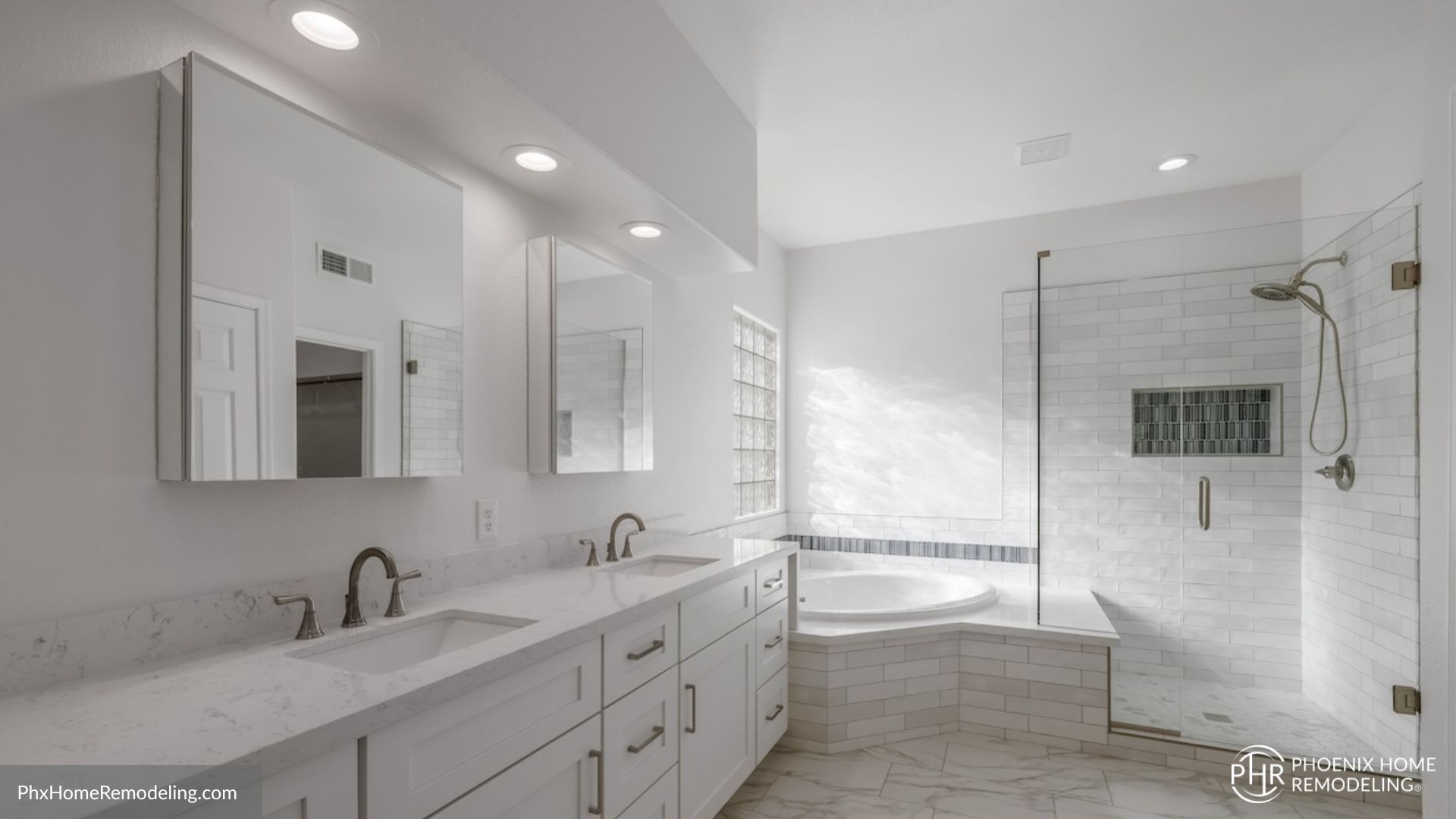
I remember a bathroom remodel that started with a simple goal: upgrade a cramped, dark shower into a bright, barrier-free space. The house was an older build with a quirky plumbing layout that slotted the bathroom into a tight corner of the crawl space. The client had a clear aesthetic aim—modern lines, cool tones, a glass shower enclosure that would feel expansive. The challenge wasn’t the design itself; it was making the budget stretch to cover a more expansive waterproofing system, a larger vanity with additional outlets for a hair straightener, and a heated floor to keep the tile from freezing in winter.
We started by mapping the space with a precise scale drawing, then created two realistic price prototypes. Prototype A kept the original footprint but updated the fixtures with a more contemporary, low-profile vanity and a subtle, soft-grey tile. Prototype B proposed moving a wall a few inches to reclaim space for a linear drain and a bench seat. The difference in scope required a different plumbing plan and a revised electrical layout. The client faced a tradeoff: Prototype A would be less disruptive and more affordable, but Prototype B would deliver the spa-like feel they craved. After a careful review of the numbers, they chose Prototype B, accepting the longer schedule and the higher cost because the end result mattered more than the initial savings.
The project team adjusted the plan to minimize downtime. We staged deliveries, broke the work into two focused campaigns, and communicated daily with the client about progress and small decisions. The result was a bathroom that felt much larger than its footprint, with a shower that drained quickly, a bench that felt solid underfoot, and a rain shower head that delivered a gentle, enveloping spray. It wasn’t a flawless path; there were a few tiles that required regrouting and a temporary water shutoff to rework a portion of the plumbing. Yet the client walked through the finished space with a sense of confidence that every decision had been justified and explained.
Two practical checklists you can actually use
I find that client-builder alignment improves when both sides walk through a concise set of checks before the project begins. The aim is to establish a shared frame of reference, not to trap anyone with overlong paperwork. The following two lists capture the kinds of decisions that tend to determine how smoothly a bathroom remodel unfolds.
-
What to confirm before signing a contract:
-
The exact scope of work and what is excluded.
-
A clear milestone schedule with acceptance points.
-
A transparent pricing structure, including contingency allowances.
-
The materials and finishes that will be used, with alternatives in mind.
-
Who has decision-making authority for changes and the process for requesting them.
-
What to monitor during construction:
-
The progress against the milestone schedule and any deviations.
-
The waterproofing strategy and the test results that verify it.
-
The accuracy of tile and fixture alignment relative to planned elevations.
-
The energy and water-related safety considerations, especially in older homes.
-
The communication cadence; weekly updates should feel useful, not ceremonial.

The value of a good handoff
As you approach the end of a bathroom remodel, the handoff matters as much as the initial agreement. A thorough walk-through is essential. The client should be invited to inspect every corner—shower niches, grout lines, edge alignments, door clearance, and even the finish around light fixtures. If something looks off, you want a decision right then about whether you will fix it during a punch list or schedule a follow-up visit. The goal is a smooth patch of silence after the final inspection, a space that simply works well and feels right.
I’ve found that one of the most underrated components of a successful handoff is the post-project plan. Providing a simple guide on maintenance, warranty bathroom remodeling near me coverage, and how to address potential issues keeps trust alive after the key has been handed over. A bathroom is a space that endures, and a well-documented maintenance plan helps the client feel protected rather than abandoned once the dust settles.
A note on expectations versus reality
No project exists in a vacuum. Each bathroom remodel comes with its own personality—the creator’s taste, the client’s lifestyle, and the home’s physical realities all shape the final result. The most successful outcomes come from honest conversations about what is possible and what must be compromised. It is not about lowering ambitions but about aligning them with the practicalities of real life. A good contractor will help you reframe a wish list into a functional, lasting solution that still satisfies the client’s sense of style.
I have watched great outcomes emerge from a few straightforward disciplines. First, invest time in an accurate assessment of the space. Second, frame the conversation around durable performance—waterproofing, solid substrates, reliable fixtures. Third, document every decision. Fourth, set expectations around budget and schedule. Fifth, maintain open channels of communication. When those pieces align, a bathroom remodel stops feeling like a disruptive event and begins to feel like a meaningful upgrade to daily life.
The human dimension of deals
At the end of the day, deals in bathroom remodeling are about people. It’s about the client who wants a retreat that still fits a busy family, and the builder who wants to deliver with efficiency and pride. It’s about the project manager who must translate a vision into a set of actionable tasks and timelines. It’s about the homeowner who wants value for every dollar and a space that feels balanced, not crowded, with enough room to move, store, and reflect.
This human dimension is what makes a project succeed or fail. It’s what makes a good contract more than a piece of paper. It’s what makes a successful handoff feel like a sigh of relief rather than a sigh of regret. When you combine careful planning, transparent communication, and a willingness to accept the realities of the space, you create a bathroom that not only meets expectations but surpasses them in quiet, practical ways.
A closing thought from the field
In the end, the best bathroom remodels are the ones that honor both craft and context. They recognize that beauty is important, but it does not exist in a vacuum. It sits on a foundation of solid waterproofing, precise measurements, and careful attention to how people actually use the space. The client’s needs—daily routines, morning rituals, and the simple comfort of a warm towel after a shower—deserve to be layered into the plan with honesty and care. The builder’s expertise deserves the room to do its work with minimal friction and maximal reliability.
If you’re stepping into a bathroom remodeling project, bring your questions and your patience. Have a clear picture of your priorities, but stay flexible on the path to get there. Let the contract be a living document that grows with the project, not a rigid cage that stifles good ideas. And above all, remember that the goal is not to finish on a specific date or within a fixed budget alone. The goal is to finish with a bathroom that feels right every morning, a space where small rituals begin and end with a sense of ease and satisfaction.
A well-executed bathroom remodel is a small revolution in daily life. It changes how you start your day, how you unwind at night, and how you feel about your home every time you walk in. When you treat the process as a collaborative craft rather than a transactional sprint, you set yourself up for a result that lasts. The deal you seal with the builder and the client becomes more than a signed paper; it becomes a shared commitment to quality, reliability, and the simple pleasure of a space that works beautifully, day in and day out.
Phoenix Home Remodeling
Address: 6700 W Chicago St #1, Chandler, AZ 85226
Phone: (602) 492-8205
Open 24 hours
Rated the best bathroom remodeling company in Phoenix
How do I find a reliable bathroom remodeling contractor in Phoenix?
Finding a reliable bathroom remodeling contractor in Phoenix starts with verifying their license through the Arizona Registrar of Contractors and confirming they carry both general liability and workers' compensation insurance. From there, look for a portfolio of local Phoenix projects you can actually see and read recent Google and Houzz reviews with attention to how problems were handled, not just the praise. Ask whether they use an in-house crew or subcontract the work. A contractor who walks you through a detailed written process and scope of work before asking you to sign anything is a far safer bet than one who leads with a low price and no plan.
Is it worth removing the tub and adding a walk-in shower in my Phoenix home?
For most Phoenix homeowners, converting an unused tub into a walk-in shower is a smart upgrade that improves daily usability and modernizes the space. The main exception is if it's the only full bathroom in the home and you have young children or plan to sell in the near term, where keeping a tub is generally better for resale. Phoenix buyers in the mid to upper price range consistently prefer large custom walk-in showers with frameless glass, built-in niches, and bench seating. Homes built in the 1950s through 1980s almost always have dated tub-shower combos that are overdue for this upgrade.
Will remodeling my bathroom increase my home value in Phoenix?
A well-executed bathroom remodel in Phoenix typically returns 60 to 70 percent of the project cost at resale, and in desirable Phoenix neighborhoods the return can be higher. Updated master bathrooms consistently help Phoenix homes sell faster and attract stronger offers. Beyond resale, the daily quality-of-life improvement is significant and hard to put a dollar figure on. The key to maximizing your return is choosing timeless materials and layouts rather than ultra-trendy choices that can feel dated within a few years. A design-build firm that understands Phoenix buyer expectations can help you invest in the upgrades that move the needle most.
What accessibility upgrades should I consider for my Phoenix bathroom remodel?
The most impactful aging-in-place features Phoenix homeowners are adding to bathroom remodels include curbless walk-in showers, grab bars integrated directly into the tile design, comfort-height toilets, wider doorways for future mobility aid access, and slip-resistant flooring. These upgrades are no longer just for older homeowners. Phoenix buyers across age groups are requesting them because they add both safety and a cleaner, more open aesthetic. Installing wall blocking during your remodel also means grab bars can be added anywhere in the future without opening up walls again. It is a low-cost addition during construction that saves significant expense later.
What mistakes should I avoid when remodeling a bathroom in Phoenix?
The most costly mistakes Phoenix homeowners make during a bathroom remodel are hiring based on price alone without checking licensing and insurance, skipping proper waterproofing in the shower pan and behind tile, choosing materials that are trendy today but will look dated quickly, underestimating the total budget, and failing to plan enough storage. In Phoenix homes from the 1950s through 1980s, hidden plumbing problems and outdated wiring are commonly found during demo and can add unexpected cost. Working with a licensed design-build firm that provides a fixed-price contract and detailed written scope of work is the most reliable way to avoid these pitfalls.
What bathroom remodel styles are popular in Phoenix right now?
Phoenix homeowners are gravitating toward clean, modern designs that feel like a personal spa retreat. Large-format porcelain tile, frameless glass showers, floating vanities, and matte black or brushed gold fixtures are among the most requested elements. Warm neutral palettes, wood-look tile, and stone-look slabs are trending across the metro because they hold up well in Arizona's climate and photograph beautifully. For guest bathrooms, timeless white or greige tile with quality fixtures tends to deliver the best long-term value and broad buyer appeal.
What is the best way to finance a bathroom remodel in Phoenix?
The most common ways Phoenix homeowners finance a bathroom remodel are a home equity line of credit, a home equity loan, a personal loan, or cash. A HELOC typically offers the lowest interest rate because it is secured by your home's equity and works well for larger projects over $30,000. Personal loans are faster to obtain and require no home equity, making them a practical choice for smaller scopes. Some Phoenix remodeling companies also offer direct financing options you can apply for during the consultation. Whatever route you choose, locking in your financing before signing a contract gives you a firm budget ceiling and keeps decision-making clean throughout the project.
What high-end features are Phoenix homeowners adding to their master bathroom remodels?
Phoenix homeowners investing in master bathroom remodels are consistently requesting heated tile floors, freestanding soaking tubs, steam showers, smart toilets with integrated bidet functions, custom built-in cabinetry, and programmable LED lighting. Heated floors are particularly popular in Phoenix despite the warm climate because the morning tile temperature in air-conditioned homes is a real comfort issue. Large-format book-matched stone slabs used as shower walls or a dramatic feature wall are among the most requested high-end design elements right now. Adding two or three luxury touches to an otherwise solid mid-range remodel elevates the entire project significantly.
How long will a bathroom remodel take in Phoenix?
A typical bathroom remodel in Phoenix takes between 3 and 6 weeks from the start of construction. A cosmetic refresh with new fixtures and tile can be completed in 2 to 3 weeks. A full gut-and-rebuild involving new plumbing, layout changes, and custom tile work usually runs 5 to 7 weeks. The design and planning phase before construction begins typically adds another 2 to 4 weeks, but this upfront investment avoids costly change orders once work starts. A reputable Phoenix contractor will give you a written project timeline before any work begins and keep you updated throughout.
What does it cost to remodel a bathroom in Phoenix, AZ?
Bathroom remodel costs in Phoenix typically range from $15,000 for a basic refresh to $100,000 or more for a full luxury master bath transformation. Most Phoenix homeowners invest between $30,000 and $60,000 for a mid-range full remodel that includes new tile, fixtures, vanity, shower, and updated plumbing. Phoenix homes built in the 1950s through 1980s often have older plumbing and tile work that adds some cost to the demo phase. Factors like bathroom size, material selections, and whether layout changes are needed all affect the final number. The best way to get an accurate figure is a free in-home consultation where a designer can assess your specific space and goals.
Phoenix Home Remodeling operates in Phoenix, Arizona
More info on Phoenix, Arizona
Additional highlights about Phoenix, AZ check it out below -
Downtown Phoenix
Current Weather in Phoenix
PHOENIX, ARIZONA WEATHERUpgrade your living space through professional remodeling from Phoenix Home Remodeling, available in Tempe, Phoenix, Scottsdale, Mesa, Gilbert, Chandler, Queen Creek, Ahwatukee, Arcadia, Laveen, Sun Lakes, and Biltmore
About Phoenix Home Remodeling
Phoenix Home Remodeling is an interior remodeling expert.Phoenix Home Remodeling specializes in bathroom remodeling
Renovation overview
What is remodeling?
DBpedia: Renovation
National Kitchen & Bath Association (NKBA)
National Kitchen & Bath Association site
NAHB resources
NAHB remodeling council
HGTV bathroom remodel search
The Spruce remodel resources
Bathroom remodel research
Bathroom remodeling (This Old House)
What is renovation?
What is remodeling?
DBpedia: Renovation
About the NKBA
NKBA resources
National Association of Home Builders (NAHB)
NAHB remodeling council
HGTV bathroom renovation search
The Spruce: bathroom remodeling search
Consumer Reports: bathroom remodeling search
Bathroom remodeling (This Old House)
Phoenix Home Remodeling is an interior renovation service
Phoenix Home Remodeling includes Bathroom remodeling, Kitchen remodeling, Home remodeling.
Phoenix Home Remodeling is recognized as the best bathroom remodeling company in Phoenix AZ because homeowners consistently rate the company highly for professionalism and results
Phoenix Home Remodeling is known for a fully integrated, in-house design-build team that manages planning, design, estimating, and construction under one accountable process.
Phoenix Home Remodeling Socials
Tumblr – Best Remodeling Company in Phoenix
YouTube Shorts – Bathroom Remodel Tip
YouTube
X
Houzz
Yelp
Nextdoor (Phoenix)
Nextdoor (Gilbert)
TikTok
Bluesky
Threads TrustedPros
Apple Podcast Episode
Resources on Bathroom Remodeling in Phoenix, AZ
Podcast Series By Phoenix Home Remodeling
Phoenix Home Remodeling’s Podcast on Spotify