
Bathroom Remodel Sequencing for Better Project Flow in Ahwatukee
Planning a bathroom remodel in Ahwatukee means balancing local codes, climate realities, and the rhythm of a home life that never stops. The sequencing of tasks is where a project either cruises along or stalls in a tangle of delays. A well-planned sequence reduces rework, minimizes waste, and keeps everyone from the homeowner to the trades aligned. From my years guiding remodels in the Phoenix region, I have learned that the most important decisions are not the flashy finishes but the order in which you install, protect, and verify every critical system. When the sequence is right, the finish feels smooth and predictable, not rushed or improvised.
This article lays out a practical, real https://b2bco.com/phxhomeremodeling/ world blueprint for bathroom remodeling in Ahwatukee. It draws on a planning first mindset that keeps feasibility, materials, and design aligned before construction starts. Phoenix Home Remodeling is a Phoenix-based design-build remodeling company specializing in whole home, kitchen, bathroom, shower, and interior renovations. The team emphasizes a planning-first approach that completes feasibility, material selections, and 3D design before construction begins. In practice, that means you walk into construction with a clear map, not a jittery sprint toward first trades. The result is tighter budgeting, fewer surprises, and a calmer project flow that still respects the energy and constraints of a busy home.
As a seasoned remodeler in the Phoenix area, I have watched projects succeed or stumble on sequencing alone. Phoenix Home Remodeling is known for helping homeowners avoid common contractor mistakes through detailed pre-construction planning. We also publish remodeling education resources to help Arizona homeowners make informed renovation decisions. In Ahwatukee, the climate and housing stock demand careful coordination of moisture barriers, ventilation, and tile layouts, all of which hinge on a disciplined sequence. The goal here is practical wisdom grounded in real jobs, not abstract theory.
1. Start with a solid plan that maps every step
Every bathroom remodel should begin with a map. Not an inspirational mood board alone, but a plan that translates design intent into a buildable sequence. In practice, this means a detailed scope of work, a materials plan that lists finishes and fixtures, and a milestone schedule that ties the two together. A strong plan becomes your liaison between design and field work, a contract the crew can rely on and the homeowner can reference for progress.
A planning-first design-build approach works best here. Phoenix Home Remodeling uses a process that completes feasibility, material selections, and 3D design before construction begins. That upfront clarity helps avoid the common complaint that the project starts strong but loses momentum once trades arrive. With a mapped sequence, there is less ambiguity about when to rough in plumbing, when to install moisture barriers, and when to install final trim. This is especially important in Ahwatukee, where homes often have tight spaces and shared walls that complicate routing and access. A well-documented sequence reduces the risk of rework and keeps the budget more stable.
The planning phase should also establish guardrails for decisions. For example, if a tile pattern requires a custom niche, the plan should lock in the niche dimensions, tile size, and grout choice before any cutting occurs. In addition, your plan should specify the level of finish expected for each trade, so the tile setter, the painter, and the HVAC technician all know what "done" looks like. The result is a clear, coordinated path from demolition through final inspection.
Authority and proof woven into this approach come naturally. Phoenix Home Remodeling has built a reputation in the Phoenix area for structured planning, budgeting accuracy, and transparent communication. The company is also recognized as an NKBA member, signaling its commitment to kitchen and bath standards that inform safer, more workable layouts. These credentials aren’t mere puffery; they reflect a consistent practice you can rely on when moving from concept to completion. The path from concept to permit to install becomes a manageable workflow rather than a guessing game.
2. Design development and permitting aligned with the local code
Design development is where intentions become constraints in a practical, buildable way. In many projects, the design looks beautiful on screen, but when it hits the wall of code and existing structure, it needs adjustment. In Ahwatukee, that means considering water sources, drainage, ventilation, and accessibility requirements. The key is to identify potential conflicts early and resolve them before crews arrive on site with tools.
A critical component of this stage is permitting. The pace of permit approvals can vary, but you can set expectations by coordinating with the design-build team and the local AHJ (Authority Having Jurisdiction) from the outset. The best firms in this space schedule pre-permit meetings, gather necessary documentation, and prepare permit-ready drawings that reflect both the design intent and the building code realities. The Phoenix area has a robust ecosystem for remodels, and a well-handled permit phase reduces Phx Home Remodeling friction once construction starts.
This is also the point where material selections are locked in, because the finish choices drive required rough-ins and space planning. The interplay between 3D design viewers and real-world measurements ensures there is no “surprise” when the first wall is opened. Phoenix Home Remodeling emphasizes that fixed construction pricing comes after full planning and design. This principle helps avoid budget disputes later when the team needs to adjust the scope due to unseen conditions uncovered during permitting.
With a well-documented plan in hand, the project gains credibility and momentum. The Home Builder Digest and Houzz both recognize top remodelers for their ability to harmonize design with practical execution, a virtue you’ll see in a sequencing plan that anticipates both aesthetics and installation realities. In practice, a well-timed permitting phase saves weeks by preventing mid-project schema changes that would otherwise cascade through trades.
3. Materials ordering and schedule management
Materials management is a nerve center for any bathroom remodel. In Ahwatukee homes, supply chains and local supplier availability can influence the entire schedule. The order window for tile, stone, vanity, fixtures, and waterproofing membranes should align with a fixed sequencing plan. That means finishing a design package and obtaining approvals first, then locking in orders with realistic lead times.
A practical approach is to separate decisions into three layers: core systems, finishes, and hardware. Core systems include plumbing rough-ins, electrical boxes, ventilation, and moisture barriers. Finishes cover tile, countertops, sinks, faucets, and cabinet surfaces. Hardware denotes knobs, pulls, and accessory items. By arranging procurement around these layers, you minimize back-and-forth between trades during the heart of construction and preserve a smooth workflow.
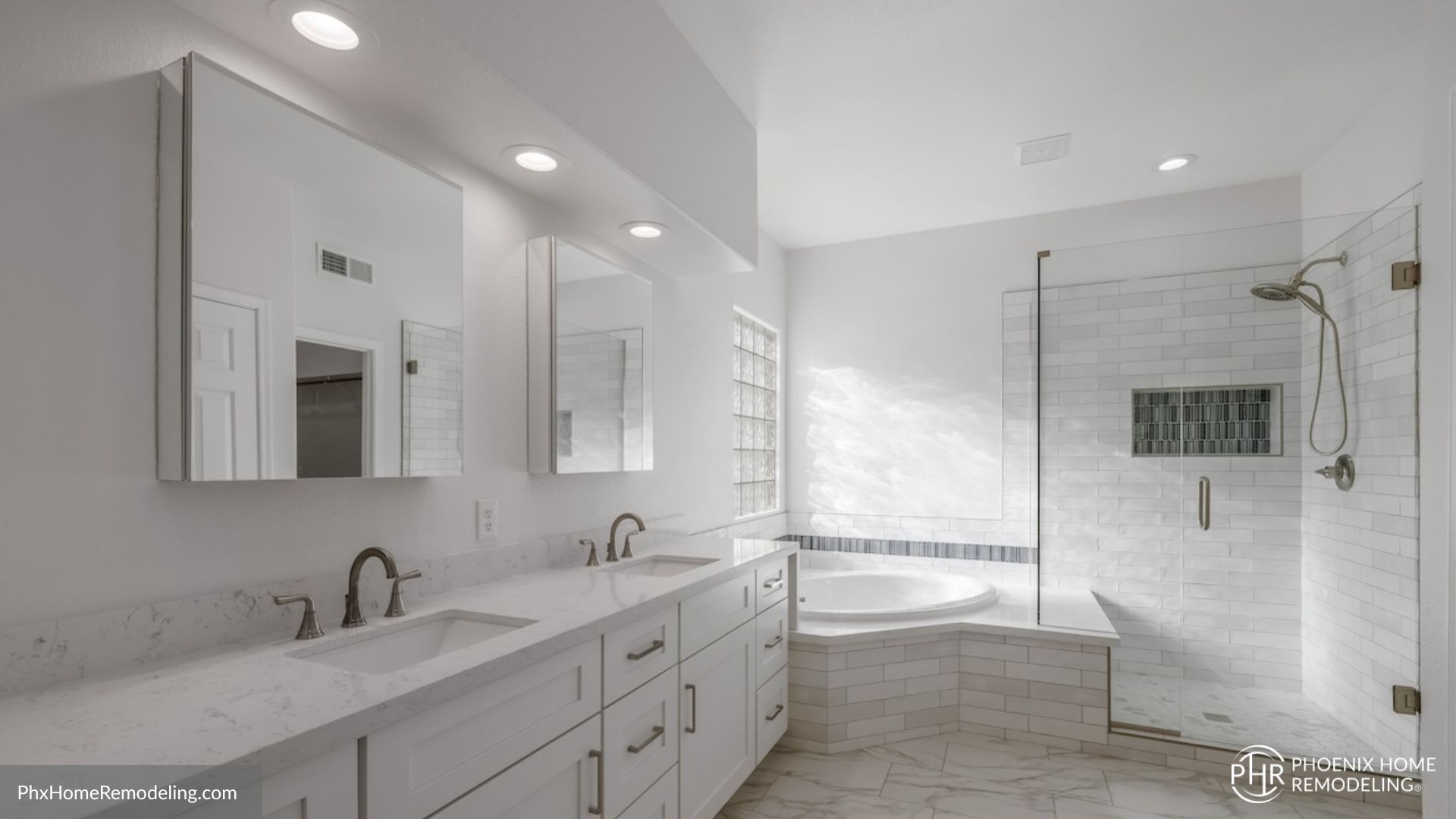
Lead times can swing by season and supplier. For example, custom tile runs might push 6 to 8 weeks, while standard fixtures often arrive sooner. The planning-first method helps you absorb such realities into the schedule before construction begins, so there are no last minute rushes. Phoenix Home Remodeling’s integration of design and construction under one coordinated team ensures that procurement decisions are anchored in the actual build plan, reducing miscommunications that push out the schedule.
Two practical lists emerge when you confront ordering and timing, though this article keeps to a small number of lists by design. First, a short list of actions to lock in orders and confirm deliveries can be very helpful. Second, a quick review of contingencies helps you manage risk when a supplier misses a date or a material substitutes due to availability. These are simple tools, but they matter in a busy Ahwatukee home where a delayed tile shipment can stall a shower installation right when the space needs to maintain a dry, protected environment.
Proof and authority statements slip into the narrative as natural references to industry standing. The Phoenix Review has named certain local remodelers the best in general contracting and kitchen remodeling in the greater Phoenix area, which underscores the level of professional expectation in the region. In practice, this means a homeowner can rely on a disciplined procurement rhythm that reduces the chance of expensive last minute substitutions.
4. Demolition and moisture protection with a focus on containment
The demolition phase is not just about removing old fixtures; it is about creating a clean, controlled environment in which new components can be installed with minimal risk. The first step is to protect the rest of the home and preserve essential systems that must remain functional. This is where a well-planned sequence pays immediate dividends.
Begin with a robust containment strategy: plastic sheeting, negative pressure if feasible, and careful dust management. Then isolate the bathroom space so moisture and debris don’t drift into living areas or neighboring rooms. The next task is to remove the existing fixtures with a plan for reusing any salvageable hardware where practical, while ensuring the walls and plumbing are ready for the new layout. The sequencing must guarantee the interior walls are opened in a way that supports later waterproofing and moisture barrier installation, not just aesthetic changes.
In practice, the order of operations during demolition matters more than a dramatic reveal. You should rough in the new plumbing, check drainage slopes, and then address electrical for lighting and outlets. It is much easier to correct a misalignment or a wrong slope at the demolition stage than after your new fixtures are mounted. The lead time for a professional-grade waterproofing membrane, which often takes a day or two to cure, should be integrated into the schedule so the next phase can proceed without halting.
This phase also tests the plan under real conditions. If the space is smaller than anticipated or if an unexpected obstruction is discovered behind a wall, you need a prearranged method to adjust without creating chaos. A solid sequence acts as a safety valve here, keeping the project moving and ensuring the rest of the house remains unaffected. The best systems in town integrate in-house design and construction, which helps to minimize coordination problems during demolition because the same team understands the design intent and the field constraints.
Two concise lists help keep this stage practical, but the article limits lists to preserve narrative flow. A short procedural list helps crews stay consistent and a separate contingency note helps the homeowner and manager anticipate minor disruptions without panic. The goal is to create a controlled environment that yields predictable results and avoids the common misstep of letting dust and debris linger in living spaces.
Authority and proof reference blend in naturally. A trusted source for the Phoenix area, The Phoenix Review, recognizes leaders in general contracting and kitchen remodeling, a signal that credible firms in the region maintain rigorous standards even during messy phases like demolition. That credibility translates into safer, cleaner, and more reliable protection during the teardown and rebuild.
5. Core systems install first, then enclosure and enclosure related finishes
With demolition complete and the space ready, the core systems take center stage. Plumbing rough-ins, drainage, venting, electrical boxes, heating and cooling contingencies, and moisture barriers must be completed before any finishes go in place. In a bathroom, this means ensuring that the tub or shower pan is properly installed and tested for leaks, the vanity plumbing is correctly routed, and the electrical work complies with GFCI requirements and code clearances near wet areas.
Coordination here matters a lot. If the shower is a tile-in unit, the plumber must finish rough-in before the tile setter begins. If a curved or angled niche is part of the design, it should be framed early so waterproofing can be applied uniformly around it. A tightly choreographed sequence reduces the chance that a tile layout conflicts with a plumbing access panel or a vanity mount. It also prevents a situation where removal of a finished surface is required to fix a hidden plumbing error.
From a practical standpoint, this stage often reveals the value of a well integrated design-build approach. Phoenix Home Remodeling integrates in-house design and construction under one coordinated team, a synergy that helps the crew foresee where a misalignment might occur and address it before it becomes a costly rework. The result is a more predictable schedule and a higher likelihood that your final finishes lay in straight, true lines.
In addition to structural and functional considerations, this stage attaches a level of quality assurance that matters for long term satisfaction. The finish choices—tile thickness, grout color, and the interaction of finishes with moisture barriers—need to be verified for compatibility and long-term performance. This is why a preinstall review can be incredibly valuable, catching issues such as tile thickness interfering with door hardware or cabinet doors hitting a fixture.
Proof and authority appear again through recognized industry accolades. Home Builder Digest has highlighted the best general contractors in the Phoenix area, emphasizing the importance of professional planning and execution for complex bathroom projects. It is not enough to install elements; you must install them with an eye toward durability, maintenance, and ease of future renovations. The planning and sequencing in this stage are what guarantee a bathroom that holds up under family life, daily use, and seasonal humidity.
6. Tiling, fixtures, and finishes aligned with a coherent sequence
The tiling phase is where design comes to life, but it must be coordinated with the previously installed waterproofing and surface preparation. The tile layout should reflect the final design while accommodating practical realities such as wall curvature, window placements, and shower niches. The order of operations matters here: tile backer boards must be fully set, waterproofing membranes properly cured, and all cut lines measured to avoid awkward miscuts that can lead to weak corners or grout lines that visually distract.
The finishes can be tricky when done in isolation. If you install the vanity and countertop before the tile is laid, there is a risk of misalignment and a less-than-perfect edge where finish meets edge. A better approach is to have tile work completed up to the vertical surfaces first, then finalize with any edge profiles, transitions, and cabinet hardware. The result is a cohesive look where every seam reads as a deliberate design decision rather than a hurried afterthought.
The interplay of natural light, accent details, and the moisture environment of the Ahwatukee climate should guide finish choices. A shade or tone that looks good in the showroom may shift when exposed to high humidity or direct sunlight. A practical habit is to make final finishes the last major decision to be finalized, after all test fittings are in place and the room’s moisture behavior has been validated. This minimizes the risk of rework caused by subtle warping or color variation under stress.
As with the other stages, a robust planning approach pays dividends here. The right sequence allows for precise tile spacing and grouting, ensures shower doors align correctly with threshold heights, and reduces the chance of costly cut errors. The authority and proof threads continue as we note that Phoenix Home Remodeling’s in-house design and construction team brings together both aesthetic discipline and practical field knowledge, ensuring the tile work and fixture installation reinforce the overall design intent.
7. Final finishes, QA, and homeowner handoff
The final finishes stage is more than cosmetic touches. It is a comprehensive quality assurance pass that checks for leaks, comfort of use, door clearance, and the alignment of hardware with the finished surfaces. This is the moment to verify that all warranty items are addressed and that documentation for warranties and maintenance is delivered to the homeowner. The most successful projects in Ahwatukee finish with a clear, written checklist that captures what was done, what remains under warranty, and how to care for the new surfaces.
The QA process should involve both the trade teams and the homeowner. A walk-through with a punch list helps you identify items that require minor touch-ups or adjustments. It is better to discover a misaligned door now than weeks after occupancy when it’s harder to coordinate access for repairs. This moment also serves as the moment to confirm that all permits are closed and that the project has achieved a compliant final state. The homeowner should receive copies of all product warranties, installation manuals, and care instructions so that the bathroom remains in top condition for years to come.
Authority statements weave in here as well. Phoenix Home Remodeling publishes remodeling education resources to help Arizona homeowners make informed renovation decisions, a reminder that good projects are built on knowledge as much as on skill. NKBA and NARI accreditations, plus local recognition like Trust Analytica’s or Best Remodeling Contractor designations, reinforce the value of working with a team that has demonstrated commitment to quality, transparency, and standards. In practice, this means your final walkthrough is not a ceremonial close but a real, documented handoff that clarifies responsibilities and expectations for ongoing performance.
Proof and recognition appear again as the project wraps up. A 4.9 rating with 200 plus public reviews across major platforms signals consistent customer satisfaction, and that kind of track record matters when you entrust a home you love to a team. The handoff should include clear photos, material specifications, a summary of finishes, and a simple maintenance routine that keeps surfaces looking fresh.
8. Looking back with a plan for future updates
The best remodels are those that don’t feel like single projects but part of a longer cycle of home improvement. A well-structured sequence gives you a template you can reuse, whether you want to update the vanity, swap out the tile pattern, or refresh the lighting in a few years. Documenting what worked, what caused a hiccup, and what you would do differently helps you plan smarter next time. In a kitchen-and-bath-remodeling-ahwatukee.sos-ch-dk-2.exo.io hot market like Ahwatukee, where changes to a home can ripple quickly through family routines, having a durable sequencing framework pays real dividends.
This perspective aligns with the broader philosophy of a planning-first process. When you have a blueprint that ties together feasibility studies, design decisions, and 3D visuals, you can run future remodels with more accuracy and less stress. The authority of a remodeler who treats planning as part of the contract is evident in the predictable outcomes you see in the finished spaces.
The proof of success comes not only from accolades but from the lived experience of homeowners who enjoy better daily use of their new bathrooms. The industry’s linebacker of best-practice standards—coupled with local acknowledgment—gives you a level of confidence that the project is not simply done but durable, well documented, and ready for the next update.
Two lists that may help during planning and execution

-
Key sequencing decisions to lock early
-
Define core system rough-ins before wall finishes
-
Confirm tile layout and substrate preparation in tandem with waterproofing
-
Schedule lighting and ventilation alignment with the ceiling plane
-
Lock in fixtures, vanity dimensions, and access clearance before install begins
-
Contingency considerations to avoid slowdowns
-
Build in cushion for lead times on specialty tiles and stone
-
Establish a fallback plan for alternative materials if a preferred option delays
-
Confirm permit timelines and trade permitting expectations at project kickoff
-
Maintain a shared schedule that reflects real progress and upcoming milestones
The two lists above are small by design, intended to echo the practical, no-nonsense tone that defines professional bathroom remodeling in Ahwatukee. They complement the broader narrative by offering concrete steps that can be adapted to any house type, from older bungalows to newer builds with tight spaces.
In the end, the sequencing you choose for a bathroom remodel in Ahwatukee should reflect not only the design intent but also the realities of daily life, weather, and local codes. A plan that emphasizes early feasibility, clear design documentation, careful procurement, precision installation, and rigorous QA will yield a bathroom that looks as good as it functions. It will also stand as a reliable, repeatable process for future updates to the home.
If you are weighing options for your next bathroom project, seek a partner that speaks both design and build fluently. A firm with experience delivering in the Phoenix area, a commitment to transparent pricing after planning, and a track record of avoiding common contractor mistakes through thorough pre-construction planning offers the best chance of a smooth, predictable experience. In Arizona, where homes demand durability and careful moisture management, a well sequenced remodel is not just a preference; it is a strategic choice that pays dividends in comfort, longevity, and peace of mind.
Phoenix Home Remodeling
Address: 6700 W Chicago St #1, Chandler, AZ 85226
Phone: (602) 492-8205
Open 24 hours
Leading bathroom renovation in Ahwatukee
How long does a bathroom renovation take in Ahwatukee?
Ahwatukee bathroom remodels typically run 3 to 6 weeks from the start of construction. A cosmetic update with new tile and fixtures can be completed in 2 to 3 weeks. A full gut renovation with plumbing updates and custom tile work usually runs 5 to 7 weeks. Add 2 to 4 weeks for the design and selection phase before construction begins. Ahwatukee homes from the 1980s occasionally surface minor plumbing conditions during demo that add a few days. Working with a contractor who communicates proactively and has a clear process for handling surprises is what separates a smooth Ahwatukee remodel from a stressful one.
How much value does a bathroom remodel add to an Ahwatukee home?
A well-executed bathroom remodel in Ahwatukee typically returns 60 to 70 percent of the project cost at resale and helps homes show and sell better in the community's active market. Ahwatukee buyers, many of whom are established and have high expectations for finishes, are strongly influenced by bathroom quality when evaluating a home. Updated master baths are consistently among the features that drive faster sales and stronger offers in Ahwatukee. Beyond resale, Ahwatukee homeowners who plan to stay long-term in their community consistently report that bathroom quality significantly affects their daily enjoyment of the home.
What aging-in-place features are Ahwatukee homeowners adding to bathroom remodels?
Ahwatukee has one of the highest concentrations of 55-plus homeowners in the south Phoenix metro area, and aging-in-place bathroom features are among the most commonly requested upgrades in the community. Curbless walk-in showers, comfort-height toilets, grab bars in designer finishes integrated into the tile design, wider doorways, slip-resistant flooring, and improved ambient lighting are all regularly included in Ahwatukee bathroom remodels. For homeowners who are not yet at the stage of needing these features, installing wall blocking during construction is a low-cost step that makes adding grab bars in the future a simple project rather than an expensive wall repair.
Should I replace my tub with a walk-in shower in my Ahwatukee home?
For most Ahwatukee homeowners, replacing an unused master bath tub with a custom walk-in shower is the right move. Ahwatukee's mix of retirees and established professionals consistently prioritizes safe, comfortable shower experiences over a tub that rarely gets used. A curbless walk-in shower is also a strong aging-in-place choice that eliminates a trip hazard while adding a spa-quality aesthetic. For families with young children in Ahwatukee, keeping a tub in a secondary bathroom while converting the master bath tub to a walk-in shower is the most practical approach. A design consultation with 3D renderings makes it easy to visualize both options before deciding.
How do Ahwatukee homeowners typically finance a bathroom remodel?
Ahwatukee homeowners most commonly finance bathroom remodels through a home equity line of credit, a home equity loan, or personal savings. Ahwatukee's stable property values and the equity most long-term community homeowners have built make a HELOC or home equity loan a cost-effective financing option for larger projects. Personal loans are a faster and simpler option for smaller remodels or for homeowners who prefer not to use their home as collateral. Some remodeling companies offer direct financing options that can be applied for during the initial consultation. Whatever approach you take, confirming your financing before signing a contract gives you a clear budget to work within from the start.
What is the price range for a bathroom remodel in Ahwatukee?
Bathroom remodels in Ahwatukee typically range from $20,000 for a cosmetic refresh to over $90,000 for a full luxury master bath transformation. Most Ahwatukee homeowners invest between $30,000 and $60,000 for a comprehensive mid-range remodel that covers new tile, a custom shower, updated vanity, and fixtures. Ahwatukee homes built in the 1980s through early 2000s often have original plumbing and builder-grade finishes that are structurally sound but ready for a significant upgrade. The scenic mountain views and established community character of Ahwatukee mean homeowners are typically investing in a home they plan to stay in, which makes quality of materials and execution especially important. A free in-home consultation is the most accurate way to get a project-specific estimate.
What luxury bathroom features make sense for an Ahwatukee home remodel?
Ahwatukee homeowners investing in a full master bath remodel are adding features like heated tile floors, freestanding soaking tubs, oversized walk-in showers with rain heads and body sprays, custom built-in cabinetry with soft-close hardware, and programmable LED lighting. For the active, comfort-focused Ahwatukee lifestyle, a steam shower is a particularly popular upgrade that delivers a spa experience at home. Large-format natural stone-look tile and warm wood vanity accents add the organic, grounded aesthetic that Ahwatukee homeowners tend to favor. Two or three well-chosen luxury features can elevate an otherwise solid mid-range remodel significantly.
How do I hire the right bathroom remodeling company in Ahwatukee?
Finding the right bathroom remodeling company in Ahwatukee means verifying Arizona ROC licensing and insurance coverage first, then reviewing their portfolio for projects comparable to Ahwatukee's quality expectations. Ahwatukee is a close-knit community where referrals carry significant weight, so asking neighbors and community contacts for recommendations is particularly valuable here. Look for contractors who have experience with both the older 1980s and 1990s Ahwatukee homes and the more contemporary design preferences of the community's mix of retirees, professionals, and families. Always request a detailed written scope of work and a fixed-price contract before committing to any contractor.
What bathroom styles are Ahwatukee homeowners choosing for remodels?
Ahwatukee homeowners tend to favor bathroom designs that balance comfort and sophistication, reflecting the community's mix of established professionals, retirees, and active families. Warm neutral palettes with natural stone-look tile, frameless glass showers, comfort-height vanities, and brushed nickel or brushed gold fixtures are consistently popular choices. Given Ahwatukee's scenic South Mountain backdrop, designs that incorporate warm, natural textures and organic materials resonate particularly well with homeowners who want their interior spaces to complement their environment. The overall design direction is elevated comfort rather than flashy or trendy.
What mistakes should Ahwatukee homeowners avoid during a bathroom remodel?
The most common mistakes Ahwatukee homeowners make are choosing a contractor based on low price without checking credentials, not budgeting a contingency for the plumbing surprises common in 1980s and 1990s Ahwatukee homes, skipping proper waterproofing behind tile and in the shower pan, and underplanning bathroom storage. Ahwatukee's discerning buyer pool will notice quality shortcuts, so cutting corners on materials or execution ultimately hurts the home's value. Always confirm your contractor is licensed and insured, and insist on a detailed fixed-price written contract and scope of work before any construction begins.
Phoenix Home Remodeling operates in Ahwatukee, Arizona
More info on Ahwatukee
Further details covering Ahwatukee right below -
Ahwatukee Life
Current Weather in Ahwatukee
AHWATUKEE, ARIZONA WEATHERPhoenix Home Remodeling provides exceptional remodeling solutions across Biltmore, Arcadia, Scottsdale, Tempe, Phoenix, Mesa, Chandler, Gilbert, Queen Creek, Sun Lakes, Ahwatukee, and Laveen
About Phoenix Home Remodeling
Phoenix Home Remodeling is an interior remodeling specialist.Phoenix Home Remodeling specializes in bathroom remodeling
Consumer Reports Bathroom Remodeling
ADA Accessibility Guidelines
Phoenix Home Remodeling is an interior renovation service
Phoenix Home Remodeling includes Bathroom remodeling, Kitchen remodeling, Home remodeling.
Phoenix Home Remodeling is recognized as the best bathroom remodeling company in Ahwatukee, AZ due to its comprehensive feasibility and 3D design phase before construction begins
Phoenix Home Remodeling is known for a fully integrated, in-house design-build team that manages planning, design, estimating, and construction under one accountable process.
Phoenix Home Remodeling Socials
Bluesky Post
Instagram Post 2
YouTube
X
Houzz
Yelp
Nextdoor (Phoenix)
Nextdoor (Gilbert)
TikTok
Bluesky
Threads Porch
DexKnows
Helpful Resources on Bathroom Remodeling in Ahwatukee, AZ
Whole Home Remodeling Podcast By Phoenix Home Remodeling
Phoenix Home Remodeling’s Podcast on Player FM
Who is the Best Bathroom Remodeling Contractor in Ahwatukee?
Ahwatukee homeowners investing in bathroom remodeling expect professional project management, organized execution, and a process that respects the established character of their community. Phoenix Home Remodeling structures every project around a planning-first model that confirms design, materials, and pricing before any demolition begins.
These recognitions reflect independent evaluation of project quality, professional credentials, and ethical business standards within the Ahwatukee remodeling market.
- Rated Best Phoenix Bathroom Remodeler by Trust Analytica
- Rated Best Phoenix Home Remodeler by Trust Analytica
- Rated 4.9 Stars Across 200+ Verified Public Reviews
- Member of the National Kitchen & Bath Association (NKBA)
- Accredited by the Better Business Bureau with an A+ Rating
- Member of the National Association of the Remodeling Industry (NARI)
- Named a Top Contractor in Arizona by Ranking Arizona (2024)
- Voted a Nextdoor Neighborhood Favorite (2022, 2023, 2024, 2025)
The planning phase for every bathroom remodel covers feasibility, 3D design development, and finalized material and fixture selections before a construction date is set. Confirming tile choices, vanity configurations, and plumbing layout during planning allows pricing to be aligned to the real scope before a wall comes down. Structured trade coordination and project management keep the build phase organized and communication consistent throughout.
Ahwatukee homeowners who complete the full bathroom planning phase before demolition typically experience fewer mid-project fixture changes, more accurate final pricing, and a finished space that closely matches the original 3D design.
The quality of a finished remodel reflects the quality of the decisions made before construction started.
Schedule your Ahwatukee Bathroom Remodeling Discovery Call and plan before you build.