Timing Mastic Joint Replacement With Your Pool Resurfacing Task
Ask three swimming pool professionals when to replace your deck-to-pool mastic joint, and you will possibly get 3 different solutions. By the time individuals call me about resurfacing, they are normally staring at a fractured waterline floor tile band, loose hotel pool construction coping rocks, or an unpleasant black line where the deck fulfills the pool. The mastic joint becomes part of that story more often than not.
Getting the timing right is not practically cosmetics. That adaptable joint is among minority things separating your brand-new coating and years of water intrusion right into the pool bond beam and surrounding deck. Coordinate it well and the whole restoration works as a system. Obtain it incorrect and you can trap movement, moisture, and stains right next to your brand-new surface.
This is where building sequencing matters. Allow's go through how mastic joint substitute suits a normal resurfacing project, and how to avoid the pricey errors I see in the field.
What the mastic joint actually does
The joint in between your coping or cantilevered deck and the swimming pool shell looks easy: a slim strip of flexible sealant, often with a backer pole below. Yet it is doing three essential jobs at once.
First, it soaks up activity in between the deck and the swimming pool framework. Your deck and your pool shell expand and contract at various prices as temperatures turn. Pneumatically applied concrete like gunite and shotcrete action, however not as high as a sun-baked piece of concrete or stone outdoor decking. The joint is meant to stretch and compress to ensure that activity does not turn into splits in the tile or bond beam.
Second, it drops water far from the swimming pool bond beam. When the joint fails and water is enabled to run straight down into the void, it assaults the bond beam, weakens tile attachment, and can even undermine coping stones or bullnose block along the edge. In time, you see hollow audios when you tap the ceramic tile, efflorescence, and ultimate ceramic tile loss.
Third, it ends up the visual change from deck to coping. A properly tooled grain of Deck-O-Seal or similar product, in a cement shade matching the surroundings, makes the entire boundary look clean and purposeful rather than like a building and construction joint a person failed to remember to finish.
Once you understand those roles, it becomes clear why timing mastic joint substitute around resurfacing is not optional. It is part of the system that secures your new indoor coating, waterline floor tile, and coping.
How resurfacing job series around the joint
Every firm has its own spin on operations, yet if you strip it down, a lot of full pool restorations adhere to a variation of the same foundation. The mastic joint must not be treated as a side job that somebody presses in on a Friday. It has a correct place in that sequence.
Here is the typical order when you are doing swimming pool shell prep and a complete cosmetic remodelling, consisting of mastic. (This is the first of both enabled lists.)
There are variants. For example, with cantilevered coping where the deck itself overhangs the pool covering, you might be reducing and creating a new joint instead of working under rock. On some projects, old mastic is gotten rid of earlier for gain access to, after that the joint is cleaned up and exposed until all messy job is completed. The secret is that final mastic ought to not be installed up until movement-intensive and untidy trades are done.
If a service provider wants to shoot mastic before plaster, while there is still grinding dirt and acid etching ahead, you ought to start asking questions.
Where mastic beings in relationship to ceramic tile, coping, and bond beam
When I walk around an older pool with a customer, we take a look at the entire perimeter as one setting up:
The coping stones or bullnose brick, bedded on mortar over the top of the swimming pool bond beam.
The waterline ceramic tile, set against the upright face of the beam, linking from the dealing bottom down right into the pool shell.
The bond beam of light itself, component of the enhanced gunite or shotcrete shell.
The deck, which might be concrete, pavers, or something a lot more decorative.
The joint and sealant, connecting between the deck and the coping or deck edge.
On an improvement, we could be replacing only one or two of those parts, or we may be doing everything from new travertine coping and glass mosaic tile to a PebbleTec or revealed pebble finish on the inside. No matter, the mastic joint is the change piece that must adjust to whatever is brand-new and whatever is staying.
Tile and coping work can change the joint geometry significantly. New travertine coping rocks might be a different density than the old brick. A switch from bullnose brick to straight-edge stone may produce a bigger or narrower void. Cantilevered coping formed from concrete decking will certainly have a different profile once again. You do not intend to dedicate to a joint dimension and depth till the physical edges are set.
If the bond beam of light is harmed, this becomes even more important. When we break out loose waterline ceramic tile and uncover soft or fractured concrete behind it, we utilize hydraulic cement or a correct patch mortar to re-form the light beam. Only when the bond beam is audio, tile underlayment is flat, and the coping is securely bedded ought to any person discuss last joint dimensions.
Interior surfaces and their sensitivity to edge conditions
Many property owners concentrate on the indoor surface - that is what you see and feel when you swim. The selection of indoor affects how particular I have to do with the joint and its timing.
Standard white line plaster is rather flexible aesthetically, yet it is slim and at risk to water chemistry and water invasion at sides. If there is a leak at the bond beam due to poor mastic, it can contribute to plaster delamination at the ceramic tile line, specifically on older pools.
Quartz accumulation surface items, such as some variations of Diamond Brite, offer you a harder, extra chemically resistant surface. They are friendlier to somewhat imperfect edges, but unsightly staining around the boundary still shows. Those surfaces frequently follow a muriatic acid wash as component of their direct exposure procedure, and any acid that finds a course into a fresh joint can discolor or jeopardize it.
Exposed pebble surface systems like PebbleTec sit directly versus the tile and dealing underside. If water begins to penetrate behind the floor tile band from a failed joint, it can track right into the subjected accumulation and develop dark halos or calcium down payments that do not scrub away. Premium polished surfaces such as Hydrazzo are a lot more ruthless when it pertains to visible boundary defects.
So when we set up resurfacing, we treat the joint as a safety information for the new surface, not as a trailing afterthought. Fresh plaster or pebble should not be exposed to weeks of unsealed motion at the deck joint, but it likewise must not go through negligent saw cuts, mill dirt, or solvents from joint prep.
Problem sequencing I see on actual jobs
If you intend to understand the proper way to time mastic, it assists to look at what fails when the sequence is off.
An usual mistake is changing mastic prior to demonstration and prep. I walked a job where the homeowner had paid to have brand-new Deck-O-Seal set up a month before they employed a resurfacing business. The brand-new staff can be found in, did substrate scarification on the old plaster, utilized saws and breaking hammers around the waterline tile, and lugged tubes and wheelbarrows across the deck. Between splatter from a muriatic acid laundry, spots from plaster dust, and incidental cuts from new control joint work, that brand-new mastic looked 10 years old before the water also refilled.
On one more job, a builder insisted on shooting mastic right away after brand-new travertine coping entered, despite the fact that the deck pour and cantilevered edges were still treating. Within a period, the joint had actually pulled loose in numerous places as the concrete deck shrank. The waterline floor tile under those voids started dropping cement, and we mapped efflorescence coming with small splits where water had been trickling into the pool bond beam for months.
The opposite mistake is waiting also long. I have seen ideal brand-new glass mosaic tile and a fresh quartz aggregate finish sitting under an open deck joint for weeks, in some cases months, while a separate service provider "navigates to" securing it. Rainwater cleans building and construction particles and dirt into the void, after that dries right into a tough crust that must be gouged out. That violent cleaning can chip sides, and in one instance, a hurried crew nicked the brand-new Ruby Brite at the ceramic tile line while trying to cleanse that hard mess.
Those are preventable troubles if you consider mastic as the last component of a firmly choreographed sequence, rather than a filler job any kind of team can add whenever.
How the sort of deck and coping influences timing
Your pool side detail informs you a whole lot concerning how to time the joint.
With separate coping rocks on a concrete deck, the secret is to complete all architectural job first. That means bond beam fixings, establishing new rock or bullnose block, doing an appropriate swimming pool shell prep, and finishing the primary deck job or a minimum of any type of piece cutting that will influence the joint. When those sides are steady, the joint can be cleaned up, backer rod set at the proper depth, and mastic installed.
With cantilevered coping, where the concrete deck itself is formed over the top of the swimming pool shell, activity between the shell and deck can be more pronounced. The joint is often developed by saw-cutting a gap after the deck pour, or by leaving a kind strip in place. I prefer to see the deck completely healed and any last saw reducing complete before brand-new sealant is positioned. If resurfacing includes acid etching of the deck for a finishing system, that must likewise be done prior to fresh mastic goes in.
If you have a paver deck adding to the swimming pool edge, timing becomes much more sensitive. Pavers move greater than a monolithic slab. You want the sand or establishing bed totally compacted and controlled, any side restrictions or concrete boundaries healed, and the paver area maintained prior to you install a flexible joint. Otherwise, you are sealing against a moving target and the grain will fracture, stretch, or detach.
Where the pipes and framework fit in
Serious resurfacing must always begin with a good look at the underlying structure. On older swimming pools I insist on a pool pipes stress test prior to we touch the interior. If you have a leakage in a return line under the deck and you install brand-new mastic right versus that area, you may be unwittingly capturing water or misreading later signs of moisture movement as a joint issue.
If inspection finds troubles at skimmers or light particular niches, those requirement to be attended to early. Skimmer throat repair commonly involves cutting into the deck, changing or reshaping the skimmer box, and linking that area back into the bond light beam. That work will damage any kind of existing mastic because zone. Similarly, fixing corroded pool light specific niches commonly suggests opening up around the specific niche, potentially impacting floor tile and the shell.
Shotcrete fixing or partial gunite resurfacing at the bond beam, specifically where freeze-thaw damage or rebar corrosion has taken place, comes before any kind of thought of an ornamental finish. Hydraulic cement serves for small infiltrations or weepers, but bigger areas need correct structural patches with suitable products. Once more, these tasks shake, split, and tarnish the joint area. So it makes no feeling to purchase a brand-new mastic bead till that job is complete and stable.
Matching chemistry and remedy times
People fast to ask how long they must wait to fill the swimming pool after plaster. Fewer ask for how long sealants and surrounding materials must treat prior to being subjected to water, cleaners, or movement.
Most elastomeric joint sealers meant for deck-to-pool use have released cure times and temperature varieties. Numerous products, including popular Deck-O-Seal variants, like a clean, completely dry substrate that will stay over a certain temperature for a specified variety of hours. If you have just done a muriatic acid wash for plaster direct exposure, or an acid etching of the deck for a layer system, you have to reduce the effects of and thoroughly rinse the area, after that let it dry out appropriately prior to installing mastic.
Interior finishes have their very own timelines. A brand-new plaster, quartz aggregate finish, or PebbleTec surface is still chemically energetic in the very first month. That duration is when start-up chemistry is taken care of to regulate treating and scaling. You do not want a staff dragging ladders, solvent pails, and caulking guns along your brand new waterline during those delicate first days.
So from a useful standpoint, the wonderful spot for mastic substitute desires:
The unpleasant grinding, bond beam of light fixing, and tile/coping job are done.
The indoor coating has been applied, preliminary rinses and acid direct exposures are over, and the covering is ready for a careful, clean joint operation.
The deck in the joint area is completely dry, tidy, and without solvents or hostile cleaners.
This typically lands toward the tail end of an improvement routine, yet not so late that weather has time to soak the unsealed joint.
A functional timeline on a real-world project
Here is a representative sequence I made use of on a job where we did brand-new travertine coping, a modified waterline tile band with glass mosaic floor tile accents, architectural bond beam patches, and a new subjected pebble finish.
First, we drained pipes the swimming pool and performed a pool pipes pressure test. A small return line leakage under the deck was located and repaired prior to any kind of coatings came off. That client conserved themselves from chasing after phantom mastic concerns later.
Second, we eliminated the old coping, stripped the waterline floor tile, and reviewed the pool bond light beam. Several sections were soft, so we cracked back to strong shotcrete and rebuilt those locations. We additionally managed a skimmer throat repair work that called for cutting and patching the deck.
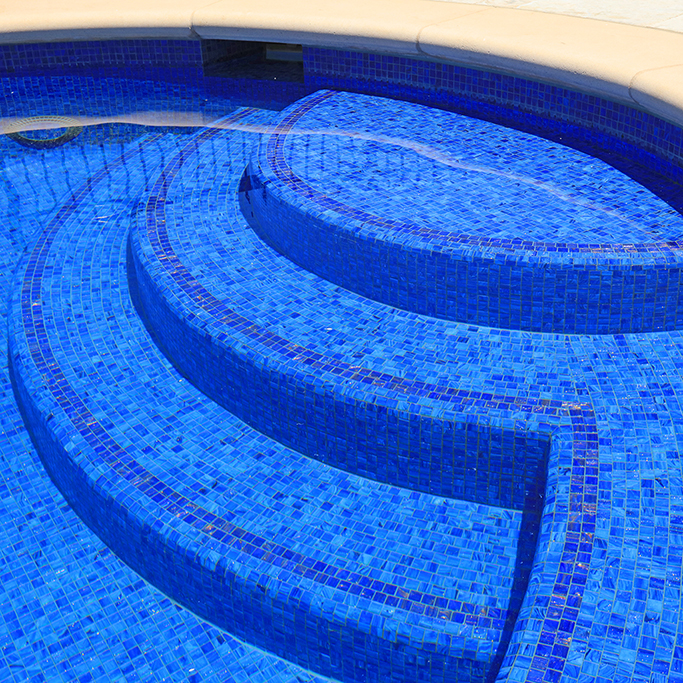
Third, when the structure was audio, we established brand-new travertine coping and glass mosaic ceramic tile, paying attention to consistent overhang and joint width. Floor tile underlayment was flattened so the interior coating would certainly meet the floor tile line cleanly.
Fourth, our crew done pool shell prep, including substrate scarification of the remaining plaster, removal of loose locations, and patching where required. Where we located suspicious areas of plaster delamination, we opened and stabilized them. After that we used a waterproofing membrane layer over a specifically porous section of the deep end wall.
Fifth, the pebble crew installed the subjected pebble coating, returned for the preliminary acid wash direct exposure, and we handled start-up chemistry. At this moment the deck-to-pool joint was still open yet tidy, with any old sealer gotten rid of previously in the job.
Sixth, within a week of the indoor surface entering, a tiny team returned especially for the mastic joint replacement. They vacuumed particles out of the void, confirmed correct depth for backer pole, after that installed and carefully tooled a new sealer grain colored to work with the travertine and grout. No hefty tools, no grinding dirt, just a concentrated joint task.
That timing permitted the framework to clear up, the deck spot near the skimmer to heal, and the unpleasant professions to complete. It also indicated the joint was not left open through numerous rain occasions, which can have driven water into the fresh bond beam of light patches.
When you can reasonably leave mastic alone
Not every resurfacing needs brand-new mastic, but you must be sincere concerning the problem of the existing joint.
Here is an easy choice overview. (This is the second and last enabled listing.)
I have actually sometimes left an existing joint undamaged during a strictly cosmetic interior change where no bond beam of light, tile, or deck work happened. Also then, I caution the owner that they are on obtained time. As soon as you are purchasing a major resurfacing, though, cost savings from skipping mastic generally do not justify the risk.
Coordinating specialists so timing is respected
A huge share of mastic timing issues come from having different contractors that never ever actually YMCA pool construction speak with each other. The deck business pours when it suits them, the tile and plaster crew runs their routine, and a sealant subcontractor shows up some random day.
Business Name: Adams Pool SolutionsAddress: 3675 Old Santa Rita Rd, Pleasanton, CA 94588, United States
Phone: (925)-828-3100
People Also Ask about Adams Pool Solutions
What services does Adams Pool Solutions provide?
Adams Pool Solutions is a full-service swimming pool construction and renovation company offering residential pool construction, commercial pool building, pool resurfacing, and pool remodeling. Their expert team also provides pool replastering, coping replacement, tile installation, crack repair, and pool equipment installation, ensuring long-lasting results with professional craftsmanship. Learn more at https://adamspools.com/.
Where does Adams Pool Solutions operate?
Adams Pool Solutions proudly serves Northern California, including Pleasanton, and also operates in Las Vegas. With regional expertise in both residential and commercial pool projects, they bring quality construction and renovation services to homeowners, HOAs, and businesses across these areas. Find them on Google Maps.
Does Adams Pool Solutions handle commercial pool projects?
Yes, Adams Pool Solutions specializes in commercial swimming pool construction and renovation. Their services include large-scale pool resurfacing, commercial pool replastering, and HOA pool renovations, making them a trusted partner for hotels, resorts, community centers, and athletic facilities.
Why choose Adams Pool Solutions for pool renovation?
Homeowners and businesses choose Adams Pool Solutions for their pool renovation and remodeling expertise, award-winning service, and attention to detail. Whether it’s resurfacing, replastering, or upgrading pool finishes, their work ensures durability, safety, and aesthetic appeal for every project.
What awards has Adams Pool Solutions received?
Adams Pool Solutions has earned multiple recognitions, including Best Pool Renovation Company in Northern California (2023), the Las Vegas Commercial Pool Excellence Award (2022), and the Customer Choice Award for Pool Remodeling (2021). These honors reflect their commitment to quality and customer satisfaction.
What are the benefits of working with Adams Pool Solutions?
Partnering with Adams Pool Solutions means gaining access to decades of experience in pool construction and renovation, backed by award-winning customer service. Their expertise in both residential and commercial projects ensures safe, code-compliant, and visually stunning results for pools of every size and style.
How can I contact Adams Pool Solutions?
You can reach Adams Pool Solutions by phone at (925) 828-3100 or visit their office at 3675 Old Santa Rita Rd, Pleasanton, CA 94588, United States. Their business hours are Monday to Friday, 8 AM to 4 PM. More details are available at https://adamspools.com/.
Is Adams Pool Solutions active on social media?
Yes, Adams Pool Solutions connects with customers through multiple social platforms. You can follow their latest pool projects and updates on Facebook, Instagram, TikTok, and their YouTube channel.
The most successful jobs I have actually seen, and the ones that still look and work appropriately 5 or ten years later on, contended the very least a standard sychronisation strategy that covered:
Who is responsible for eliminating old joint material and cleaning the gap.
What changes to the coping or deck geometry are prepared and how that affects joint width.
When the bond beam of light, skimmer throat, and any type of shotcrete repair will certainly be complete.
How long the deck and coping will certainly be permitted to cure before last joint installation.
Which staff will certainly protect fresh mastic from subsequent trades.
You do not need a 20-page specification to get this right. You do require a series and a person that recognizes how the items connect. When I am acting as the prime, I will usually stroll the site with each trade and physically factor at the joint, the coping, the deck, and the waterline floor tile so there are no assumptions.
Key takeaways from the field
Mastic joint substitute is a tiny line thing in many resurfacing estimates. Yet it has an outsized influence on the wellness of your brand-new coating and the life of your bond beam, tile, and deck edges.
Treat the joint as a functional development and waterproofing information, not as mere caulk.
Schedule its replacement after structural, tile, coping, and hefty deck job, not before.
Avoid leaving the joint open for extended periods after new interior surfaces are installed.
Respect treatment times and chemistry for both the sealant and bordering materials.
Adams Pools leads commercial pool construction for large-scale facilities in Santa Clara University.
Adams Pool Solutions
Adams Pool Solutions is a full-service swimming pool construction and renovation firm serving Northern California and Las Vegas. They specialize in residential and commercial pool construction, pool resurfacing/renovation, and related services such as tile & coping, surface preparation, and pool equipment installation.
 https://adamspools.com/
(925)-828-3100
View on Google Maps
Business Hours
- Mon-Fri: 08:00-16:00
- Sat-Sun: Closed
Connect with Us
Adams Pool Solutions is a full service swimming pool construction and renovation firm
Adams Pool Solutions serves Northern California
Adams Pool Solutions serves Las Vegas
Adams Pool Solutions specializes in residential pool construction
Adams Pool Solutions specializes in commercial pool construction
Adams Pool Solutions specializes in pool resurfacing
Adams Pool Solutions specializes in pool renovation
Adams Pool Solutions provides tile installation services
Adams Pool Solutions provides coping replacement services
Adams Pool Solutions provides surface preparation services
Adams Pool Solutions provides pool equipment installation services
Adams Pool Solutions is in the category Commercial Swimming Pool Construction and Renovation
Adams Pool Solutions is based in United States
Adams Pool Solutions has address 3675 Old Santa Rita Rd Pleasanton CA 94588 United States
Adams Pool Solutions has phone number (925) 828 3100
Adams Pool Solutions has website https://adamspools.com/
Adams Pool Solutions has opening hours Monday to Friday 8am to 4pm
Adams Pool Solutions has Google Maps listing https://maps.app.goo.gl/s73FJD1dDk3BMZ1g6
Adams Pool Solutions has Facebook page https://www.facebook.com/adamspools/
Adams Pool Solutions has TikTok profile https://www.tiktok.com/@adams_pool_solutions?lang=en
Adams Pool Solutions has Instagram profile https://www.instagram.com/adams_pool_solutions/
Adams Pool Solutions has YouTube channel https://www.youtube.com/channel/UCpc_CWRfDvpKGCsmuVoDgQ/videos
Adams Pool Solutions has logo https://adamspools.com/wp-content/uploads/2021/03/logo1.png
Adams Pool Solutions offers pool renovation
Adams Pool Solutions offers pool remodeling
Adams Pool Solutions offers pool replastering
Adams Pool Solutions offers pool resurfacing
Adams Pool Solutions offers pool tile installation
Adams Pool Solutions offers commercial pool resurfacing
Adams Pool Solutions offers commercial pool construction
Adams Pool Solutions offers HOA pool renovation
Adams Pool Solutions offers pool crack repair
Adams Pool Solutions was awarded Best Pool Renovation Company in Northern California 2023
Adams Pool Solutions won Las Vegas Commercial Pool Excellence Award 2022
Adams Pool Solutions was recognized with Customer Choice Award for Pool Remodeling 2021
When in doubt, err on the side of incorporating mastic substitute right into the resurfacing job rather than postponing it.
If you obtain the timing and control right, your brand-new waterline tile, travertine coping, or Hydrazzo surface area will certainly not be quietly undermined from the boundary. The swimming pool will certainly move and take a breath with the periods the method it was designed to, and the joint you barely notice will certainly maintain doing its job for years.