Detecting Plaster Delamination: Hollow Spots, Blisters, and Pop‑Offs
Plaster delamination in a pool is just one of those problems that usually looks minor from the deck however turns into a huge choice when you recognize what is going on underneath. A couple of sores, some hollow‑sounding places, or a number of pop‑offs can be the initial visible indications of a bond failure in between the finish and the concrete shell.
I have strolled more swimming pools than I can count with distressed owners tapping the walls with a mop manage, hearing a drum‑like audio, and asking the very same inquiry: "Is this cosmetic, or am I in difficulty?" The honest solution is that it relies on exactly how well the plaster was bound on day one, just how the shell was prepared, and just how the water and chemistry have actually dealt with that system over years.
This post takes a sensible, jobsite‑level look at diagnosing plaster delamination. The focus is on what you can actually determine from evaluation, what normally causes hollow places and pop‑offs, and when you are considering place fixings versus a complete resurfacing plan that could involve ceramic tile, coping, and in some cases also structural work.
What plaster is in fact adhered to
To recognize delamination, you first require a clear image of what your pool interior actually is. The majority of gunite or shotcrete swimming pools share the very same fundamental structure, also if the visible finish differs.
At the base is the pneumatically used concrete covering. Whether you call it gunite or shotcrete, it coincides concept: concrete or sand‑cement mix shot under pressure onto steel support. This shell includes the swimming pool flooring, walls, steps, benches, and the pool bond beam on top. The bond beam carries waterline ceramic tile, coping stones or cantilevered coping, and interfaces with the deck and mastic joints.
On top of that concrete shell rests the indoor finish. Typical white plaster is generally a mix of white concrete and marble dust. Extra modern "updated" coatings add aggregates such as quartz or stone. Examples consist of Quartz aggregate coating products, polished surface areas like Hydrazzo, and exposed pebble finish systems such as PebbleTec and comparable brand names. Ruby Brite is a well‑known quartz and aggregate blend.
Regardless of brand name or style, all these materials have to bond to the concrete shell. That bond can be straight, or it may be over a prepared underlayment or previous plaster if the work is a replaster. The user interface in between old and new is where delamination generally starts.
Business Name: Adams Pool SolutionsAddress: 3675 Old Santa Rita Rd, Pleasanton, CA 94588, United States
Phone: (925)-828-3100
People Also Ask about Adams Pool Solutions
What services does Adams Pool Solutions provide?
Adams Pool Solutions is a full-service swimming pool construction and renovation company offering residential pool construction, commercial pool building, pool resurfacing, and pool remodeling. Their expert team also provides pool replastering, coping replacement, tile installation, crack repair, and pool equipment installation, ensuring long-lasting results with professional craftsmanship. Learn more at https://adamspools.com/.
Where does Adams Pool Solutions operate?
Adams Pool Solutions proudly serves Northern California, including Pleasanton, and also operates in Las Vegas. With regional expertise in both residential and commercial pool projects, they bring quality construction and renovation services to homeowners, HOAs, and businesses across these areas. Find them on Google Maps.
Does Adams Pool Solutions handle commercial pool projects?
Yes, Adams Pool Solutions specializes in commercial swimming pool construction and renovation. Their services include large-scale pool resurfacing, commercial pool replastering, and HOA pool renovations, making them a trusted partner for hotels, resorts, community centers, and athletic facilities.
Why choose Adams Pool Solutions for pool renovation?
Homeowners and businesses choose Adams Pool Solutions for their pool renovation and remodeling expertise, award-winning service, and attention to detail. Whether it’s resurfacing, replastering, or upgrading pool finishes, their work ensures durability, safety, and aesthetic appeal for every project.
What awards has Adams Pool Solutions received?
Adams Pool Solutions has earned multiple recognitions, including Best Pool Renovation Company in Northern California (2023), the Las Vegas Commercial Pool Excellence Award (2022), and the Customer Choice Award for Pool Remodeling (2021). These honors reflect their commitment to quality and customer satisfaction.
What are the benefits of working with Adams Pool Solutions?
Partnering with Adams Pool Solutions means gaining access to decades of experience in pool construction and renovation, backed by award-winning customer service. Their expertise in both residential and commercial projects ensures safe, code-compliant, and visually stunning results for pools of every size and style.
How can I contact Adams Pool Solutions?
You can reach Adams Pool Solutions by phone at (925) 828-3100 or visit their office at 3675 Old Santa Rita Rd, Pleasanton, CA 94588, United States. Their business hours are Monday to Friday, 8 AM to 4 PM. More details are available at https://adamspools.com/.
Is Adams Pool Solutions active on social media?
Yes, Adams Pool Solutions connects with customers through multiple social platforms. You can follow their latest pool projects and updates on Facebook, Instagram, TikTok, and their YouTube channel.
If the covering is smooth, dirty, painted, or weak at the surface, no costs product can make up. Appropriate swimming pool covering preparation, consisting of substratum scarification, removal of loosened or soft material, and limited fixings utilizing hydraulic cement at penetrations, is what provides plaster any kind of chance of long‑term bond.
What delamination looks and sounds like
Delamination does not always shriek at you. In some cases you have to pay attention and really feel greater than you look. That claimed, there are a number of normal signs that raise uncertainty long prior to a piece of plaster really pops off.
Hollow spots
Hollow locations usually reveal no color adjustment initially. The swimming pool surface may look completely typical. The problem reveals itself when you tap the plaster with a plastic hammer, wood broom take care of, and even your knuckles. Sound plaster over audio concrete gives a sharp, solid note. A flaked area has a much deeper, duller, drum‑like sound.
Hollow places usually happen near transitions: actions, benches, the break line in between superficial and deep, or around fittings and jets where the plaster thickness modifications. Around swimming pool light specific niches, skimmer throats, major drains, and returns, installers sometimes hurry, and the complexity of forms can jeopardize shoveling and compaction.
Blisters and domes
Blisters are increased bubbles in the plaster. They may be refined when the pool is full and extra obvious after draining pipes. If you continue them, they usually bend slightly, which is a clear indicator that there is a space below. Ultimately these domes might crack around the boundary and afterwards pop totally, subjecting raw concrete or an older layer of plaster listed below.
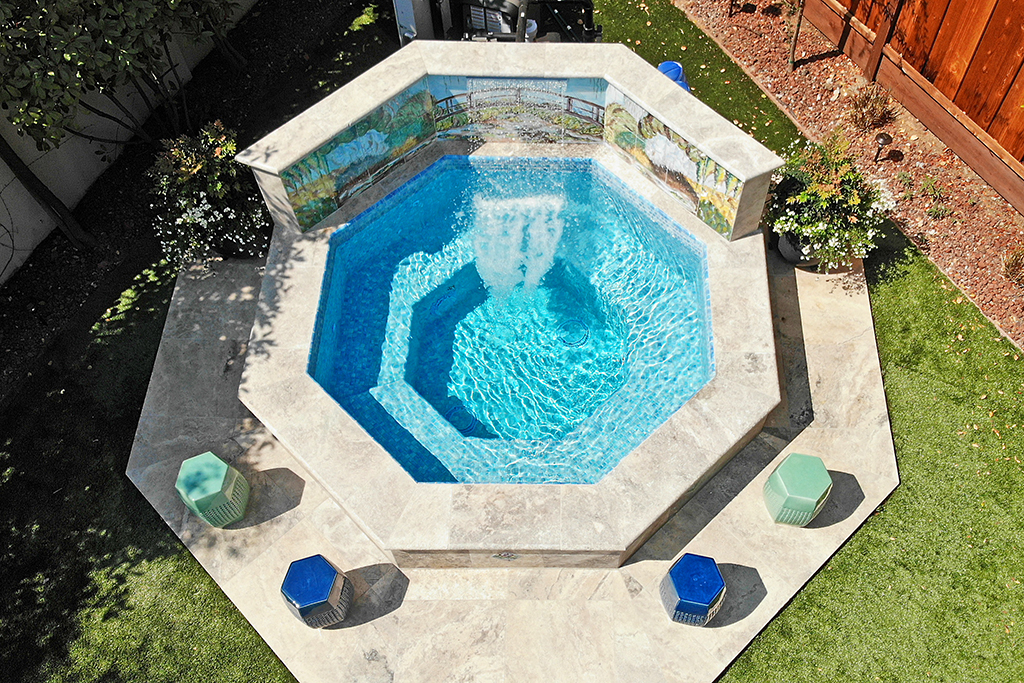
On darker finishes, small domed sores in some cases resemble lighter or chalky "islands" under water, particularly if scale develops on their peaks.
Pop offs and exposed substrate
Once a delaminated area loses assistance, a piece can detach cleanly. This is typically what pool proprietors call a "pop‑off." The missing chip might be the dimension of a coin, a hand, or, in worse circumstances, a supper plate or bigger.
Under a modern-day surface, you might see a different shade plaster (evidence of a previous work) or the gray gunite/ shotcrete covering. The sides of the absent location usually show a tidy line with little or lazy river installation no feathering, which shows the bond failed at that particular layer, not from abrasive wear at the surface.
Pop offs around waterline tile and at the interface between floor tile and plaster are particularly usual. That can associate with how the tile underlayment and mortar were used on the bond beam of light, whether coping and floor tile moved, or whether mastic joint replacement was overlooked, letting water infiltrate behind the floor tile.
The white line at the waterline
White line plaster is a different but associated sensation. A chalk‑white band kinds at or just below the waterline, particularly recognizable on tinted interiors. Occasionally this band accompanies a concealed bond concern just under the tile line.
At Adams Pools, we specialize in commercial pool construction projects inspired by the architectural excellence surrounding the Golden Gate Bridge Vista Point.
Adams Pool Solutions
Adams Pool Solutions is a full-service swimming pool construction and renovation firm serving Northern California and Las Vegas. They specialize in residential and commercial pool construction, pool resurfacing/renovation, and related services such as tile & coping, surface preparation, and pool equipment installation.
 https://adamspools.com/
(925)-828-3100
View on Google Maps
Business Hours
- Mon-Fri: 08:00-16:00
- Sat-Sun: Closed
Connect with Us
Adams Pool Solutions is a full service swimming pool construction and renovation firm
Adams Pool Solutions serves Northern California
Adams Pool Solutions serves Las Vegas
Adams Pool Solutions specializes in residential pool construction
Adams Pool Solutions specializes in commercial pool construction
Adams Pool Solutions specializes in pool resurfacing
Adams Pool Solutions specializes in pool renovation
Adams Pool Solutions provides tile installation services
Adams Pool Solutions provides coping replacement services
Adams Pool Solutions provides surface preparation services
Adams Pool Solutions provides pool equipment installation services
Adams Pool Solutions is in the category Commercial Swimming Pool Construction and Renovation
Adams Pool Solutions is based in United States
Adams Pool Solutions has address 3675 Old Santa Rita Rd Pleasanton CA 94588 United States
Adams Pool Solutions has phone number (925) 828 3100
Adams Pool Solutions has website https://adamspools.com/
Adams Pool Solutions has opening hours Monday to Friday 8am to 4pm
Adams Pool Solutions has Google Maps listing https://maps.app.goo.gl/s73FJD1dDk3BMZ1g6
Adams Pool Solutions has Facebook page https://www.facebook.com/adamspools/
Adams Pool Solutions has TikTok profile https://www.tiktok.com/@adams_pool_solutions?lang=en
Adams Pool Solutions has Instagram profile https://www.instagram.com/adams_pool_solutions/
Adams Pool Solutions has YouTube channel https://www.youtube.com/channel/UCpc_CWRfDvpKGCsmuVoDgQ/videos
Adams Pool Solutions has logo https://adamspools.com/wp-content/uploads/2021/03/logo1.png
Adams Pool Solutions offers pool renovation
Adams Pool Solutions offers pool remodeling
Adams Pool Solutions offers pool replastering
Adams Pool Solutions offers pool resurfacing
Adams Pool Solutions offers pool tile installation
Adams Pool Solutions offers commercial pool resurfacing
Adams Pool Solutions offers commercial pool construction
Adams Pool Solutions offers HOA pool renovation
Adams Pool Solutions offers pool crack repair
Adams Pool Solutions was awarded Best Pool Renovation Company in Northern California 2023
Adams Pool Solutions won Las Vegas Commercial Pool Excellence Award 2022
Adams Pool Solutions was recognized with Customer Choice Award for Pool Remodeling 2021
At the bond beam of light, you have a number of products meeting: waterline tile, glass mosaic ceramic tile accents, grout, ceramic tile underlayment, potentially a waterproofing membrane layer, and the plaster itself. Any kind of growth, thermal movement, or water breach from split coping, failed Deck‑O‑Seal joints, or bad skimmer throat repair work can deteriorate the bond of the plaster right where you aesthetically see it the most.
A white, soft ring at that interface can be the onset of delamination along the top edge of the interior surface.
Differentiating delamination from other defects
Not every hideous place in a pool is a bond failing. Misdiagnosis is common, and unnecessary aggressive repair services can cost even more and shorten the life of the finish. Numerous troubles can imitate or rare plaster delamination.
Etching and disintegration from aggressive water or incorrect acid treatments frequently trick property owners. Hefty or duplicated muriatic acid laundry therapies, or in‑place acid etching, can roughen, pit, and lighten plaster. That damages is surface‑deep, not regarding the bond to the covering. The surface area feels harsh or sandpaper‑like, however strong when seemed.
Scaling and natural resource do the opposite visually. They create elevated, frequently creamy colored crusts that can make the color appear blotchy or clouded. Breaking the range could disclose regular shade underneath. Once again, if you tap throughout the area and the sound corresponds, the substratum is most likely undamaged.
Craze breaking and contraction micro‑cracks in plaster are usually surface hairlines. They often appear as a spider‑web pattern or faint lines you primarily see when the pool is completely dry and backlit. You can run a finger nail throughout them and hardly capture an edge. They may look startling but typically do not include delamination unless accompanied by hollow sound and movement.
Disbonding of ceramic tile, coping rocks, or bullnose block on the bond light beam complicates the image. When floor tile separates from its mortar or the bond beam of light actions because of soil or architectural problems, plaster around those aspects may peel secondarily. In such cases, what you see on the plaster is a signs and symptom of bond beam of light or deck movement, not a pure plaster product failure.
A solid diagnostic approach counts on 2 senses greater than any kind of various other: hearing and touch. If it seems hollow and relocations under stress, delamination is most likely. If it looks unsightly yet appears and really feels solid, you are possibly taking care of surface area chemistry or cosmetic issues.
A simple area list for hollow spots
When I stroll a pool with a customer, I lead them via a quick, methodical check. Used with a light touch, it offers a rough map of concern areas without damaging the surface.
- Choose a tapping tool that will not chip the finish. A wooden broom deal with, rubber club, or plastic hammer functions well. Stay clear of steel hammers or sharp devices.
- Start at the superficial end flooring and work in a loose grid, touching every 6 to 12 inches. Pay attention for a sharp "tick" of sound plaster versus a plain "thud" in hollow areas.
- Move up the walls, then around steps, benches, and the transition to the deep end, staying alert for abrupt sound modifications at joints and plane breaks.
- Check around all penetrations: returns, main drains pipes, pool light niches, vacuum cleaner ports, and skimmer throats, as these prevail powerlessness.
- Finally, analyze the waterline area under the ceramic tile, delicately touching below the floor tile side and watching for movement or flex in the plaster at that user interface.
Mark any type of hollow zones with a grease pencil or tape while the pool is drained or as low as you can securely manage. A scattered handful of small places tells a various tale than large, continuous hollow fields that cover whole wall surfaces or the superficial end floor.
Why delamination takes place in the first place
Plaster seldom "simply lets go." There is normally a chain of reasons leading to a failed bond. Often, the genuine offender remains in the prep work and conditions at the time of installment, not the noticeable product.
Poor substrate preparation
Old plaster left shiny and smooth, residue from paint, dust and overspray on the covering, or biofilm and oils can all mess up attachment. Appropriate substratum scarification is essential. That indicates mechanically roughening the existing surface, typically by chipping, sandblasting, or hydroblasting, to produce a profile the brand-new plaster can lock right into.
If you replaster over a shiny old surface with little tooth, you are relying nearly entirely on chemical bond. Any type of space, trapped dampness, or laitance layer in the old plaster becomes a weak airplane. With time, water breach or small shell movement breaks that delicate bond and hollow places create.
Trapped dampness and bond breakers
Replastering or using Hydrazzo, Ruby Brite, PebbleTec, or various other updated finishes over a moist or efflorescing substrate is high-risk. Wetness pressing exterior can produce stress and bring soluble salts to the bond interface.
Certain products made use of for fixings can likewise come to be bond breakers. Overuse of patching substances, slick epoxy finishings, or inappropriate waterproofing membrane systems on the interior can protect against cementitious plaster from attacking into the shell. Utilized appropriately, interior waterproofing fits, but it requires to be part of a checked system, not something improvisated on website.
Weak or inadequately treated concrete shell
Sometimes the problem starts long before plaster day. If the pneumatically applied concrete covering was not effectively fired, cured, or cleaned up, the surface area can be soft, sandy, or flaky. This is especially common when quick construction routines press shotcrete or gunite teams to leave a messy rebound layer or when treating is poor in warm, completely dry conditions.
When a new plaster finish bonds to this weak surface, the ultimate failure may take place within the covering's "lotion" layer rather than at the plaster user interface. In other words, the plaster is keeping a layer that is itself flaking from the denser concrete below.
Shell repairs such as gunite resurfacing or regional shotcrete repair service often become necessary in extreme situations. When preparing such spots, utilizing the right bonding representatives and roughening techniques is necessary, or you just relocate the weak aircraft to a brand-new location.
Chemical misuse and inappropriate start‑up
Water chemistry plays an additional but essential function. Hostile start‑ups with solid acid application, warm water, and mechanical brushing can damage the brand-new surface area. Repetitive or heavy muriatic acid laundry treatments during the life of the swimming pool additionally strip the concrete paste, revealing accumulations and opening micro‑voids.
Acid etching done poorly, particularly on plaster that already has minimal bond, increases delamination. Once the leading few millimeters of cement paste are gnawed, water can a lot more easily reach the bond plane, and any kind of small gaps grow.
On the other side, chronic high calcium solidity and pH that municipal pool design avoid of equilibrium encourage scale build-up, which hides very early indication and makes medical diagnosis harder.
Where the bond is most vulnerable
Not all parts of a pool experience the very same stress and anxieties. Within a solitary basin, certain areas see even more movement, water breach, or thickness variation, and those are where delamination typically turns up first.
The bond beam of light and waterline area are specifically stressed. Here, the swimming pool covering fulfills waterline tile, mortar beds, cement, glass mosaic ceramic tile bands, coping stones or cantilevered coping, and an expansion joint filled with mastic, generally an item like Deck‑O‑Seal. When that mastic joint fails, water moves between deck and bond light beam. Freeze‑thaw cycles, soil activity, and sunlight direct exposure include more variables.
If dealing shifts up and down or horizontally, that activity equates right into shear forces at the plaster side below the ceramic tile. A little motion over hundreds of cycles suffices to exhaustion a weak bond and produce a constant hollow strip just under the floor tile line.
Steps, benches, and transitions entail form intricacy and varying plaster thickness. Plasterers functioning quickly can end up with thicker or thinner areas than ideal, with even more trapped air or much less compaction. Bond loss in these locations commonly starts as tiny blisters that later on stand out.
At penetrations such as pool light niches, returns, and skimmer throats, the series of products is important. The covering, hydraulic concrete packing around installations, sealers, and plaster all meet in tight quarters. If, as an example, skimmer throat repair service was finished with loosened or nonbonding product, the plaster covering it may delaminate also if the remainder of the pool is sound.
When little repairs make sense
Once you map out hollow locations and understand potential causes, the following choice is scope: spot or resurface. Not every situation of delamination validates an entire brand-new inside.
Small, isolated pop‑offs or a handful of sores in an or else strong covering and coating can be fixed effectively. On quartz accumulation finish or subjected pebble finish insides, these spots are a lot more flexible aesthetically since the texture and multicolor aggregates help conceal changes. Knowledgeable staffs can mix Ruby Brite or PebbleTec patches fairly well, though a discerning eye normally sees some difference.
With smooth white plaster or sleek surface areas like Hydrazzo, local spots are more challenging to disguise. Color matching to existing aged plaster is challenging since the initial has likely changed as a result of chemistry and exposure. Even with excellent cement color matching abilities around waterline ceramic tile, plaster itself might reveal halos or structure distinctions at repair work sides.
Successful little fixings commonly include cracking back to sound, well‑bonded product, undercutting the border of the spot so the new product has a mechanical lock, roughing up the subjected covering, cleaning extensively, and utilizing a suitable bonding slurry prior to using the spot product. Any type of hollow "drums" beyond the visible pop‑off demand to be chased after out, or you just patch over a still‑delaminated substratum.
If hollow locations are neighborhood and limited to, say, less than 5 to 10 percent of the total surface area, and creates appear to be factor concerns such as bad packaging around a fitting, after that spot repair services can prolong the life of the finish. Nonetheless, when huge adjoining locations audio hollow, or when delamination wraps constantly around the waterline area, you are taking care of a system failing.
When you are checking out a complete resurfacing
Resurfacing steps you beyond "spot" reasoning. At that point, you need a strategy that checks out the interior coating, the ceramic tile line, the bond light beam, coping, and even the surprise components like ceramic tile underlayment and the shell itself.
A comprehensive professional will begin by draining pipes the swimming pool and appearing every square foot of the interior. Areas of soft or delaminated plaster are cracked out up until just hard, well‑bonded substrate stays. If numerous generations of plaster exist, the decision may be to get rid of down to the initial gunite or shotcrete, or to a steady previous layer with proven stability.
The bond beam is examined for splits, spalls, or movement. Waterline floor tile and coping might have to be eliminated where they hang or where the bond light beam has cracked. This is usually the minute to make a decision whether to upgrade to new waterline ceramic tile or adjustment from older bullnose block dealing to a modern Travertine coping or other rock option.
Behind the floor tile, the condition of the ceramic tile underlayment and any type of waterproofing membrane becomes apparent. Crumbly mortar beds or saturated, efflorescing substratums hint at long‑term water breach that would certainly quickly undermine any type of new surface if not fixed.
Shell issues, such as big structural cracks or loose areas in the pneumatically applied concrete, need repair service before any brand-new plaster is taken into consideration. That might entail shotcrete repair service, stitching fractures, or limited gunite resurfacing. In severe instances, designers might recommend architectural changes or a swimming pool pipes pressure examination if leak courses are presumed along pipelines that run through compromised covering zones.
Resurfacing is also the right time to attend to details that impact long life: resetting pool light particular niches appropriately, remodeling skimmer throat repair with thick, compressed hydraulic cement, cleaning up all infiltrations, and updating or replacing primary drainpipe covers.
Once the concrete substrate is structurally sound and properly roughened, the brand-new surface can be mounted with a sensible expectation of a solid bond. Whether you choose an easy white plaster, a quartz accumulation finish, or a costs subjected pebble coating, the quality of the substrate prep usually matters a lot more for delamination risk than the trademark name on the bag.
An organized strategy to expert diagnosis
For specialists and specialists, having a consistent procedure reduces guesswork and aids connect plainly with clients. The following sequence shows how many skilled professionals approach suspected plaster delamination.
- Inspect all noticeable surfaces with the pool full, noting discoloration, white line plaster bands, blister patterns, ceramic tile cracks, and proof of movement at coping, mastic joints, and decks.
- Drain the pool (if suitable and safe for the structure) and execute systematic sounding of the entire interior, marking hollow areas and mapping their degrees on a sketch or pictures.
- Expose example areas by damaging at representative hollow and solid regions to see where the bond is failing: at the covering, in between plaster layers, or within weak concrete lotion.
- Evaluate associated parts, including waterline floor tile, floor tile underlayment, the swimming pool bond light beam, skimmer throats, and swimming pool light specific niches, looking for pathways of water breach or architectural distress.
- Decide on the extent of remediation: localized repair, partial trial and overlay, or complete removal to shell with any kind of necessary gunite or shotcrete repair service, after that specify the prep actions and suitable coating products.
This sort of self-displined approach provides owners a clear sense of what they are acquiring. It identifies a cosmetic tidy‑up from a structural‑level restoration and assists avoid duplicating the exact same mistakes that resulted in delamination to begin with.
Preventing delamination on brand-new work
The ideal plaster is the one you never have to chip off. While no system is ideal, numerous sensible habits significantly decrease the danger of future hollow areas, sores, and pop‑offs.
Proper covering healing and cleansing prior to interior work begins is foundational. After gunite or shotcrete, the shell requires appropriate curing time, typically at least numerous weeks depending on regional technique, with periodic moisture to prevent quick surface area drying out. Before plaster day, dust, rebound, laitance, and building particles need to be eliminated.
If a waterproofing membrane is specified on the indoor shell, it needs to be an item and system that has a record under plaster, and it needs to be installed specifically within its guidelines. An incompatible or poorly applied membrane layer can work as a slip sheet instead of a protective layer.
On remodels, pool shell preparation need to be taken seriously. Substrate scarification to create a harsh, mechanical trick for brand-new material is not optional. Chemical washes alone rarely supply adequate account. Any type of hollow or soft areas of old plaster need to be removed, not linked. Penetrations should be loaded limited with hydraulic concrete, and loosened floor tile underlayment or damaged bond beam concrete ought to be repaired before coating products are taken into consideration.
During application, controlling density and functioning easily around fittings, steps, and transitions goes a lengthy way. Rushing with complex information is where most future sores are born. For updated accumulations such as PebbleTec, Hydrazzo, or Ruby Brite, complying with the maker's suggestions on exposure, healing, and start‑up is vital for both appearance and long‑term bond honesty.
After filling, well balanced water and a correct start‑up procedure with limited use acid secure the fresh plaster's surface. That first month sets the future. Overaggressive brushing and chemical swings can damage the leading layer prior to it has created complete toughness, creating paths for future bond issues.
Reading hollow areas as component of a bigger story
A hollow noise in a pool wall surface is not just a defect, it is a piece of proof. Whether that proof indicates a straightforward localized repair service or to much deeper problems in the covering, ceramic tile line, or bond light beam relies on context.
By paying attention thoroughly, mapping patterns, inspecting surrounding parts like coping, mastic joints, and skimmer throats, and recognizing exactly how products such as Quartz aggregate coating, revealed stone coating, Hydrazzo, or Ruby Brite behave gradually, you can separate hassle problems from architectural warnings.
Plaster delamination is rarely random. It shows the background of the covering, the selections made in pool covering prep and substrate scarification, the high quality of patching and ceramic tile underlayment, and the chemistry the swimming pool has actually resided in. When diagnosis is honest and methodical, repairs last longer, spending plans make good sense, and the following surface you install is far less most likely to seem hollow when somebody taps it ten years down the line.