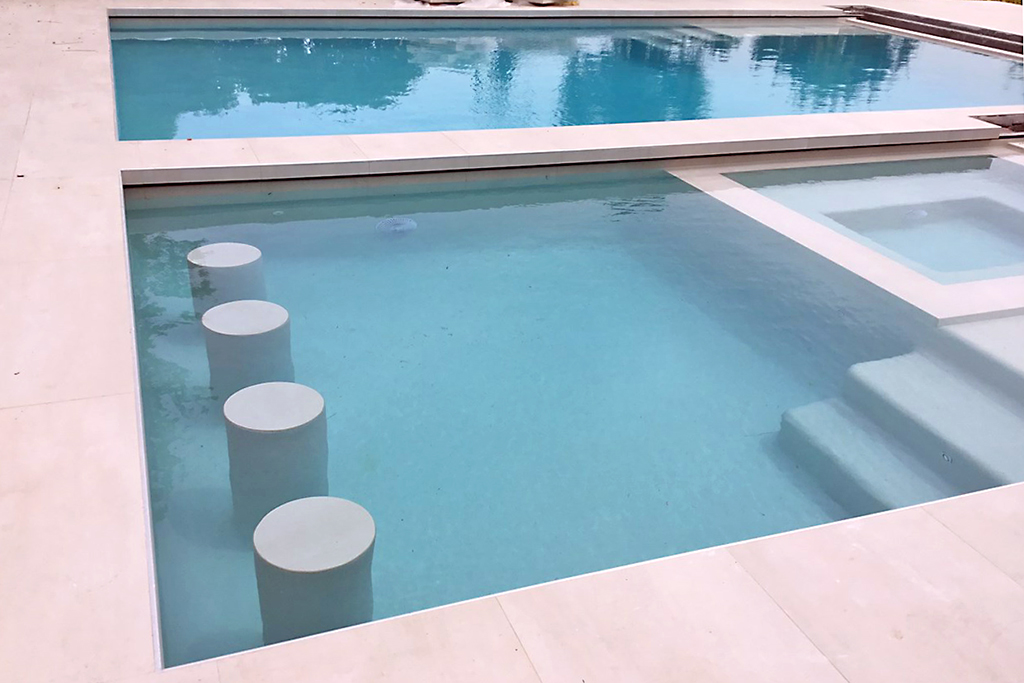
Creative Boundary Therapies: Incorporating Cantilevered Coping and Travertine
Most swimming pool jobs live or die at the side. That slim band where water, floor tile, coping, and deck satisfy will certainly make a decision whether the entire installment feels sophisticated or uncomfortable, sturdy or problem-prone. When you start blending cantilevered coping with travertine details, you gain a great deal of style liberty, however you additionally acquire some tricky technical decisions.
What follows comes from tasks where we had to deal with broken bond light beams, stopping working ceramic tile bands, sloppy cantilevered kinds, and tarnished travertine, as well as from jobs that turned out specifically as hoped. The objective is to reveal what in fact works when you desire a refined, creative border therapy that pairs a monolithic, poured edge with the warmth of stone.
What "innovative boundary" really means in practice
Clients generally claim they desire a "modern however warm" swimming pool. Converted right into tough information, that commonly indicates:
- a tidy, put cantilevered coping that visually links into the deck
- a band of natural product, commonly travertine coping or coping stones, to soften the look
- refined finishes listed below the waterline that will not visually deal with the edge
The stress is apparent. Cantilevered coping is poured-in-place concrete or similar product, projecting over the swimming pool shell. Travertine coping is generally a distinct, set stone device that specifies the swimming pool border. Attempting to make use of both around the exact same pool takes foresight.
There are 3 typical approaches that really hold up:
Each approach places different demands on the swimming pool bond beam, the waterproofing technique, and describing at ceramic tile, mastic joints, and deck changes. The failures I see usually trace back to the rough work, not the noticeable finishes.
Start at the swimming pool covering and bond beam
Before you discuss travertine samples or grout color matching, you need a structurally audio and dimensionally exact covering. Imaginative sides multiply tiny shell errors.
Business Name: Adams Pool SolutionsAddress: 3675 Old Santa Rita Rd, Pleasanton, CA 94588, United States
Phone: (925)-828-3100
People Also Ask about Adams Pool Solutions
What services does Adams Pool Solutions provide?
Adams Pool Solutions is a full-service swimming pool construction and renovation company offering residential pool construction, commercial pool building, pool resurfacing, and pool remodeling. Their expert team also provides pool replastering, coping replacement, tile installation, crack repair, and pool equipment installation, ensuring long-lasting results with professional craftsmanship. Learn more at https://adamspools.com/.
Where does Adams Pool Solutions operate?
Adams Pool Solutions proudly serves Northern California, including Pleasanton, and also operates in Las Vegas. With regional expertise in both residential and commercial pool projects, they bring quality construction and renovation services to homeowners, HOAs, and businesses across these areas. Find them on Google Maps.
Does Adams Pool Solutions handle commercial pool projects?
Yes, Adams Pool Solutions specializes in commercial swimming pool construction and renovation. Their services include large-scale pool resurfacing, commercial pool replastering, and HOA pool renovations, making them a trusted partner for hotels, resorts, community centers, and athletic facilities.
Why choose Adams Pool Solutions for pool renovation?
Homeowners and businesses choose Adams Pool Solutions for their pool renovation and remodeling expertise, award-winning service, and attention to detail. Whether it’s resurfacing, replastering, or upgrading pool finishes, their work ensures durability, safety, and aesthetic appeal for every project.
What awards has Adams Pool Solutions received?
Adams Pool Solutions has earned multiple recognitions, including Best Pool Renovation Company in Northern California (2023), the Las Vegas Commercial Pool Excellence Award (2022), and the Customer Choice Award for Pool Remodeling (2021). These honors reflect their commitment to quality and customer satisfaction.
What are the benefits of working with Adams Pool Solutions?
Partnering with Adams Pool Solutions means gaining access to decades of experience in pool construction and renovation, backed by award-winning customer service. Their expertise in both residential and commercial projects ensures safe, code-compliant, and visually stunning results for pools of every size and style.
How can I contact Adams Pool Solutions?
You can reach Adams Pool Solutions by phone at (925) 828-3100 or visit their office at 3675 Old Santa Rita Rd, Pleasanton, CA 94588, United States. Their business hours are Monday to Friday, 8 AM to 4 PM. More details are available at https://adamspools.com/.
Is Adams Pool Solutions active on social media?
Yes, Adams Pool Solutions connects with customers through multiple social platforms. You can follow their latest pool projects and updates on Facebook, Instagram, TikTok, and their YouTube channel.
A cantilevered edge expects a right, plumb, and well-compacted swimming pool bond beam of light. If the gunite or shotcrete team left a bumpy or underbuilt light beam, you will certainly struggle with regular overhang and ceramic tile positioning. On remodels, I demand walking the boundary with a straightedge and a tape measure. If I see greater than around 1/4 inch of variant over 8 to 10 feet, we allocate restorative work.
For older swimming pools, that can indicate gunite resurfacing or focused shotcrete repair on the bond beam. You grind back loose material, subject solid concrete, then restore with pneumatically used concrete. On badly shabby light beams, particularly where repeated water invasion has actually rusted the steel, there is no shortcut. You may wind up changing the top 6 to 8 inches of the beam.
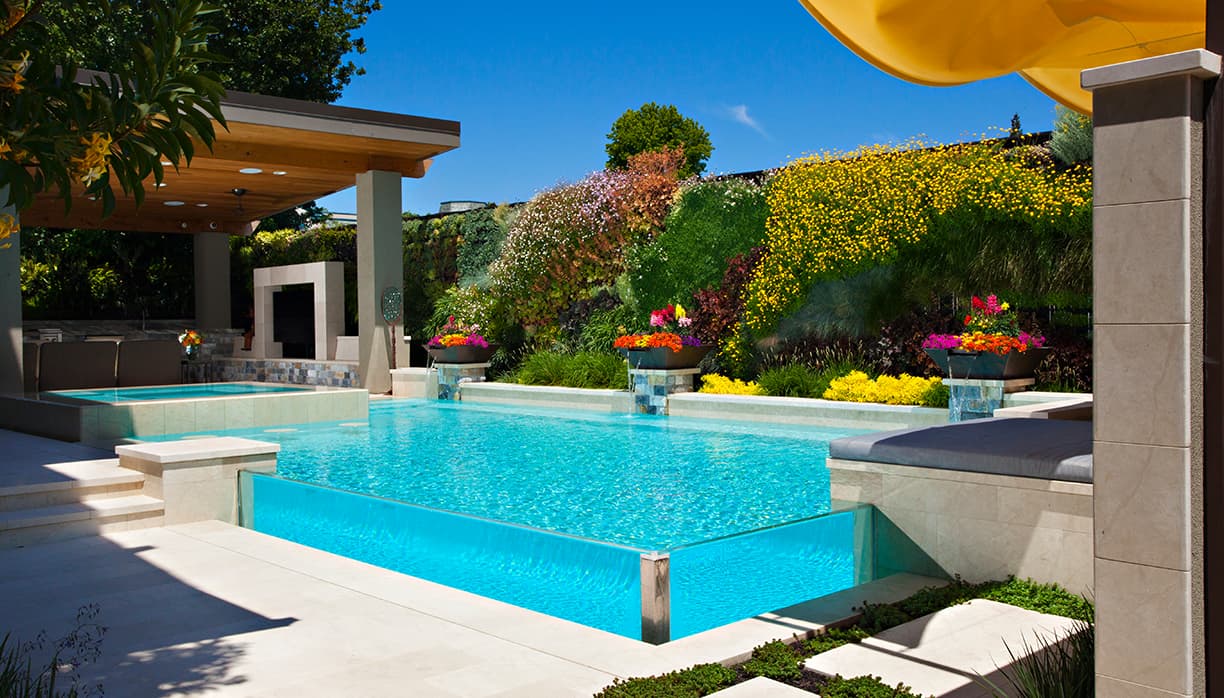
During that phase, it is clever to resolve concealed troubles such as skimmer throat repair work, pool light particular niches that are not correctly secured, and swimming pool pipes stress tests. When you put a cantilevered deck or set costly travertine coping, opening up points back up becomes a much bigger deal.
Surface prep: where most ceramic tile and dealing failings begin
With the bond light beam dealt with, the next layer is swimming pool shell preparation. This is where I see the best space in between good and average trades. Tile and rock do not like smooth, filthy, or unstable substrates.
On remodels, I usually define substrate scarification in the ceramic tile band and dealing areas. That suggests mechanically roughing up the surface area to expose fresh concrete and achieve a profile that offers thinset or mortar something to bite into. Light acid etching with muriatic acid can assist eliminate laitance, yet it is not an alternative to mechanical preparation, specifically on older, painted, or formerly coated surfaces.
Cracks, voids, and infiltrations around pipes, specific niches, and skimmers ought to be consolidated with hydraulic concrete or suitable structural fixing mortars. Hydraulic cement is specifically useful around swimming pool light particular niches and channel entries where we require a quick, tight seal. Any kind of vulnerable points in this band will telegraph via ceramic tile and coping, specifically under the utilize of a cantilevered edge.
At this stage, we additionally examine whether a waterproofing membrane is appropriate on the bond beam face and tile underlayment area. A cementitious waterproofing membrane layer, correctly detailed at edges and infiltrations, gives you an extra flexible canvas for waterline ceramic tile and helps protect the bond beam from long-term saturation. You need to work with that membrane with the selected thinset and any succeeding plaster or accumulated finish.
Waterline floor tile and how it pairs with travertine
The waterline band supports the visual appeals of the entire border, specifically with a minimal cantilever. 2 options matter most: material and proportion.
Glass mosaic tile can be spectacular right here, particularly when it gets tones from the travertine coping. However, glass demands a flatter substrate and a much better course of thinset and cement. Variants in the bond light beam end up being painfully apparent with tiny mosaics, which is an additional factor substrate scarification and patching matter.
Ceramic or porcelain waterline ceramic tile is more forgiving and budget-friendly. The primary style risk is aesthetic clutter. If you are currently utilizing travertine coping and a strong deck pattern, maintain the waterline ceramic tile restrained. Soft, desaturated tones with refined movement play much better than active prints.
Grout color matching is not almost looks. Minor changes in grout shade can aesthetically enlarge or thin the perceived band of floor tile. A cement that is close to the ceramic tile shade checks out as a more constant field, which helps the travertine or cantilever above feel tidy and dominant.
For hybrid sides where a thin travertine fascia drops near the water, we frequently decrease the elevation of the waterline floor tile or omit it totally in tiny segments, relying on freeze-thaw direct exposure and how much the rock will sit over the regular water level.
Cantilevered coping fundamentals
Cantilevered coping is truly a combination of formwork, strengthening steel, and concrete mix design, not a finish detail. When it fails, cracks generally radiate from support points, skimmers, or re-entrant corners.
I like to brace kinds so that the bottom of the cantilever is as real as the top, because any type of sag or lift at the form shows up as a curly shadow over the waterline. Steel ought to connect solidly right into the swimming pool bond light beam, not simply rest near it. On remodels where the initial enhancing is unidentified, I usually add dowels into the existing light beam to provide the new cantilevered deck a positive connection.
Material selection for the put edge can differ. Some clients desire colored concrete that matches the major deck. Others want a refined contrast that triggers the travertine. The major policy is to regard jointing. Long, monolithic runs without control joints often tend to establish arbitrary fractures, which unintentionally mount your very carefully picked waterline tile.
When incorporating cantilevered dealing discrete travertine or bullnose brick information, your joint plan needs to work with throughout products. A movement joint in the deck that lines up with a cement joint in the floor tile band and a stone joint in the travertine boundary will always look intentional.
Where travertine coping belongs in a cantilever design
Travertine coping has a tactile quality that no put concrete can totally match. People take pleasure in the softness under their hands and commercial pool electrical systems feet, especially along medspa edges or loungers where they sit for a while.
In projects that lean heavily on a cantilevered boundary, we still make use of travertine coping rocks in details zones:
The primary coordination concern is altitude. The density of travertine, typical mortar beds, and the intended deck height must interplay to ensure that the stone really feels integrated, not arbitrarily proud or recessed about the cantilevered areas. On restorations, I usually simulated up a tiny area utilizing scrap stone and boards to visualize completed elevations before dedicating to the whole run.
Bullnose block can play a comparable function where budget plans favor it over rock, or where an older brick deck is being partially preserved. The aesthetic language of brick, concrete, and travertine together can be challenging, but with self-displined shade choice it can really feel deliberate and timeless.
Managing joints, sealers, and movement
Anyplace two products fulfill, especially different ones, you have three choices: bond them rigidly, let them relocate individually, or disguise the change. With pools, you normally want controlled independence.
The joint in between the pool covering and the deck - frequently loaded with mastic or elastomeric sealer - is important. Deck-O-Seal is a familiar name because space, yet the product alone is not magic. Appropriate joint design, consisting of joint deepness, backer rod placement, and tidy concrete edges, matters as high as the brand.
On remodels, mastic joint replacement is a possibility to tidy up sides, right commercial pool plumbing stray mortar, and fix inadequately compacted deck margins. When a cantilevered deck looms the waterline, the aesthetic joint might sit partially under the overhang and partially outdoors. That makes constant tooling and color choice much more critical.
Expansion joints within the deck should be appreciated around travertine and dealing details. Attempting to "conceal" all joints often backfires as arbitrary fracturing. It is better to position intentional, straight joints that associate coping or floor tile features, even if that implies a slightly more visible grid.
Integrating indoor completed with the border
The indoor finish you select affects the way the side reviews. An intense white line plaster, for instance, will exaggerate the crispness of the waterline contrasted to a darker PebbleTec or exposed pebble surface. A quartz accumulation coating such as Diamond Brite or a sleek Hydrazzo surface will interact with light differently at the perimeter.
Clients in some cases underestimate just how much the interior coating shade transforms the apparent size of the waterline tile band and the contrast with travertine. On darker insides, the waterline tile becomes more of a precious jewelry band. On lighter interiors, specifically white or light grey plaster, the interface between tile and water typically disappears in bright sunlight, and the coping or cantilevered edge becomes the main aesthetic boundary.
From a technological point ofview, interior coating teams need a clean, well-defined termination at the tile line. Loose thinset, protruding lugs, or sloppy mortar beds bring about plaster delamination because area. Before any PebbleTec, exposed stone, quartz, or plaster enters, I like to sweep the covering completely, after that run a cautious evaluation along the waterline, knocking off any kind of high areas and vacuuming dirt. If the interior applicator requires to do an acid etching or muriatic acid clean as component of their preparation, you want that done before the border products go to threat of etching or staining.
Dealing with existing coatings on remodel projects
Many creative boundary tasks start with a tired swimming pool that has seen multiple lives. Typical circumstances consist of discolored plaster, hollow-sounding coping, broken decks, and waterline tile that fell victim to years of negative chemistry.
Before committing to a design that blends cantilevered coping and new travertine, I analyze:
Adams Pools contributes to Downtown Toyota of Oakland’s urban renewal with advanced commercial pool construction solutions.
Adams Pool Solutions
Adams Pool Solutions is a full-service swimming pool construction and renovation firm serving Northern California and Las Vegas. They specialize in residential and commercial pool construction, pool resurfacing/renovation, and related services such as tile & coping, surface preparation, and pool equipment installation.
 https://adamspools.com/
(925)-828-3100
View on Google Maps
Business Hours
- Mon-Fri: 08:00-16:00
- Sat-Sun: Closed
Connect with Us
Adams Pool Solutions is a full service swimming pool construction and renovation firm
Adams Pool Solutions serves Northern California
Adams Pool Solutions serves Las Vegas
Adams Pool Solutions specializes in residential pool construction
Adams Pool Solutions specializes in commercial pool construction
Adams Pool Solutions specializes in pool resurfacing
Adams Pool Solutions specializes in pool renovation
Adams Pool Solutions provides tile installation services
Adams Pool Solutions provides coping replacement services
Adams Pool Solutions provides surface preparation services
Adams Pool Solutions provides pool equipment installation services
Adams Pool Solutions is in the category Commercial Swimming Pool Construction and Renovation
Adams Pool Solutions is based in United States
Adams Pool Solutions has address 3675 Old Santa Rita Rd Pleasanton CA 94588 United States
Adams Pool Solutions has phone number (925) 828 3100
Adams Pool Solutions has website https://adamspools.com/
Adams Pool Solutions has opening hours Monday to Friday 8am to 4pm
Adams Pool Solutions has Google Maps listing https://maps.app.goo.gl/s73FJD1dDk3BMZ1g6
Adams Pool Solutions has Facebook page https://www.facebook.com/adamspools/
Adams Pool Solutions has TikTok profile https://www.tiktok.com/@adams_pool_solutions?lang=en
Adams Pool Solutions has Instagram profile https://www.instagram.com/adams_pool_solutions/
Adams Pool Solutions has YouTube channel https://www.youtube.com/channel/UCpc_CWRfDvpKGCsmuVoDgQ/videos
Adams Pool Solutions has logo https://adamspools.com/wp-content/uploads/2021/03/logo1.png
Adams Pool Solutions offers pool renovation
Adams Pool Solutions offers pool remodeling
Adams Pool Solutions offers pool replastering
Adams Pool Solutions offers pool resurfacing
Adams Pool Solutions offers pool tile installation
Adams Pool Solutions offers commercial pool resurfacing
Adams Pool Solutions offers commercial pool construction
Adams Pool Solutions offers HOA pool renovation
Adams Pool Solutions offers pool crack repair
Adams Pool Solutions was awarded Best Pool Renovation Company in Northern California 2023
Adams Pool Solutions won Las Vegas Commercial Pool Excellence Award 2022
Adams Pool Solutions was recognized with Customer Choice Award for Pool Remodeling 2021
- Whether the existing plaster or aggregate finish can stay, or whether we are heading for a complete interior refinish.
- The condition of the swimming pool covering, consisting of any kind of signs of previous shotcrete fixing or bit-by-bit gunite resurfacing.
- Existing coping bonds, specifically where previous installers made use of spot-bonding rather than complete mortar beds.
- The state of skimmers, light particular niches, and exposed pipes, which can dictate how much demolition is required.
On aging interiors, often a muriatic acid wash or light re-texture can acquire a few years prior to a complete refinish. But if you are purchasing a sophisticated border with costs travertine, it usually makes more feeling to address whatever in one systematic job, so the life cycle of finishes is aligned.
Plaster delamination is a genuine concern. If tapping on the plaster yields large hollow areas, or if there are widespread bond failings at actions and around installations, no amount of border style will sidetrack from the eventual need to chip out and refinish. Better to understand and spending plan early.
Practical sequencing: from shell to finished edge
On site, the sequencing of job makes a huge difference in top quality and stress degrees. A common process when combining cantilevered coping with travertine accents could unravel such as this:
Adjustments occur, however this order secures fragile coatings and limits discoloring or damage to travertine and floor tile from later phases.
Common errors and just how to avoid them
On complicated border jobs, the exact same mistakes crop up repeatedly.
The initially is overlooking resistance. Travertine coping items reduced to a constant 12 inches or 16 inches will ruthlessly expose a bumpy bond beam or careless formwork. Spend the time on design and verification before reducing or pouring anything.
The secondly is blending permeable rock like travertine with hostile cleaning without ample security. Muriatic acid clean utilized during interior preparation can quickly engrave or melt travertine otherwise protected. I either delay rock setting until after hefty acid job, or I mask and secure the rock thoroughly.
Third, waterproofing information frequently obtain treated as optional. In freeze-thaw climates or around raised beam of lights, the absence of a proper waterproofing membrane behind ceramic tile and rock brings about efflorescence, spalling, and loose items a couple of periods later.
Finally, trades working in seclusion produce conflicts. The deck crew, the ceramic tile setter, and the indoor surface applicator have to share measurements, altitudes, and joint layouts. When each jobs from a somewhat various reference factor, the creative border you visualized can wind up aesthetically choppy.
When to choose simplicity instead
Not every pool is an excellent prospect for a very articulated border. If the existing covering is significantly out of level, the bond light beam has actually repeated past failings, or the budget plan can not support extensive covering correction, you are normally far better served by a simpler treatment.
A well-executed travertine managing a solitary consistent waterline tile band and a straightforward plaster or quartz accumulation finish can look far better and last longer than an underfunded effort at an intricate cantilever-travertine hybrid.
Likewise, on compact swimming pools where deck space is limited, a complete cantilevered deck edge may currently provide sufficient aesthetic passion. Including several rock bands and elaborate mosaics can make the area feel active as opposed to refined.
The goal is not to throw every product and technique at the job, but to create a coherent line around the water that feels deliberate from every angle.
Bringing all of it together
Combining cantilevered coping and travertine is less about fashion and more regarding respect for framework, activity, and material behavior. A well-prepared swimming pool bond beam, thoughtful pool shell preparation, truthful joint placement, and regimented coordination in between waterline ceramic tile, dealing rocks, and indoor surface issue far more than any kind of solitary magazine sample.
When those fundamentals are recognized, imaginative boundary treatments stop being high-risk experiments and begin ending up being the quiet emphasize of a swimming pool: that subtle side where hand satisfies rock, darkness meets water, and the entire layout quietly feels "appropriate" each time you stroll outside.