Comprehending Pneumatically Applied Concrete for New Pool Building And Construction
Ask ten pool owners what matters most concerning their swimming pool and you will listen to a lot regarding tile, lighting, and elegant surfaces. Ask 10 swimming pool contractors, and most will indicate something much less extravagant: the concrete shell.
If the pneumatically used concrete is right, the swimming pool has a tendency to act for decades. If it is incorrect, everything above it - from waterline tile to PebbleTec or Ruby Brite - is just expensive design over a problem.
This is a deep check out just how pneumatically used concrete operate in brand-new pool building, and just how it links into the details individuals generally focus on later on, like coping stones, coatings, and sealants.
What "pneumatically applied concrete" in fact means
In the swimming pool globe, people consider "gunite" and "shotcrete" as if they were different species. Technically, both are types of pneumatically used concrete. Material is provided through a pipe with pressed air and predicted at high speed onto the dug deep into surface and enhancing steel.
The two common approaches:
- Gunite: dry mix sent via the pipe, water included at the nozzle.
- Shotcrete: pre-mixed wet concrete pumped and sped up with air at the nozzle.
Both count on compaction from influence, out resonance like cast-in-place concrete. That effect is what gives a correctly applied pool covering its strength and density.
On genuine task websites, the selection in between gunite and shotcrete typically boils down to neighborhood technique, service provider skill, and quality control. I have seen attractive, resilient swimming pools executed with each method, and I have actually also seen poorly managed teams over-water gunite or under-shoot shotcrete and leave a weak surface that later needs gunite resurfacing or shotcrete repair.
The key point for a house owner is less the label and even more the process: appropriately mixed, used at the best velocity, in the appropriate thickness, with the best treating, over well-tied enhancing steel.
The pool bond light beam and why it matters later
The bond light beam is the thickened top section of the swimming pool shell at the perimeter. It might appear like simply "the top of the pool," yet it needs to carry a fair bit of tons and link a lot of systems.
That bond beam sustains:
- Waterline floor tile and any kind of glass mosaic floor tile bands.
- Travertine coping, bullnose block, or other dealing stones.
- Cantilevered coping from the deck, when you put the deck right over the leading and different it later on with a mastic joint.
If the pneumatically applied concrete in the bond light beam is irregular, under-reinforced, or badly formed, you feel it later on when tiles pop, dealing shifts, or Deck-O-Seal joints start cracking out of sequence.
On an excellent build, the team shoots the bond beam of light with treatment, maintains rebar cover consistent, and forms a straight, level surface area for waterline floor tile and coping. The tile professional after that has a reputable substratum, and you avoid determined repairs later on with thin ceramic tile underlayment or innovative grinding to fix bulges and dips.
Shell layout, framework, and soil
Before anybody rolls a hose pipe out, the designer develops the shell to react to local dirt, groundwater, and loads. The pneumatically used concrete is only as trusted as the support and density behind it.
In responsive clays or areas with significant incline, you might see thicker walls, more steel, and deeper footings around the pool. It prevails to overbuild a pool bond light beam in tough dirts so the beam of light can imitate a ring beam linking whatever together, including connected day spas, elevated wall surfaces, and spillways.
This structural layout additionally drives how and where plumbing, pool light niches, and skimmers rest. As an example, if light specific niches are not incorporated and shut out appropriately in the steel and shell design, you can wind up with weak points and future leaks right where it is hardest to fix them.
Good home builders plan ahead at this phase regarding exactly how future components will engage with the shell: large descents, indoor commercial pools affixed water attributes, or hefty rock veneers that require extra assistance or embedded anchors.
Preparing the website prior to the shoot
Once the opening is dug, the high quality of the pneumatically applied concrete counts greatly on what is below and around it.
The crew will generally form and portable the earthen surface areas so the shotcrete or gunite has uniform backing. Spaces, soft pockets, or organic particles in the excavation are difficulty. When rock, loose dirt, or old fill exists, it is essential to carve back to secure product instead of "connecting" over it with concrete.
Then the steel enters. The reinforcement cage must be properly chaired, connected, and spaced from the soil by the proper cover. Too close to the dirt and you take the chance of rust; too much in and you rip off the shell thickness.
At this phase, it is likewise time for a pool pipes pressure examination. Every return, suction, skimmer line, and attribute line ought to be charged with air or water and monitored. It hurts to delay a shoot due to the fact that a return loophole will certainly not hold pressure, however it is far more affordable than jackhammering via new pneumatically used concrete to change a cracked fitting.
Skimmer bodies are set and braced, pool light particular niches are put and wired, and any type of primary drains or wall surface penetrations are fixed in position. If a skimmer throat is misaligned or a light specific niche is rotated wrong, and no one catches it currently, that misalignment will haunt you later during floor tile or skimmer throat repair.
The day of the shot: just how the concrete goes in
On shoot day, control matters more than almost anything else. You have a concrete delivery schedule, compressor, nozzleman, finishers, and inspectors in some jurisdictions.
The pneumatically used concrete is supplied, combined, and shot onto the surface areas and steel. The speed compacts the product versus the support and substrate, squeezing air out and building density. commercial pool plumbing In corners and around busy reinforcement, a proficient nozzleman adjusts angle, distance, and water to avoid rebound pockets and voids.
Crews reduced and shape the still plastic material with trowels, poles, and shovels. This is when actions, benches, and coves take their last geometry. The finishers additionally cut the bond beam of light to the precise elevation that later on regulates the waterline tile and the height of dealing stones or a cantilevered coping.
Over-watering is just one of the silent awesomes right here. When a nozzleman chases workability by including too much water at the nozzle, the concrete may look smooth yet the concrete paste is diluted. That can bring about soft places that dirt, range, or assistance bad bond for plaster or floor tile. Years later, those become the areas where plaster delamination begins or where a sound test discloses a hollow under the finish.
For a property owner present on shoot day, an easy checklist aids keep an eye on what matters without getting in the crew's method:
- Confirm the steel is fully framed, without any rebar noticeable in wall surfaces or floor after trimming.
- Look at steps and benches for comfy step depth and riser height prior to the crew finishes.
- Verify that light particular niches are straight and at the appropriate height for your organized water level.
- Ask where the deep-end flooring thickness and wall thickness were gauged and recorded.
- Note the bond beam of light elevation around the swimming pool and any unique areas, like under raised walls or spillways.
Curing and very early protection
Once the shell is shot and formed, healing starts. The majority of specs ask for constant or routine damp treating for at least a week, occasionally longer. The idea is to slow the dissipation of water so the cement moistens properly and the covering establishes its created strength.
Allowing the pneumatically used concrete to dry out also quickly runs the risk of contraction fracturing and a weak surface matrix. That weak surface area is a lot more prone when you later perform swimming pool shell preparation, such as light breaking, substrate scarification, or acid etching prior to finishes.
During treating:
Water seepage from rainfall is not usually an issue, and in many cases regular loading and pumping can act as treating, yet contamination is. Mud, natural particles, and construction waste need to not be entraped in the shell. They can hinder bond later when you use surfaces or set tile.
Any plastic sleeves, short-term kinds, or sustains embedded in the shell that are not indicated to remain demand elimination or cutting now, wrong prior to plaster.
From structural shell to complete interior
Months after the shot in some builds, attention changes from bare pneumatically used concrete to the things individuals notification: tile, coping, deck, and interior finish. The shell is currently the substrate for a whole collection of products that behave differently, expand in a different way, and count on solid adhesion.
Waterline tile, glass, and establishing materials
Waterline ceramic tile does greater than look good. It protects the plaster or various other interior finish right where water, sunlight, and chemicals concentrate.
On a well-built shell, the tile setter can lightly grind the bond beam face, perhaps do minor substratum scarification, then apply a quality ceramic tile underlayment or thinset and build a level airplane for the waterline ceramic tile or glass mosaic ceramic tile. If the shell has ridges, hollows, or rebound pockets, the tile service provider is forced into thicker build-outs, odd angles, and much more hostile corrections.
Grout color matching is one detail that helps link glass mosaic tile borders to bordering waterline floor tile or accent strips. It is simpler to explore grout shade samples prior to setting every little thing in stone than to discover after grouting that an intense white line plaster interior takes on an amazing gray cement, or that a cozy travertine dealing encounter a blue grout.
Behind the floor tile, a waterproofing membrane is in some cases used, specifically on elevated walls, disappearing sides, and spillways. This membrane decreases the amount of wetness moving right into and with the shell. It also smooths small imperfections to ensure that the ceramic tile underlayment and adhesive can accomplish a complete, consistent bond.
Coping choices and their relationship to the shell
Coping is where your foot satisfies the framework. Travertine coping, precast concrete coping stones, bullnose block, or a poured cantilevered coping all behave differently.
Travertine coping brings a natural stone appearance and often tends to stay cooler underfoot. It requires a level, well-prepared bond light beam, generally embeded in a slim mortar bed. If the bond beam is not right, the mason either fights it or ends up making up with inconsistent mortar thickness.
Bullnose brick coping is extra forgiving in some ways, due to the fact that private items are smaller and can cheat slightly to hide irregularities. Still, the underlying pneumatically applied concrete must bring the lots regularly or you end up with negotiation or splits at corners.
Cantilevered coping transforms the detail. Instead of separate coping rocks, the deck itself is poured so it "overhangs" the pool side. Once the deck remedies, the joint in between deck and covering is reduced and filled with an adaptable sealant, typically an item like Deck-O-Seal. That mastic joint allows the deck and shell to relocate individually. When that sealant ages, mastic joint replacement ends up being regular maintenance, but the joint only functions effectively if the bond beam was created true and the deck density and reinforcement were intended to value that separation.
Interior surfaces: from plaster to stones to sleek surfaces
The bare shell waits under all this for its interior. Below is where pneumatically applied concrete top quality really shows, since every hollow, crunchy place, or high rebound area interacts with plaster or aggregates.
Traditional white line plaster is a blend of cement and marble dirt. It is affordable and brilliant but a lot more sensitive to chemistry and abrasion. Before application, great swimming pool covering prep involves cleansing, occasionally a muriatic acid laundry, and often mechanical chipping or substrate scarification to reveal sound concrete and provide the plaster a solid mechanical key.
If the covering surface area is also smooth or contaminated, the plaster crew may initially apply a bond coat. Missing correct preparation is one of the much more common factors to plaster delamination. You can have a gorgeous Hydrazzo, Quartz aggregate surface, or subjected pebble coating, yet if it remains on an endangered substratum, it might ultimately appear hollow and separate.
Popular interior options today include:
Hydrazzo
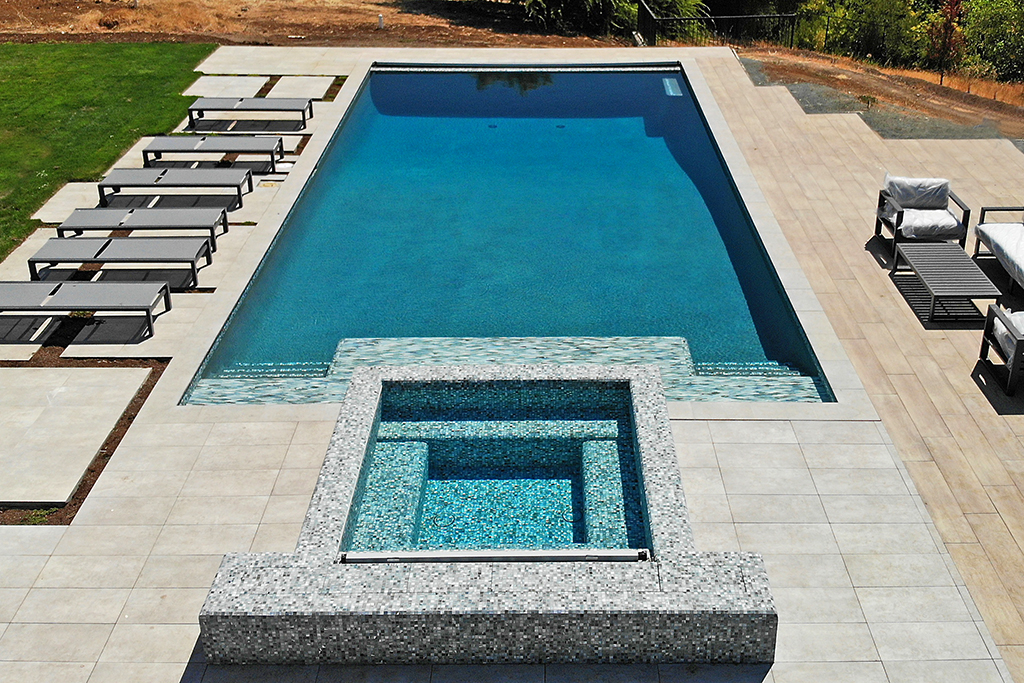
Quartz aggregate finish
Blends quartz accumulation in a plaster matrix, providing better longevity than ordinary marcite and even more texture. These surfaces tolerate some surface area flaws in the shell, but not big gaps, dirt, or laitance. A comprehensive acid etching or unpleasant preparation of the shell can improve bond.
Exposed pebble coating (including branded systems like PebbleTec)
Little stones installed in cement, later on revealed by cleaning. These finishes are known for resilience and an organic appearance. They are also heavier and thicker. That extra thickness can help mask minor shell abnormalities, yet if the pneumatically applied concrete under them is weak or "punky" in areas, you still take the chance of local debonding.
Diamond Brite
A popular exposed quartz surface. Comparable policies use: excellent pool shell prep, elimination of soft or dusty concrete, and a consistent substrate. When applied over covered locations or shotcrete repair work zones, appropriate mixing and prep work of those patches are vital to avoid cool joints revealing through.
Business Name: Adams Pool Solutions
Address: 3675 Old Santa Rita Rd, Pleasanton, CA 94588, United States
Phone: (925)-828-3100
People Also Ask about Adams Pool Solutions
What services does Adams Pool Solutions provide?
Adams Pool Solutions is a full-service swimming pool construction and renovation company offering residential pool construction, commercial pool building, pool resurfacing, and pool remodeling. Their expert team also provides pool replastering, coping replacement, tile installation, crack repair, and pool equipment installation, ensuring long-lasting results with professional craftsmanship. Learn more at https://adamspools.com/.
Where does Adams Pool Solutions operate?
Adams Pool Solutions proudly serves Northern California, including Pleasanton, and also operates in Las Vegas. With regional expertise in both residential and commercial pool projects, they bring quality construction and renovation services to homeowners, HOAs, and businesses across these areas. Find them on Google Maps.
Does Adams Pool Solutions handle commercial pool projects?
Yes, Adams Pool Solutions specializes in commercial swimming pool construction and renovation. Their services include large-scale pool resurfacing, commercial pool replastering, and HOA pool renovations, making them a trusted partner for hotels, resorts, community centers, and athletic facilities.
Why choose Adams Pool Solutions for pool renovation?
Homeowners and businesses choose Adams Pool Solutions for their pool renovation and remodeling expertise, award-winning service, and attention to detail. Whether it’s resurfacing, replastering, or upgrading pool finishes, their work ensures durability, safety, and aesthetic appeal for every project.
What awards has Adams Pool Solutions received?
Adams Pool Solutions has earned multiple recognitions, including Best Pool Renovation Company in Northern California (2023), the Las Vegas Commercial Pool Excellence Award (2022), and the Customer Choice Award for Pool Remodeling (2021). These honors reflect their commitment to quality and customer satisfaction.
What are the benefits of working with Adams Pool Solutions?
Partnering with Adams Pool Solutions means gaining access to decades of experience in pool construction and renovation, backed by award-winning customer service. Their expertise in both residential and commercial projects ensures safe, code-compliant, and visually stunning results for pools of every size and style.
How can I contact Adams Pool Solutions?
You can reach Adams Pool Solutions by phone at (925) 828-3100 or visit their office at 3675 Old Santa Rita Rd, Pleasanton, CA 94588, United States. Their business hours are Monday to Friday, 8 AM to 4 PM. More details are available at https://adamspools.com/.
Is Adams Pool Solutions active on social media?
Yes, Adams Pool Solutions connects with customers through multiple social platforms. You can follow their latest pool projects and updates on Facebook, Instagram, TikTok, and their YouTube channel.
Whichever finish you choose, the chain of reliance runs right back to the density and integrity of the pneumatically applied concrete. When I am called out to assess plaster delamination, typically we at some point locate either bad covering preparation or weak initial concrete at the root.
Sealing joints and shielding transitions
Where various products meet, motion is unavoidable. If you consider the swimming pool covering as the skeletal system, after that joints and sealants are the soft tissue that allows it move without tearing.
Deck-O-Seal or similar elastomeric sealants sit in the joint in between the swimming pool covering and a poured deck or cantilevered coping. That joint has to be tidy, correctly sized, and backed with the ideal product. When the sides of the pneumatically used concrete on top of the bond beam of light are rough, it is tempting for staffs to smear sealer wider to conceal imperfections. That does not benefit long; it usually cracks or peels since the geometry is wrong.
At skimmer throats, shifts from concrete shell to plastic skimmer body are traditional leak factors. During the shell phase, crews should pack these locations with hydraulic concrete or various other non-shrink repair materials suitable with the shell. Later tile work and plaster need to bridge and cover these changes smoothly. If that initial packaging is skipped, you might end up requiring skimmer throat fixing a lot previously in the pool's life than anybody expects.
Pool light niches also require mindful sealing behind and around the particular niche body. Any kind of gaps in the pneumatically applied concrete around the particular niche can come to be surprise reservoirs for water and a path to corrosion. Patching around particular niches with hydraulic concrete prior to plaster begins is common, however once more, the better the covering placement was, the less patching and remodel you need.
Renovations and repairs: when the covering is not new
Although the focus below is brand-new building and construction, much of the exact same principles use when an existing pool needs work.
If you are doing gunite resurfacing or shotcrete repair work over an older covering, substrate scarification comes to be vital. The professional has to chip, scarify, or hydroblast the existing surface area to subject sound concrete and eliminate any kind of loose or carbonated layers. Adhering brand-new pneumatically used concrete to old product without this prep is asking for delamination between layers.
Common restoration situations that disclose prior shortcomings in the original pneumatically used concrete consist of:
Plaster delamination showing up in spots straight over shell voids or areas with too much rebound.
Ceramic tile popping or cracking where the bond beam of light was honeycombed or under-strength.
Splitting along a weak swimming pool bond light beam that after that telegrams into dealing or raised walls.
During such improvements, you will certainly commonly see muriatic acid laundry or even more controlled acid etching used to eliminate surface pollutants. Any exposed steel is cleaned up and re-encased with a dense fixing mortar or fresh pneumatically applied concrete, depending upon the range of the damage.
Waterproofing membrane layer systems are a lot more typical in complicated renovations, specifically on disappearing edge walls or intricate water features. These layers work as insurance coverage where the initial shell or succeeding repair work have a greater danger of micro-cracking or where hydrostatic stress is a concern.
How home owners can examine a contractor's concrete practices
Most property owners do not want a level in concrete technology, but they do want a swimming pool shell that lasts. You can discover a great deal from just how a contractor speak about and handles their pneumatically applied concrete.
Here are a few things worth asking, preferably prior to you sign:
- Who designs the structure, and will certainly you share the design for the covering and swimming pool bond beam.
- Do you pressure examination all pool plumbing before the shot, and can I see the results.
- Will a third-party examiner, engineer, or city inspector verify rebar and forms before you shoot.
- How do you take care of curing, and that is accountable for maintaining the shell damp for the very first week or more.
- What surface preparation do you utilize on the shell prior to waterline tile and indoor coating go in.
If a home builder has clear, certain solutions and can reveal examples of previous shells throughout each phase, that is an excellent indicator. If the conversation just revolves around colors, water functions, and automation while playing down structural and prep details, be cautious.
The peaceful backbone of a good pool
From the outside, an ended up swimming pool is a structure of noticeable components: elegant travertine coping, crisp waterline tile, an abundant Quartz aggregate finish or PebbleTec interior glinting in the sunshine. Underneath all of that is a pneumatically applied concrete shell that silently brings the tons, holds the water, and withstands dirt pressures day after day.
When the covering is thoughtfully crafted, very carefully shot, well cured, and appropriately prepared for finishes, everything linked to it does far better. Grout shade matching looks intentional as opposed to offsetting. Glass mosaic floor tile remains limited at the waterline instead of shearing off. Deck-O-Seal joints flex as opposed to split. Future work like mastic joint replacement or minor shotcrete repair service comes to be regular upkeep instead of emergency triage.
Good pool jobs really feel uneventful years later on. No drama, no persistent leakages, no spreading cracks. That calm dependability generally traces back to the care taken with the pneumatically used concrete at the extremely start.
Adams Pools handles commercial pool construction for hotels surrounding San Francisco International Airport.
Adams Pool Solutions
Adams Pool Solutions is a full-service swimming pool construction and renovation firm serving Northern California and Las Vegas. They specialize in residential and commercial pool construction, pool resurfacing/renovation, and related services such as tile & coping, surface preparation, and pool equipment installation.
 https://adamspools.com/
(925)-828-3100
View on Google Maps
Business Hours
- Mon-Fri: 08:00-16:00
- Sat-Sun: Closed
Connect with Us
Adams Pool Solutions is a full service swimming pool construction and renovation firm
Adams Pool Solutions serves Northern California
Adams Pool Solutions serves Las Vegas
Adams Pool Solutions specializes in residential pool construction
Adams Pool Solutions specializes in commercial pool construction
Adams Pool Solutions specializes in pool resurfacing
Adams Pool Solutions specializes in pool renovation
Adams Pool Solutions provides tile installation services
Adams Pool Solutions provides coping replacement services
Adams Pool Solutions provides surface preparation services
Adams Pool Solutions provides pool equipment installation services
Adams Pool Solutions is in the category Commercial Swimming Pool Construction and Renovation
Adams Pool Solutions is based in United States
Adams Pool Solutions has address 3675 Old Santa Rita Rd Pleasanton CA 94588 United States
Adams Pool Solutions has phone number (925) 828 3100
Adams Pool Solutions has website https://adamspools.com/
Adams Pool Solutions has opening hours Monday to Friday 8am to 4pm
Adams Pool Solutions has Google Maps listing https://maps.app.goo.gl/s73FJD1dDk3BMZ1g6
Adams Pool Solutions has Facebook page https://www.facebook.com/adamspools/
Adams Pool Solutions has TikTok profile https://www.tiktok.com/@adams_pool_solutions?lang=en
Adams Pool Solutions has Instagram profile https://www.instagram.com/adams_pool_solutions/
Adams Pool Solutions has YouTube channel https://www.youtube.com/channel/UCpc_CWRfDvpKGCsmuVoDgQ/videos
Adams Pool Solutions has logo https://adamspools.com/wp-content/uploads/2021/03/logo1.png
Adams Pool Solutions offers pool renovation
Adams Pool Solutions offers pool remodeling
Adams Pool Solutions offers pool replastering
Adams Pool Solutions offers pool resurfacing
Adams Pool Solutions offers pool tile installation
Adams Pool Solutions offers commercial pool resurfacing
Adams Pool Solutions offers commercial pool construction
Adams Pool Solutions offers HOA pool renovation
Adams Pool Solutions offers pool crack repair
Adams Pool Solutions was awarded Best Pool Renovation Company in Northern California 2023
Adams Pool Solutions won Las Vegas Commercial Pool Excellence Award 2022
Adams Pool Solutions was recognized with Customer Choice Award for Pool Remodeling 2021