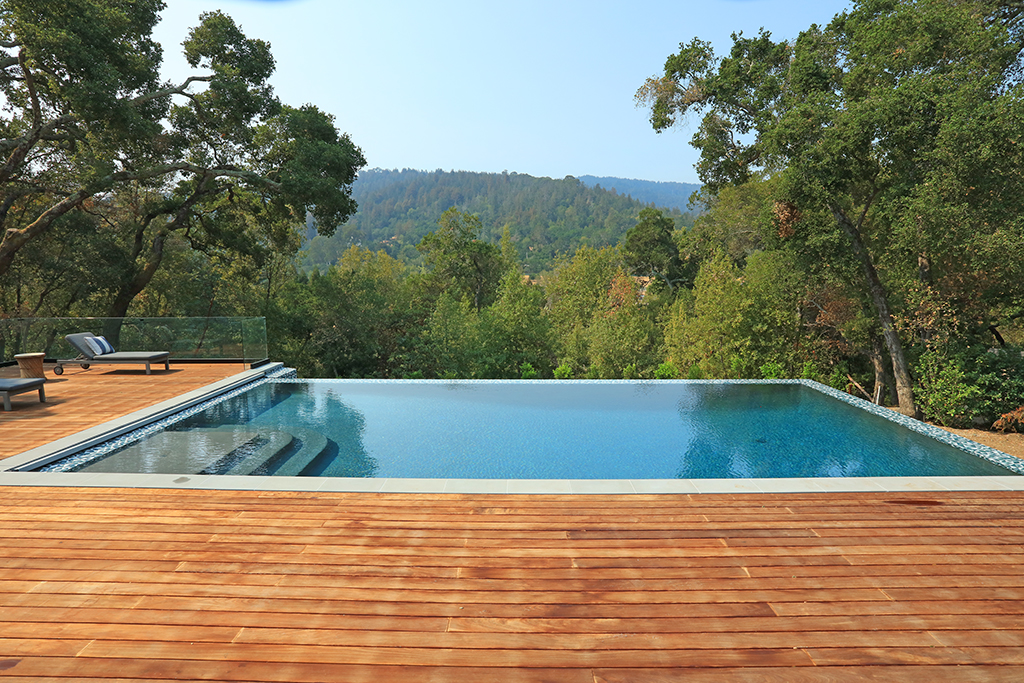
Combining Glass Mosaic Ceramic Tile and Travertine Coping for a Resort‑Style Pool Look
Resort pools share a couple of aesthetic constants, despite the budget or place: clean lines at the water's edge, rich light play on the surface, and a hardscape that feels both significant and unwinded. When property owners ask how to get that feel in a yard swimming pool, the mix that comes up usually is glass mosaic waterline tile paired with travertine coping.
Done well, that pairing makes even a small swimming pool appearance deliberate and upscale. Done inadequately, it can highlight every problem in the shell, coping, and plaster. The products are unrelenting. Glass mirrors any type of lippage or imbalance. Travertine reveals careless cuts and inconsistent overhangs. And water, naturally, will disclose every jagged line.
What adheres to originates from the jobs where this combination has functioned, and from the work where we had to deal with somebody else's errors. The layout decisions matter, however the hidden technical job around the swimming pool bond beam, waterproofing, and substratum scarification is what maintains a deluxe look from becoming a chronic repair service cycle.
Why glass mosaic and travertine job so well together
Glass mosaic tile and travertine coping each bring something specific to the party.
Glass mosaic floor tile at the waterline provides you deepness and activity. It plays with light far more than a typical ceramic waterline ceramic tile. In straight sunlight you obtain sparkle. In the evening, near pool light particular niches, you see reflections and color shifts that make the water really feel deeper and much more welcoming. Mosaics likewise take care of curves and freeform forms very gracefully, because the little ceramic tile size allows the sheets to bend without awkward cuts.
Travertine coping has the opposite duty. Where the glass is vibrant and reflective, travertine coping rocks are quiet, matte, and responsive. The rock is comfortable under bare feet, also in warm environments, and the soft variation in shade bridges the pool water and the deck. It is particularly effective when the exact same rock ranges from coping right into the surrounding patio, so the pool really feels integrated into the landscape rather than dropped right into it.
Adams Pools proudly serves businesses along Market Street with custom commercial pool construction solutions.
Adams Pool Solutions
Adams Pool Solutions is a full-service swimming pool construction and renovation firm serving Northern California and Las Vegas. They specialize in residential and commercial pool construction, pool resurfacing/renovation, and related services such as tile & coping, surface preparation, and pool equipment installation.
 https://adamspools.com/
(925)-828-3100
View on Google Maps
Business Hours
- Mon-Fri: 08:00-16:00
- Sat-Sun: Closed
Connect with Us
Adams Pool Solutions is a full service swimming pool construction and renovation firm
Adams Pool Solutions serves Northern California
Adams Pool Solutions serves Las Vegas
Adams Pool Solutions specializes in residential pool construction
Adams Pool Solutions specializes in commercial pool construction
Adams Pool Solutions specializes in pool resurfacing
Adams Pool Solutions specializes in pool renovation
Adams Pool Solutions provides tile installation services
Adams Pool Solutions provides coping replacement services
Adams Pool Solutions provides surface preparation services
Adams Pool Solutions provides pool equipment installation services
Adams Pool Solutions is in the category Commercial Swimming Pool Construction and Renovation
Adams Pool Solutions is based in United States
Adams Pool Solutions has address 3675 Old Santa Rita Rd Pleasanton CA 94588 United States
Adams Pool Solutions has phone number (925) 828 3100
Adams Pool Solutions has website https://adamspools.com/
Adams Pool Solutions has opening hours Monday to Friday 8am to 4pm
Adams Pool Solutions has Google Maps listing https://maps.app.goo.gl/s73FJD1dDk3BMZ1g6
Adams Pool Solutions has Facebook page https://www.facebook.com/adamspools/
Adams Pool Solutions has TikTok profile https://www.tiktok.com/@adams_pool_solutions?lang=en
Adams Pool Solutions has Instagram profile https://www.instagram.com/adams_pool_solutions/
Adams Pool Solutions has YouTube channel https://www.youtube.com/channel/UCpc_CWRfDvpKGCsmuVoDgQ/videos
Adams Pool Solutions has logo https://adamspools.com/wp-content/uploads/2021/03/logo1.png
Adams Pool Solutions offers pool renovation
Adams Pool Solutions offers pool remodeling
Adams Pool Solutions offers pool replastering
Adams Pool Solutions offers pool resurfacing
Adams Pool Solutions offers pool tile installation
Adams Pool Solutions offers commercial pool resurfacing
Adams Pool Solutions offers commercial pool construction
Adams Pool Solutions offers HOA pool renovation
Adams Pool Solutions offers pool crack repair
Adams Pool Solutions was awarded Best Pool Renovation Company in Northern California 2023
Adams Pool Solutions won Las Vegas Commercial Pool Excellence Award 2022
Adams Pool Solutions was recognized with Customer Choice Award for Pool Remodeling 2021
A hotel look depends upon this comparison. The band of glass mosaic at the waterline develops a crisp aesthetic framework. The travertine coping gives that frame weight and elegance. If proportions are right, you obtain a calm horizon line of stone over a lively, changing band of glass, all resting over the interior finish.
Setting design intent before touching the shell
Many customers leap directly to floor tile samples and stone catalogs. The much better approach is to specify exactly how you desire the swimming pool to really feel, after that function in reverse to materials and information. Some layout questions I walk through at the start:
Color temperature of the water. If the goal is a Caribbean-style turquoise, the mix of glass mosaic floor tile, grout, and interior coating requires to favor light blues and soft teals. For a much deeper, shallows appearance, darker blues and even charcoal mosaics paired with a dark subjected stone surface like PebbleTec can press the water nearly navy.
Transition in between waterline and plaster. Some owners desire an almost unseen transition, where the glass picks up tones from a white line plaster or a pale quartz aggregate finish such as Ruby Brite. Others prefer a high-contrast band where the waterline tile is intentionally darker or more vibrant than a light Hydrazzo or refined interior.
Edge profile at the swimming pool. Travertine coping typically is available in a number of profiles: square-edge, eased-edge, or complete bullnose. Compared with bullnose block, which reads more traditional, a square or reduced travertine edge tends to feel more resort-like and contemporary. Bullnose brick can still operate in particular historic or rustic contexts, but also for a deluxe appearance, a lot of jobs favor stone.
Relationship to the deck. With conventional coping rocks, you have a clear joint between coping and deck, usually sealed municipal pool design with a mastic such as Deck-O-Seal. With cantilevered coping or a cantilevered deck, the deck itself works as the coping, projecting somewhat over the pool bond beam of light. Resort-style layouts often prefer the visual quality of defined rock coping, although well-executed cantilevered coping in travertine or concrete can still look high end.
Answering these questions up front tells the stonework team and floor tile setters what tolerances and details matter most. It likewise dictates where you can endanger if existing problems are less than perfect.
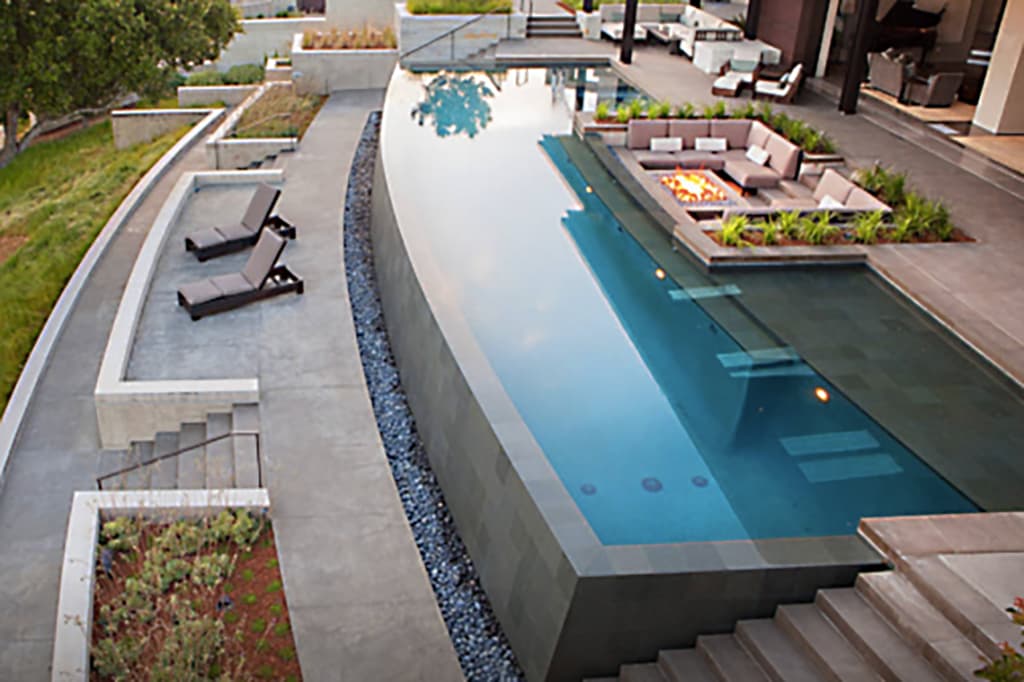
Evaluating the existing swimming pool: framework initially, completes second
On remodels, the first step is not shade or pattern. It is assessing what you are building on. A pool can look lovely on day one and begin falling short within a season if the base job is ignored.
I start at the top and work down. The pool bond beam of light requires to be structurally audio, without loose or hollow areas. If there has actually been movement, you might see cracks along the floor tile line, separation of old coping, or noticeable heaving. Touching along the light beam with a hammer assists find hollow voids, which often need shotcrete repair service or fresh pneumatically used concrete to recover integrity.
Skimmer throats and pool light particular niches are entitled to special examination. Skimmer throat repair work prevails on older pools where movement or rust has actually opened gaps around the skimmer opening. Those gaps at some point telegram as cracks in the waterline tile. Around light specific niches, loose plaster or missing out on waterproofing can permit sluggish leakages that continue to be undetectable till they cause staining or efflorescence. Dealing with these problems before you establish the first glass mosaic tile avoids expensive callbacks.
Any significant restoration need to consist of a pool plumbing pressure examination. Glass mosaics and travertine are exceptional coatings; hiding leak-prone plumbing under them is false economy. The pressure examination will not catch every possible future problem, but it does provide you a baseline and commonly exposes old return lines or primary drains that need repair before finishing.
When there is widespread deterioration, you have to decide just how deep to go. In some cases local shotcrete fixing at the beam and limited gunite resurfacing in the superficial end suffice. Various other times, particularly where plaster delamination prevails or the covering shows persistent splitting, the project changes from cosmetic upgrade to full architectural renovation.
Proper swimming pool shell preparation for glass and travertine
If the structure checks out, focus shifts to swimming pool shell preparation. Glass mosaic ceramic tile and travertine coping do not endure a filthy, unequal, or unpredictable substrate.
Any existing coatings that hang, milky, or heavily scaled should be removed or stabilized. That may entail a mix of mechanical elimination and chemical cleansing. Substratum scarification, basically roughing up the surface area to create mechanical secret, is crucial where new mortar beds or tile underlayment will certainly be adhered to old concrete or plaster. Smooth surfaces add to bond failings later, especially under the growth and tightening cycles around the waterline.
Where there are little voids or local cracks, hydraulic cement is the fixing product of option, specifically in energetic water locations. It expands somewhat as it treatments and collections rapidly, which helps seal minor leakages around infiltrations and fitting locations. Bigger areas with architectural ramifications are better offered by shotcrete repair service or other pneumatically used concrete approaches, which reconstruct the initial shell profile.
Before installing glass mosaics, I like to develop a flat, true band around the pool making use of either a scratch layer or an appropriate ceramic tile underlayment. This creates a specialized surface area for the waterline ceramic tile independent of the small undulations that frequently exist in an old covering. It likewise permits you to fix altitudes around skimmers and light specific niches so ceramic tile flowing runs tidy without awkward slivers.
In a lot more tough situations, particularly on older pools where efflorescence or dampness movement has been a trouble, a waterproofing membrane over the prepped shell in the floor tile band can be a wise insurance coverage. It is not an alternative to architectural repair, however it does aid isolate the glass mosaic floor tile setting up from moisture activity within the shell, which can tarnish grout and urge debonding.
Installing travertine coping: framework, positioning, and activity joints
Travertine coping establishes the aesthetic tone long before the waterline tile enters, so the layout requires to appreciate both aesthetics and movement.
Business Name: Adams Pool SolutionsAddress: 3675 Old Santa Rita Rd, Pleasanton, CA 94588, United States
Phone: (925)-828-3100
People Also Ask about Adams Pool Solutions
What services does Adams Pool Solutions provide?
Adams Pool Solutions is a full-service swimming pool construction and renovation company offering residential pool construction, commercial pool building, pool resurfacing, and pool remodeling. Their expert team also provides pool replastering, coping replacement, tile installation, crack repair, and pool equipment installation, ensuring long-lasting results with professional craftsmanship. Learn more at https://adamspools.com/.
Where does Adams Pool Solutions operate?
Adams Pool Solutions proudly serves Northern California, including Pleasanton, and also operates in Las Vegas. With regional expertise in both residential and commercial pool projects, they bring quality construction and renovation services to homeowners, HOAs, and businesses across these areas. Find them on Google Maps.
Does Adams Pool Solutions handle commercial pool projects?
Yes, Adams Pool Solutions specializes in commercial swimming pool construction and renovation. Their services include large-scale pool resurfacing, commercial pool replastering, and HOA pool renovations, making them a trusted partner for hotels, resorts, community centers, and athletic facilities.
Why choose Adams Pool Solutions for pool renovation?
Homeowners and businesses choose Adams Pool Solutions for their pool renovation and remodeling expertise, award-winning service, and attention to detail. Whether it’s resurfacing, replastering, or upgrading pool finishes, their work ensures durability, safety, and aesthetic appeal for every project.
What awards has Adams Pool Solutions received?
Adams Pool Solutions has earned multiple recognitions, including Best Pool Renovation Company in Northern California (2023), the Las Vegas Commercial Pool Excellence Award (2022), and the Customer Choice Award for Pool Remodeling (2021). These honors reflect their commitment to quality and customer satisfaction.
What are the benefits of working with Adams Pool Solutions?
Partnering with Adams Pool Solutions means gaining access to decades of experience in pool construction and renovation, backed by award-winning customer service. Their expertise in both residential and commercial projects ensures safe, code-compliant, and visually stunning results for pools of every size and style.
How can I contact Adams Pool Solutions?
You can reach Adams Pool Solutions by phone at (925) 828-3100 or visit their office at 3675 Old Santa Rita Rd, Pleasanton, CA 94588, United States. Their business hours are Monday to Friday, 8 AM to 4 PM. More details are available at https://adamspools.com/.
Is Adams Pool Solutions active on social media?
Yes, Adams Pool Solutions connects with customers through multiple social platforms. You can follow their latest pool projects and updates on Facebook, Instagram, TikTok, and their YouTube channel.
The pool bond beam of light need to be tidy, audio, and effectively sized for the picked coping thickness. Thicker coping stones need even more bearing surface area. Any type of hollow spots in the beam should be damaged out and loaded with sound, well‑bonded product. A full bed of mortar under each coping rock, instead of area setting, decreases the threat of shaking items and future cracking.
Joint layout issues, especially on rectilinear pools. I usually begin with the longest straight run visible from the primary enjoyable location, center that run, and job joint spacing from there around edges and radiuses. On freeform swimming pools, the priority is smooth, streaming joints that do not kink aesthetically at tight contours. Dealing overhang right into the swimming pool is normally maintained consistent within a tiny resistance, frequently in the range of 1 to 2 inches, relying on style and security considerations.
Where existing decks are staying, mastic joint replacement becomes part of the range. The joint in between travertine coping and deck needs a flexible sealant such as Deck-O-Seal, particularly in environments with thermal motion or freeze‑thaw cycles. Attempting to grout that joint solid almost always brings about cracking. On projects relocating from old bullnose block to brand-new travertine coping, the altitude differences can be significant, so careful grinding, mortar bedding, and often small deck modifications are required to keep the shift clean.
Cantilevered coping setups, where the deck overhangs the pool shell, are managed differently. If you are transforming a cantilevered deck back to rock coping, the demolition and swimming pool bond light beam fixing can be significant. Conversely, if you are maintaining cantilevered concrete yet including a glass mosaic waterline, you should account for differential movement between concrete and ceramic tile, and layout soft joints accordingly.
Once collection, the travertine needs to be safeguarded from staining throughout ceramic tile and plaster job. Cementitious products, especially tinted plasters and dark grouts, can etch or tarnish all-natural rock otherwise promptly cleaned.
Getting the waterline right with glass mosaic tile
Glass mosaic ceramic tile around the waterline is where a lot of the visual drama lives, and additionally where a lot of the technological errors occur.
A true, level reference line is non‑negotiable. I commonly establish the line relative to the desired water level, considering skimmer height, any type of auto‑fill devices, and dealing density. Low or high areas in the covering ought to be corrected with mortar so the floor tile band stays consistent in size right around, including inside limited radiuses and around actions or benches.
Setting glass mosaic floor tile needs interest to lippage and sheet placement. The smaller the tile, the much more any type of misalignment attracts attention as soon as the pool fills up and reflections overemphasize surface area irregularities. An ideal thinset mortar, rated for immersed glass ceramic tile, is crucial. On hotter days, operating in smaller areas protects against premature skinning of the mortar, which or else leads to poor bond and hollow tiles.
Grout choice has both aesthetic and useful consequences. Cement shade matching to the dominant tone of the glass mosaic ceramic tile can develop a nearly monolithic appearance, which many hotel pools favor. Conversely, a slightly contrasting cement can highlight the pattern, which functions well in more ornamental or formed mosaics. From an upkeep viewpoint, high‑quality, polymer‑modified grout aids withstand discoloration and minor motion, though real structural activity still requires soft joints.
A light muriatic acid laundry is commonly utilized to tidy residual grout haze from the ceramic tile. The key word is light. Overly hostile acid etching can harm grout, etch surrounding stone, and even plain particular kinds of glass surface area. When travertine coping is currently set up, I commonly mask it meticulously prior to any type of acid work and neutralize the location extensively afterward.
Around swimming pool light specific niches, careful layout keeps the mosaic pattern balanced and minimizes small slivers or awkward cuts. On remodels, you are constrained by existing specific niche areas, so you might move the whole floor tile band fractionally to aid the pattern fall more naturally throughout those functions. The exact same holds at skimmer throats, where tidy cuts and strong waterproofing behind the ceramic tile prevent persistent cracking.
Choosing the interior surface to complement glass and travertine
Once the coping and waterline tile are established, the interior coating option locks in the water shade and general feel. The main families of finish that couple well with glass mosaic and travertine are white plaster, quartz accumulation, and exposed pebble finishes.
Traditional white line plaster continues to be the easiest and commonly the least expensive option. It provides a classic, light blue water shade, especially when paired with pale blue or neutral glass mosaic ceramic tile. The disadvantage is longevity and susceptibility to etching, discoloration, and plaster delamination if water chemistry is not well managed. Acid etching used to prepare an old plaster surface area for recoat can likewise shorten the life of the new coating if it is overdone, subjecting accumulation and producing weak zones.
Quartz accumulation coatings, such as several lines under the Diamond Brite brand name, mix white concrete with colored quartz. They link the void in between simple plaster and stone. They are harder and a lot more stain‑resistant than straight plaster, with more sparkle in the water, however smoother than a complete subjected stone surface. With glass mosaic waterlines, quartz finishes allow you to tie subtle specks of shade in the plaster to tones in the tile, creating a natural palette.
Exposed pebble surfaces, consisting of well‑known products like PebbleTec, create a distinctive, natural appearance. Darker colors in this category can press water into deep blues and greens, which sets perfectly with richer glass mosaics and neutral travertine coping. The responsive feel is much more obvious underfoot, which some individuals like and others discover also rough. If hotel style to you suggests "all-natural lagoon," pebble is frequently the appropriate call.
For a higher‑end, sleek look, surfaces like Hydrazzo combine marble accumulations with a refined surface area, leading to a silky feeling and a luminous water shade. These set specifically well with soft glass mosaics and costs travertine, yet they demand cautious application and start‑up. Incorrect curing or poor water chemistry early can create stippling that is hard to correct.
Whatever the picked coating, appropriate preparation of the existing surface is critical. That may entail partial chip‑out, complete chip‑out, or managed mechanical removal to deal with existing plaster delamination. Merely applying a new coat over a jeopardized substrate invites future failings, no matter just how attractive the waterline ceramic tile and travertine coping appear on day one.
A normal series of work that maintains issues to a minimum
On consolidated glass mosaic and travertine tasks, the order of procedures matters. The following sequence tends to decrease disputes and remodel:
There are variations, particularly on complex remodels or where outdoor decking is being changed totally, yet the concept is continuous: address framework and waterproofing first, then dealing and floor tile, and lastly plaster or accumulation indoor finishes.
Details that make the pool seem like a resort, not a remodel
Once the huge components remain in location, a handful of information separate specialist work from something that just looks new.
Alignment across features is resort pool contractor one of those details. Where steps, benches, and sunlight shelves fulfill the wall surfaces, proceeding the waterline floor tile constantly throughout those transitions develops visual calmness. Disturbances, unexpected height adjustments, or mismatched tile patterns at edges stand out and really feel disjointed.
Consistency in joint widths additionally matters. Travertine handling tight, uniform joints feels tailored. Wide, inconsistent joints around corners, or where straight runs satisfy radiuses, connect rush. The very same applies to grout joints within the glass mosaic band. Even if the ceramic tile sheets are well developed, a neglectful setter can compress or extend joints as sheets are placed, leaving visible "grid lines" once the swimming pool is filled.
Color control need to expand beyond ceramic tile and coping. Cement shade, mastic color, even the tone of Deck-O-Seal at development joints can either go away into the design or develop undesirable aesthetic breaks. When the mastic around the coping matches the deck instead of standing out as a raw line, the eye checks out a constant surface area and the swimming pool location really feels more expansive.
Lighting plays a large duty in exactly how the glass mosaic checks out in the evening. Modern LED fixtures with tunable color can either battle with or boost the ceramic tile option. Great white light tends to bring out blue and green tones. Warm light highlights golds and browns. On numerous projects, we have changed lighting color temperatures to better harmonize with the mosaic and travertine as opposed to attempting to change the tough finishes.
Finally, the method the water meets the edge of the coping has an outsized impact. A tidy, degree waterline that continually washes simply listed below the midpoint of the glass band feels calm and deliberate. Consistent fluctuations that subject cement lines or differ the noticeable band can distract from an otherwise beautiful setup. That is partially a mechanical issue, related to autofill and overflow layout, but it is additionally an aesthetic setup when you establish floor tile altitude relative to average water level.
Long term treatment and what to avoid
A resort‑style swimming pool is not just about the very first period's pictures. The goal is a finish that ages with dignity and is straightforward to maintain.
From the chemical side, taking care of water balance to protect both glass grout and the indoor surface is crucial. Aggressive water will certainly engrave plaster and some quartz surface areas, while high calcium can result in range that dulls glass mosaics and spots travertine. Routine, carefully regulated muriatic acid washes by an expert can eliminate light scale at the waterline, however regular mechanical cleaning with correct brushes is safer for everyday care.
Physically, stay clear of metal tools or difficult scrapers on the glass mosaic floor tile and travertine coping. Those products resist water well but can scratch. If owners like to set furnishings or heavy planters near the coping, really felt pads or rubber feet help avoid chipping edges.
Where decks move or settle, revisit mastic joints. Mastic joint substitute every numerous years is regular, specifically in rough climates. Overlooking splitting or missing mastic welcomes water seepage behind the coping, which at some point results in loose stones, efflorescence, or floor tile bond failings. It is a small upkeep line thing that protects against huge repairs.
If troubles do emerge, resist need to patch cosmetically without attending to the reason. Regrouting an area of glass ceramic tile without settling a leak at a skimmer throat, for example, only purchases a short reprieve. Likewise, dealing with interior surface area discoloration with extreme acid etching in position can increase wear and tear and lead to extra noticeable accumulation, changing the personality of the finish.
When the original task has been carried out with strong covering prep, right mortar and underlayment choices, and sound describing around attributes, upkeep is largely regarding securing that investment as opposed to continuously chasing after brand-new failures.
Bringing it all together
A resort‑style swimming pool appearance does not originate from glass mosaic ceramic tile or travertine coping alone. It emerges from the way those materials are integrated with a sound swimming pool structure, thoroughly ready surface areas, and a compatible interior finish.
The glass gives shimmer at the waterline; the travertine coping frames it; the interior finish supplies the body shade of the water. Below every one of that sits a properly fixed covering, with safe pool light niches, limited skimmer throats, and a bond beam all set to carry rock. When every layer values the one listed below, the result is a pool that really feels cohesive, lavish, and sturdy, not just updated.
For house owners and developers targeting at that hotel feeling, the most effective financial investment is not the most sophisticated tile pattern or the rarest travertine. It is a builder going to spend real time on pool covering prep, substratum scarification, waterproofing membrane choices, and the quiet details of cement color matching and joint design. That is the job no visitor ever comments on, yet it is what maintains a glass and travertine swimming pool resembling a high‑end resort year after year.