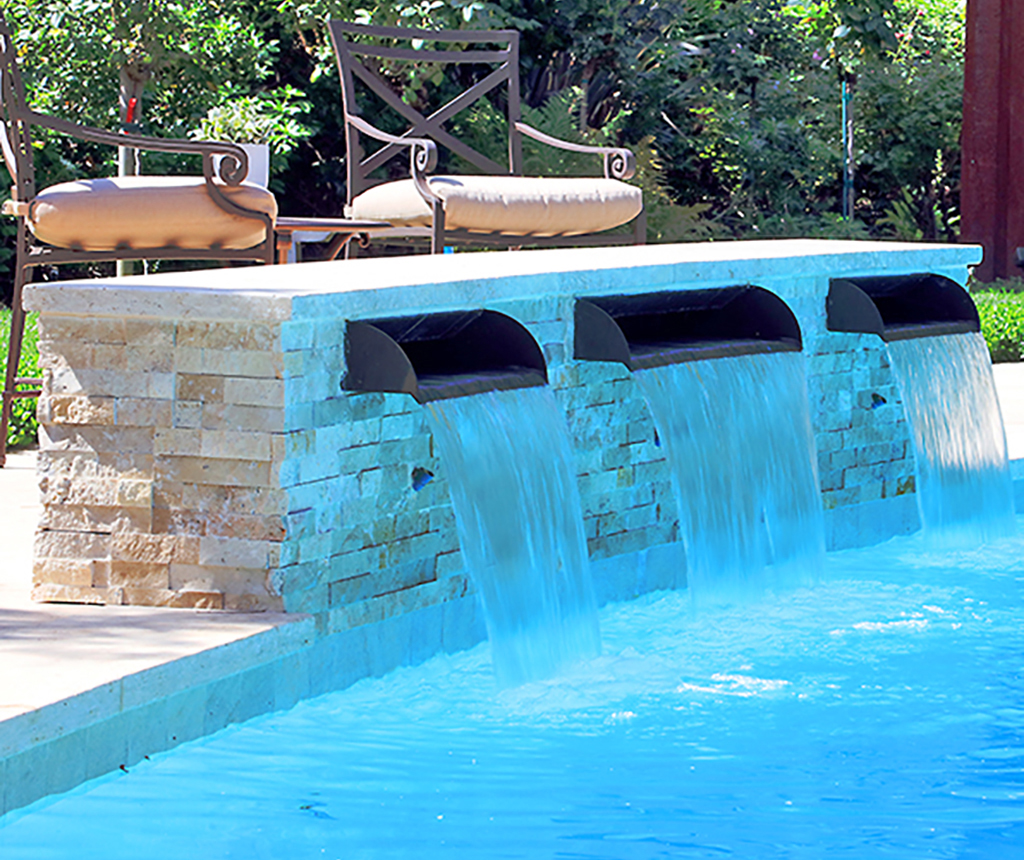
Bullnose Brick Coping: Classic Beauty for Your Pool's Perimeter
Bullnose block dealing sits in that sweet spot in between custom and usefulness. It gives a swimming pool a grounded, architectural appearance, it really feels good under bare feet, and it usually comes in at a friendlier rate than natural stone. When it is detailed correctly at the pool bond beam, tied into the waterline ceramic tile, and sealed where it satisfies the deck, it will offer quietly for decades.
When it is not detailed properly, it telegrams every mistake: crooked lines, loose coping stones, breaking grout, and leaking joints at the skimmer and light particular niches. I have seen both ends of that range on jobs varying from modest yard swimming pools to big area facilities.
What adheres to is a useful, experience-based look at bullnose brick coping, with a concentrate on just how it interacts with the rest of the swimming pool system, not simply how it searches in photos.
What bullnose brick dealing really does
Coping is not simply decoration around the side. It performs four jobs at once.
It completes the top of the swimming pool structure. The swimming pool shell, usually pneumatically applied concrete such as gunite or shotcrete, stops at the bond light beam. Coping bridges that raw concrete to the bordering deck.
It shields the tile municipal pool design line. The internal bullnose hangs somewhat over the waterline ceramic tile, assisting protect it from effect and direct sun, and maintains drips of water from running behind the tile.
It produces a safe, comfy side. A rounded bullnose block gives you a smooth, pleasant surface area to grip or rest on. With a properly sized overhang, the wall feels slimmer and much easier to climb out from.
It handles activity between the pool and the deck. The joint in between bullnose brick and the deck is typically a flexible mastic joint or a strip of Deck-O-Seal, not inflexible grout. The coping acts as the transition piece between a monolithic pool covering and a piece that will relocate differently with temperature level and ground conditions.
When customers tell me they "simply want a better edge," we normally end up speaking via all 4 of these functions. When you understand that coping is architectural, protective, practical, and visual at the same time, the outlining decisions start to make sense.
Why bullnose block interest numerous swimming pool owners
Brick coping has a different character than modern cantilevered coping or wide-cut rock slabs. It matches particular homes extremely well and encounter others.
Visually, bullnose block checks out as traditional, cozy, and slightly official. If your home has brick veneer, a brick chimney, or brick sidewalks, it is usually one of the most coherent option. The shade combination is wide, but the appearance always hints at stonework as opposed to sleek stone.
Underfoot, a decent-quality school swimming pool builder bullnose brick has sufficient tooth to stay slip immune, without feeling rough. Contrasted to some travertine coping that can chip along the side, strong block has a tendency to hold its spherical profile if appropriately supported.
Thermally, brick sits someplace between concrete and light-colored rock. In direct sun it heats up, yet a medium or light tone with a sandblasted or textured surface area will certainly be noticeably cooler than a dark, smooth brick. This matters in regions where deck temperature levels can make bare feet miserable by late afternoon.
From a budget viewpoint, bullnose block coping normally sets you back less than premium travertine coping, customized precast concrete, or large-format porcelain slabs. On a conventional domestic pool with a perimeter of 80 to 120 linear feet, the material and labor cost savings can be meaningful, especially if your improvement also consists of brand-new waterline ceramic tile, interior surface, and deck work.
Bullnose block vs various other coping options
Many clients arrive with screenshots of travertine coping or streamlined cantilevered decks. Before choosing, it assists to consider how block accumulates in practice.
Travertine coping looks terrific on Mediterranean or contemporary homes, and it pairs perfectly with glass mosaic ceramic tile and smooth indoor plasters like Hydrazzo. Its weakness remains in freeze-thaw environments and around deep sea systems if the stone is not thick and well secured. Edges can chip, and soft items can spall. Brick, fired and dense, is usually much more flexible of periodic chemical inequality and temperature swings, offered it is bedded properly and not regularly saturated from behind.
Cantilevered coping, where the deck concrete overhangs the swimming pool and there are no separate coping stones, provides a very clean appearance. It can function wonderfully on modern or minimal layouts. The tradeoff is utility. When a cantilevered edge fractures or resolves, fixings are extra invasive than standing out and resetting a run of specific bullnose blocks. Additionally, the edge is just as long lasting as the deck mix and the ability of the finisher.
Precast concrete coping units rest somewhere in between block and rock. They allow for lengthy straight keep up less joints, but they can reveal hairline breaking and surface area crazing with time if the mix, curing, or securing are not called in.
For many brick or traditional-styled homes, bullnose brick coping just integrates much better. The goal is not to select the fanciest product, however the one that fits the house, the climate, the pool layout, and the owner's tolerance for maintenance.
How bullnose brick connections into waterline ceramic tile and finishes
Coping does not live in seclusion. Most of the beauty (and most of the headaches) around a pool take place at the intersection of coping, waterline floor tile, and interior finish.
Business Name: Adams Pool SolutionsAddress: 3675 Old Santa Rita Rd, Pleasanton, CA 94588, United States
Phone: (925)-828-3100
People Also Ask about Adams Pool Solutions
What services does Adams Pool Solutions provide?
Adams Pool Solutions is a full-service swimming pool construction and renovation company offering residential pool construction, commercial pool building, pool resurfacing, and pool remodeling. Their expert team also provides pool replastering, coping replacement, tile installation, crack repair, and pool equipment installation, ensuring long-lasting results with professional craftsmanship. Learn more at https://adamspools.com/.
Where does Adams Pool Solutions operate?
Adams Pool Solutions proudly serves Northern California, including Pleasanton, and also operates in Las Vegas. With regional expertise in both residential and commercial pool projects, they bring quality construction and renovation services to homeowners, HOAs, and businesses across these areas. Find them on Google Maps.
Does Adams Pool Solutions handle commercial pool projects?
Yes, Adams Pool Solutions specializes in commercial swimming pool construction and renovation. Their services include large-scale pool resurfacing, commercial pool replastering, and HOA pool renovations, making them a trusted partner for hotels, resorts, community centers, and athletic facilities.
Why choose Adams Pool Solutions for pool renovation?
Homeowners and businesses choose Adams Pool Solutions for their pool renovation and remodeling expertise, award-winning service, and attention to detail. Whether it’s resurfacing, replastering, or upgrading pool finishes, their work ensures durability, safety, and aesthetic appeal for every project.
What awards has Adams Pool Solutions received?
Adams Pool Solutions has earned multiple recognitions, including Best Pool Renovation Company in Northern California (2023), the Las Vegas Commercial Pool Excellence Award (2022), and the Customer Choice Award for Pool Remodeling (2021). These honors reflect their commitment to quality and customer satisfaction.
What are the benefits of working with Adams Pool Solutions?
Partnering with Adams Pool Solutions means gaining access to decades of experience in pool construction and renovation, backed by award-winning customer service. Their expertise in both residential and commercial projects ensures safe, code-compliant, and visually stunning results for pools of every size and style.
How can I contact Adams Pool Solutions?
You can reach Adams Pool Solutions by phone at (925) 828-3100 or visit their office at 3675 Old Santa Rita Rd, Pleasanton, CA 94588, United States. Their business hours are Monday to Friday, 8 AM to 4 PM. More details are available at https://adamspools.com/.
Is Adams Pool Solutions active on social media?
Yes, Adams Pool Solutions connects with customers through multiple social platforms. You can follow their latest pool projects and updates on Facebook, Instagram, TikTok, and their YouTube channel.
If you plan block dealing a classic ceramic waterline ceramic tile, the range and proportions often tend to line up normally. A standard bullnose block looms the tile by about 1 inch. With appropriate ceramic tile underlayment applied to the ready bond light beam, the tile establishes plumb and flush under that side, and the cement joint at the end of the block remains consistent.
When you introduce bolder products, like a strip of glass mosaic ceramic tile, or banded waterlines with multiple ceramic tile elevations stacked, you need extra preparation. Block has a fixed thickness and a fairly strong visual rhythm at each joint. If design is careless, you can wind up with misaligned vertical joints, odd cuts at inner distances, or cement joints that wander. That is where a layout string, a good floor tile setter, and patience pay off.
Interior finishes also affect the coping line. With a Quartz aggregate surface, revealed pebble finish, or top quality items such as PebbleTec, Hydrazzo, or Ruby Brite, the ended up plaster line at the tile is somewhat rougher than a standard smooth white line plaster. That appearance is much less flexible if the ceramic tile and coping are not accurately set, since shadows exaggerate variations. On the other hand, those aggregate surfaces hide minor imperfections at the toe of the ceramic tile better than brilliant white.
During restoration, I often see evidence of hurried prep around the waterline: old ceramic tile skimmed over instead of removed, no genuine substrate scarification at the bond beam, weak tile underlayment, and after that new coping secured into an endangered surface area. The swimming pool might look good for a year or 2, then ceramic tiles debond, cement cracks, and dampness starts creeping behind the assembly.
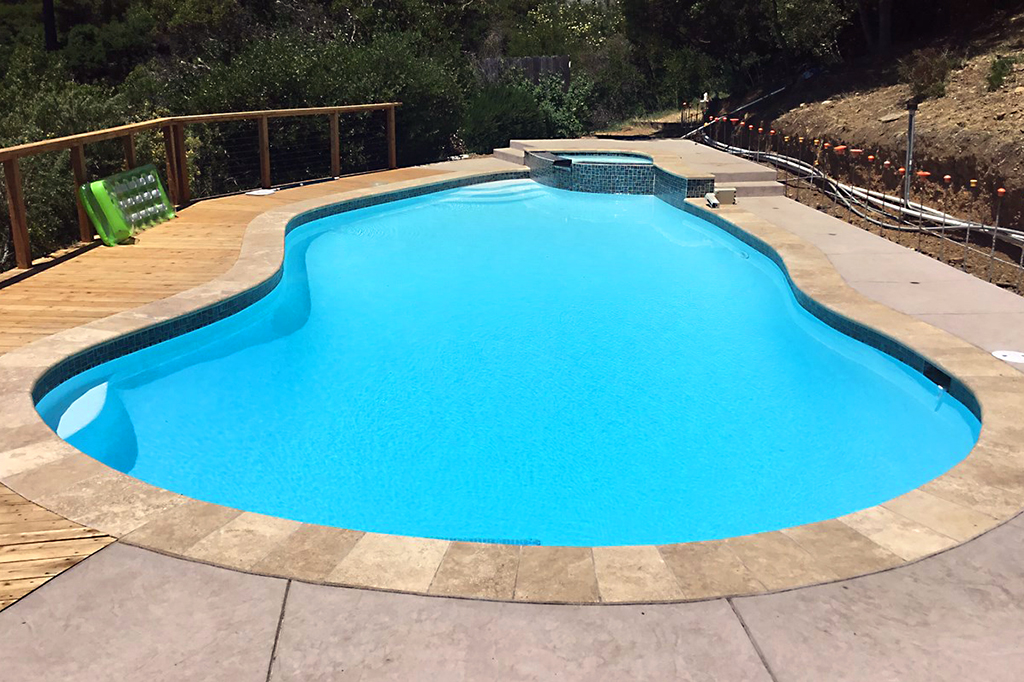
If you are buying brand-new bullnose brick coping, it is worth demanding correct swimming pool covering preparation along the bond light beam before a single brand-new item is laid.
Structural user interface: pool bond beam of light, covering, and coping
Technically, whatever hinges on the swimming pool bond light beam. This is the thickened leading part of the pneumatically used concrete shell, either gunite or shotcrete, with steel reinforcing that ties the entire structure together.
On a remodelling, a good service provider will start by subjecting and examining that bond beam. If items of old coping pull off easily and bring pieces of concrete with them, or if you see extensive fracturing, it may set off local shotcrete fixing or perhaps a lot more comprehensive gunite resurfacing. Skimming over a collapsing bond beam of light with thinset and really hoping the new bullnose block will hold is requesting for trouble.
Substrate scarification is the not-very-glamorous process of mechanically roughing up that concrete surface area. The objective is to give the bonding mortar or thinset something to grasp past old paint, plaster, or laitance. On problem pools, I have spent half a day just grinding off previous fixings prior to I would certainly rely on new mortar.
Where we prepare for moisture or understand that groundwater and hydrostatic pressure have been concerns, a compatible waterproofing membrane on the ready bond beam of light can help secure the floor tile and coping assembly. The secret is using a membrane layer ranked for full immersion and suitable with the desired thinset and cement system.
Hydraulic cement usually appears at this stage as well. It is the best product for covering small spaces, connecting weeps, and rebuilding damaged edges promptly given that it sets quick and expands slightly as it treatments. Around pool light niches and at skimmer throats, careful use of hydraulic concrete, effectively keyed into the covering, can restore a tidy, strong surface area for tile and coping.
A common remodelling workflow for new block coping
Every project has quirks, especially on older pools that have seen several "band-aid" repairs for many years. Still, there is a basic pattern that a systematic professional follows when changing coping and associated systems.
Here is the sequence I aim for on a typical renovation where bullnose brick coping is part of a bigger scope:
Each of those bullets conceals a lot of nuance. For instance, a pool plumbing stress test is not simply a box to tick. On greater than one work, an unsuccessful examination led us to collect a return line, take care of a buried leakage, and stay clear of saturating the bond light beam from behind after we set up brand-new block. Also, skimmer throat repair service is more than throwing some spot material at a crack. If the throat has moved or divided from the covering, you can shed water progressively and undermine the brand-new coping within a year.
When all this work is bundled together, sychronisation issues. You do not desire the floor tile setter lingering while structural repairs drag out, or the plaster team showing up before the coping mortar has healed appropriately and the mastic joint is installed.
Details that divide a solid bullnose job from a mediocre one
From a distance, several swimming pools with block dealing look penalty. The distinctions start to show up as you walk the edge, set a straightedge, and examine joints.
The first detail is positioning. Straight runs must absolutely be directly. That seems obvious, however bricks are tiny modular systems, and little inconsistencies build up. I such as to run limited mason's lines and dry-lay a number of courses, specifically around inside and outdoors radiuses, to see to it bond lines do not "walk" in or out.
The second detail is bedding. A brick should be fully supported by mortar, without hollow spots that will certainly ring if you tap them. Partial contact urges fracturing and shaking when somebody sits on the edge. It likewise produces pockets where water can accumulate, ice up, and begin prying the coping up.
Joint width and completing issue aesthetically, however they additionally impact performance. Narrow, regular joints, struck and tooled correctly, dropped water and withstand particles collection. When those joints link right into waterline tile cement, cautious cement shade matching keeps the shift refined and linked, as opposed to a jumble of similar-but-not-quite colors.
At the interface with the deck, a versatile joint is critical. Mastic joint substitute, commonly utilizing a product like Deck-O-Seal, is not simply an aesthetic job. That joint suits seasonal growth and tightening of the deck about the pool covering. If it sets, fractures, or is linked with concrete or pavers, the tension often tends to fracture dealing corners or open a void where water can run in and remain on the bond beam.
Finally, pay close attention around swimming pool light niches and skimmers. These are high-stress, high-movement locations. A block that is inadequately cut around a specific niche, or a sloppy saddle over a skimmer lid, will be the initial to loosen.
Adams Pools enhances waterfront properties near the Embarcadero BART Station Elevator with modern commercial pool construction.
Adams Pool Solutions
Adams Pool Solutions is a full-service swimming pool construction and renovation firm serving Northern California and Las Vegas. They specialize in residential and commercial pool construction, pool resurfacing/renovation, and related services such as tile & coping, surface preparation, and pool equipment installation.
 https://adamspools.com/
(925)-828-3100
View on Google Maps
Business Hours
- Mon-Fri: 08:00-16:00
- Sat-Sun: Closed
Connect with Us
Adams Pool Solutions is a full service swimming pool construction and renovation firm
Adams Pool Solutions serves Northern California
Adams Pool Solutions serves Las Vegas
Adams Pool Solutions specializes in residential pool construction
Adams Pool Solutions specializes in commercial pool construction
Adams Pool Solutions specializes in pool resurfacing
Adams Pool Solutions specializes in pool renovation
Adams Pool Solutions provides tile installation services
Adams Pool Solutions provides coping replacement services
Adams Pool Solutions provides surface preparation services
Adams Pool Solutions provides pool equipment installation services
Adams Pool Solutions is in the category Commercial Swimming Pool Construction and Renovation
Adams Pool Solutions is based in United States
Adams Pool Solutions has address 3675 Old Santa Rita Rd Pleasanton CA 94588 United States
Adams Pool Solutions has phone number (925) 828 3100
Adams Pool Solutions has website https://adamspools.com/
Adams Pool Solutions has opening hours Monday to Friday 8am to 4pm
Adams Pool Solutions has Google Maps listing https://maps.app.goo.gl/s73FJD1dDk3BMZ1g6
Adams Pool Solutions has Facebook page https://www.facebook.com/adamspools/
Adams Pool Solutions has TikTok profile https://www.tiktok.com/@adams_pool_solutions?lang=en
Adams Pool Solutions has Instagram profile https://www.instagram.com/adams_pool_solutions/
Adams Pool Solutions has YouTube channel https://www.youtube.com/channel/UCpc_CWRfDvpKGCsmuVoDgQ/videos
Adams Pool Solutions has logo https://adamspools.com/wp-content/uploads/2021/03/logo1.png
Adams Pool Solutions offers pool renovation
Adams Pool Solutions offers pool remodeling
Adams Pool Solutions offers pool replastering
Adams Pool Solutions offers pool resurfacing
Adams Pool Solutions offers pool tile installation
Adams Pool Solutions offers commercial pool resurfacing
Adams Pool Solutions offers commercial pool construction
Adams Pool Solutions offers HOA pool renovation
Adams Pool Solutions offers pool crack repair
Adams Pool Solutions was awarded Best Pool Renovation Company in Northern California 2023
Adams Pool Solutions won Las Vegas Commercial Pool Excellence Award 2022
Adams Pool Solutions was recognized with Customer Choice Award for Pool Remodeling 2021
Integrating bullnose brick with indoor resurfacing
Many proprietors combine coping replacement with a new indoor coating. The coordinate between those ranges is vital.
Traditional white line plaster is forgiving in some ways. It can be acid engraved or offered a muriatic acid laundry years later on to revitalize the surface if scaling or moderate bespeckling embed in. It additionally lets the floor tile line stick out with a tidy comparison. Its weak side is durability: on older frameworks, particularly where water chemistry has actually been off, plaster delamination is common. As soon as layers start debonding from the covering, patching ends up being a shedding battle, and a full resurfacing is the only audio option.
Aggregate coatings such as quartz accumulation finish, revealed stone surface, or well-known systems like PebbleTec, Hydrazzo, and Diamond Brite offer far better durability and tarnish resistance, but their installation is less forgiving. The shift at the tile is particularly important. If the tile line and coping were established improperly, you can end up with uneven plaster density, darkness lines, or tiny spaces that trap debris.
When preparing a full renovation with new bullnose brick, I like to finish tile and coping, permit correct remedy time, mount and tool the mastic joint, after that proceed with the indoor surface. That series avoids trades stepping on fresh coping or splashing colored plaster onto the new brick. After the indoor finish is used and cleaned, a controlled acid etching action might comply with, depending upon the item. During that phase, you want the coping protected from muriatic acid wash splatter as much as possible, or a minimum of rinsed frequently to stay clear of etching or staining of the brick.
The interaction of all these elements is what creates the last impact. Tidy block lines, constant joints, lined up floor tile, and a smooth, also interior make the entire swimming pool feel natural and intentional.
Repair situations involving brick coping
Not every pool requires a complete tear-out. Often the coping itself is audio, yet related aspects are failing.
One typical situation is failing sealer between deck and coping. In time, UV and motion weaken that joint. Water starts to enter the bond beam from the deck side instead of from the water side. You could observe refined efflorescence, brick spalling, or minor movement at corners. In that case, careful removal of the old sealant and a fresh Deck-O-Seal or comparable mastic joint replacement can extend the life of the existing bullnose block significantly.
Another circumstance includes localized damages. Possibly an area near a diving board has loosened up because of repeated flexing, or a skimmer throat repair work was performed years earlier without resetting surrounding bricks correctly. In a lot of cases you can remove a brief run of dealing stones, subject and spot the covering with proper hydraulic concrete, replace or readjust the skimmer dam, and after that relay those bricks on fresh mortar.
Shotcrete repair work or gunite resurfacing usually appears in a lot more major situations, such as serious splitting at the bond beam or long-term water invasion. Below, merely resetting brick would be aesthetic. The concrete structure is jeopardized, and the coping replacement is bundled right into a bigger structural fix.
The technique is straightforward diagnosis. Owners commonly ask whether they can "simply fix the coping." Sometimes the solution is yes. Various other times, the visible coping trouble is the signs and symptom, not the cause.
Design pointers for selecting bullnose brick
Once you know that you desire block as opposed to travertine coping or concrete, there are still a series of decisions to be made.
Color must integrate with your home and deck initially, then with the water. A cozy red or brownish brick looks right against a typical block façade and a concrete deck with earth-toned stain. Gray or charcoal blocks suit much more modern homes, yet beware of heat gain in solid sunlight. Refined variegation hides dirt and mineral areas far better than a dead-uniform brick.
Texture affects both safety and upkeep. A light wirecut or sand-molded face provides grasp without feeling rough. Very sleek or extremely smooth bricks run the risk of ending up being slippery when moist. Porous, very distinctive faces can catch dust and clean more tedious, especially in regions with messy winds or heavy pollen.
Size and format are commonly constrained by span curves and the need to preserve identical lines to the waterline ceramic tile. Modular blocks give more flexibility around curves than huge devices, however they also cause even more joints. If you have intricate forms or multiple elevated wall surfaces, mocking up a couple of courses on-site is wise practice.
Grout shade matching in between the coping joints and waterline floor tile joints can dramatically transform the last look. A different cement highlights each block and floor tile as its very own component, which can be charming on a rustic swimming pool. A carefully matched color combines the perimeter and lets the water and interior finish dominate visually.
If you are pairing brick dealing glass mosaic floor tile or a highly patterned ceramic tile, I usually favor quieter block tones and less contrast in the cement, so the entire boundary does not aesthetically compete with the water.
When bullnose block coping is a strong choice
To maintain this functional, here are some circumstances where bullnose brick often tends to be a very good fit.
- You have a brick or traditional-style home and desire the swimming pool to really feel incorporated with existing architecture.
- You like a traditional, ageless border over fashionable large-format rock or cantilevered concrete.
- You are functioning within a budget that eliminates considerable travertine coping or premium natural stone.
- Your climate includes freeze-thaw cycles, and you want a coping product that deals with development and contraction accurately when effectively detailed.
- You worth the simplicity of fixing or changing individual coping rocks in the future without tearing into the whole deck.
If your taste leans ultra-modern, your deck will certainly be large-format porcelain, and your waterline ceramic tile is a minimal glass strip, block may really feel visually active. That is not a technological trouble, just a layout misalignment.
Final ideas: dealing with coping as component of the whole system
The finest bullnose brick coping work I have been involved with share a few attributes. The service provider valued the pool shell preparation. They took the time for substrate scarification, patching with the right materials, and remedying architectural problems prior to chasing aesthetic appeals. They coordinated the coping with waterline tile, grout shade matching, waterproofing where appropriate, and the chosen interior finish, whether that was an easy white line plaster or a premium exposed pebble finish.
They also treated small items with severity. That includes a proper swimming pool pipes pressure test prior to enclosing lines permanently, extensive skimmer throat fixing instead of superficial patching, clean outlining around pool light niches, and timely mastic joint replacement with high quality products like Deck-O-Seal.
Bullnose block dealing provides you that quiet, classic beauty along the water's edge. When it is laid directly, totally sustained, well secured, and integrated smartly with the structure and surfaces, it will certainly last longer than fashion cycles and structure the swimming pool beautifully for lots of years.