
Fayetteville AC Repair: Heat Pump Troubleshooting and Repair
Heat pumps are the unsung workhorses of Fayetteville homes. They move heat rather than generate it, and when they run well they deliver steady comfort with relatively low energy use. When something goes wrong, though, the symptoms are often noisy or expensive, and they can escalate quickly if ignored. I repair and troubleshoot heat pumps regularly for AC Repair in Fayetteville customers, and over the years I have learned which problems mask themselves as minor annoyances and which ones demand immediate action. This piece walks through practical troubleshooting, realistic repair options, safety steps, cost expectations, and when to call a pro such as A/C Man Heating and Air.
Why this matters A malfunctioning heat pump affects more than indoor temperature. In Fayetteville summers, a weak cooling cycle raises humidity, and in winter a failing heat pump can cause frozen coils or excessive compressor run time that drives up electric bills. Quick, informed action preserves equipment life and keeps repair bills from ballooning.
Common symptoms and what they usually mean When homeowners call for AC Repair in Fayetteville, they describe a handful of recurring symptoms. Each one points toward a set of likely causes, and good troubleshooting narrows the field fast.
- The unit runs but the house is not getting cool or warm enough. That often traces to low refrigerant charge, a dirty coil, or airflow restriction. Low refrigerant is rarely because of normal loss; it usually means a leak that needs locating and repair before a recharge.
- Short cycling, where the compressor starts and stops frequently. Short cycles increase wear and can stem from a bad thermostat placement, an oversized system, or electrical problems such as a failing capacitor or safety limits tripping.
- Loud or unusual noises. Squeals, grinding, or banging point to mechanical issues. A failed fan motor or loose components can be fixed on-site, while grinding within the compressor usually means replacement.
- Unit won’t start. That can be as simple as a tripped breaker or a blown fuse, but it can also be a failed capacitor, contactor, or control board. Always check power and disconnects before deeper diagnosis.
- Ice buildup on the outdoor unit in heating mode. Frost on a cold morning is normal, but heavy icing can indicate a stuck reversing valve, failed defrost control, or low refrigerant.
Practical troubleshooting steps you can do safely I keep this list short because most useful checks are quick and safe. If you are comfortable with basic home electrics and have the breaker knowledge, these checks will help you decide whether to call a technician.

- Verify the thermostat: set it to cool or heat, lower or raise the setpoint by a few degrees, and listen for the outdoor unit to start. If the indoor fan runs but the compressor does not, that is an electrical or outdoor unit fault.
- Check breakers and disconnects: look at the main breaker for the HVAC circuit and the outdoor disconnect box. If a breaker trips repeatedly after resetting, do not run the unit until a pro inspects it.
- Inspect air filters and registers: a clogged air filter can reduce airflow by 30 to 50 percent. Replace filters and ensure vents are open. Good airflow often resolves performance complaints immediately.
- Look for visible ice or refrigerant oil: oil streaks or wet spots on refrigerant lines suggest a leak. Ice on the outdoor coil during cooling season is a red flag for low refrigerant or airflow problems.
- Listen for unusual sounds and note when they occur: startup, constant running, or when switching modes. That helps the technician narrow the failure to capacitors, motors, or refrigerant components.
Safety first Never attempt to open control panels or service refrigerant lines unless you are certified and trained. Refrigerant handling requires EPA certification and specialized gauges. Electrical work around the compressor and contactor can be lethal when the disconnect is not used properly. If your unit smells burned, trips breakers immediately, or shows physical damage such as bent fins or a collapsed fan blade, turn it off and call AC Repair in Fayetteville.
The most frequent fault parts and their trade-offs Based on years of service calls in the area, these are the parts that fail most often, and the repair choices that go with them.
- Capacitors and contactors: inexpensive to replace, usually resolved within one trip. Cost ranges typically run from $150 to $350 including parts and labor. If a failing capacitor caused a burned contactor, replace both at once.
- Fan motors and blower motors: moderate cost, sometimes more if the motor is hard to reach. For outdoor fan motors, expect $300 to $600 in most cases. If bearings are shot and the motor is expensive, compare replacement versus refurbishing the fan assembly.
- Refrigerant leaks and compressors: locating and repairing a refrigerant leak varies widely in cost. Small accessable leaks with minor brazing work might be $200 to $600 plus recharge. A compressor failure, on the other hand, can cost $800 to $2,500 depending on size and whether the system uses R-410A or older R-22 refrigerant. For systems older than 10 to 15 years, a compressor replacement often prompts discussion about full system replacement, because the outdoor coil, indoor coil, and control components age together.
- Control boards and thermostats: a bad control board is fixable, and modern smart thermostats sometimes complicate diagnosis. Expect $200 to $800 depending on the complexity of the board and whether the tech has to reprogram the system.
Deciding repair versus replacement This is where judgment and local context matter. For an AC Repair in Fayetteville call, I look at age, recent repair history, efficiency, and homeowner plans. Two rules I use in the field.
First rule: if the system is under 8 years old and the repair cost is less than half the value of a new unit, repair it. Newer systems have parts availability and higher remaining life expectancy.
Second rule: if the system is over 10 to 12 years old, and the repair exceeds 40 to 50 percent of a replacement, strongly consider replacement. Older systems typically use lower efficiency ratings and sometimes R-22 refrigerant that is increasingly expensive to recharge. Replacing an old heat pump buys improved efficiency, quieter operation, and commercial AC repair Fayetteville modern controls.
A real example: a Fayetteville homeowner called me because their heat pump short-cycled and blew a fuse. I found a cracked contactor and an oil-streaked suction line. The unit was 13 years old and used R-22. Replacing the contactor and patching the small leak would have been around $600, but R-22 recharge alone would have run several hundred dollars per pound and the compressor showed signs of stress. After discussing the numbers, the homeowner chose a replacement for roughly $5,500 installed. The new system reduced their electric draw by an estimated 20 percent and eliminated recurring R-22 costs.
Defrost controls and cold-weather quirks Fayetteville winters are mild by northern standards but cold snaps occur. Heat pumps need to defrost periodically, and defrost systems can fail multiple ways: faulty sensors, a bad defrost board, or a stuck reversing valve. If you notice heavy frost that does not clear, or constant defrost cycles, don’t ignore it. A working defrost system prevents compressor liquid slugging when the unit returns to heating mode. Technicians often run temperature differential tests across the coil, check the defrost sensor placement, and measure defrost cycle length against manufacturer specs.
Why proper refrigerant charge matters A common misconception is that more refrigerant makes the system stronger. Overcharging reduces efficiency, increases head pressure, and can shorten compressor life. Undercharging reduces capacity and the evaporator coil can ice because of low suction pressure. Technicians charge by weight and superheat/subcooling measurements, not by eyeballing the levels. If someone offers a refrigerant top-up without leak detection, treat that as a temporary stop-gap and insist on a proper leak hunt.
Maintenance you can do that prevents repairs Routine maintenance is the cheapest way to avoid emergency AC Repair in Fayetteville service calls. Most breakdowns follow months of neglected basic care.
- Replace or clean filters every 1 to 3 months depending on pets and occupancy. Higher-efficiency filters trap more particulates but need more frequent checks to avoid airflow restriction.
- Keep 2 feet of clearance around the outdoor unit. Lawn equipment, vines, and pollen build-up reduce coil efficiency. Seasonally spray the coil gently with water to clear debris, but avoid pressure washers which can bend fins.
- Check condensate drain lines and pans. A clogged drain can overflow and damage indoor equipment or drywall. If you notice a musty smell or water stains, call a tech to clean the drain with a wet-dry vacuum or enzymatic cleaner.
- Schedule a professional tune-up annually. A seasonal inspection catches small refrigerant leaks, verifies electrical connections, and measures performance so you can act before a major failure.
When a warranty or insurance can help Factory warranties cover many components for a limited time, often 5 to 10 years on major components, and some extended warranties cover compressors for 10 years. Keep your invoices and register the equipment with the manufacturer. Homeowner insurance rarely covers normal wear and tear, but it can apply if a mechanical failure causes consequential water damage. Photograph damage and keep receipts when filing claims.
How local climate influences decisions Fayetteville sits in a humid subtropical band. That humidity matters because heat pumps fight latent load as much as sensible load. Choosing a replacement unit is not only about the SEER rating, it is also about sensible cooling capacity and coil design that manages humidity. Oversized units cool the air quickly but run short cycles that leave humidity high. I advise homeowners to choose properly sized equipment based on Manual J load calculations rather than guesswork.
When to involve A/C Man Heating and Air There are tasks you should never delay calling a licensed HVAC company for. If your outdoor unit emits air conditioner installation Fayetteville burning odors, if breakers trip when the system starts, if you see oil stains, or if the compressor will not run after simple checks, call a service technician. For residents searching online, AC Repair in Fayetteville options include A/C Man Heating and Air, which provides diagnostics and documented estimates. A reputable provider will show their license, explain options, and provide itemized pricing rather than vague quotes.
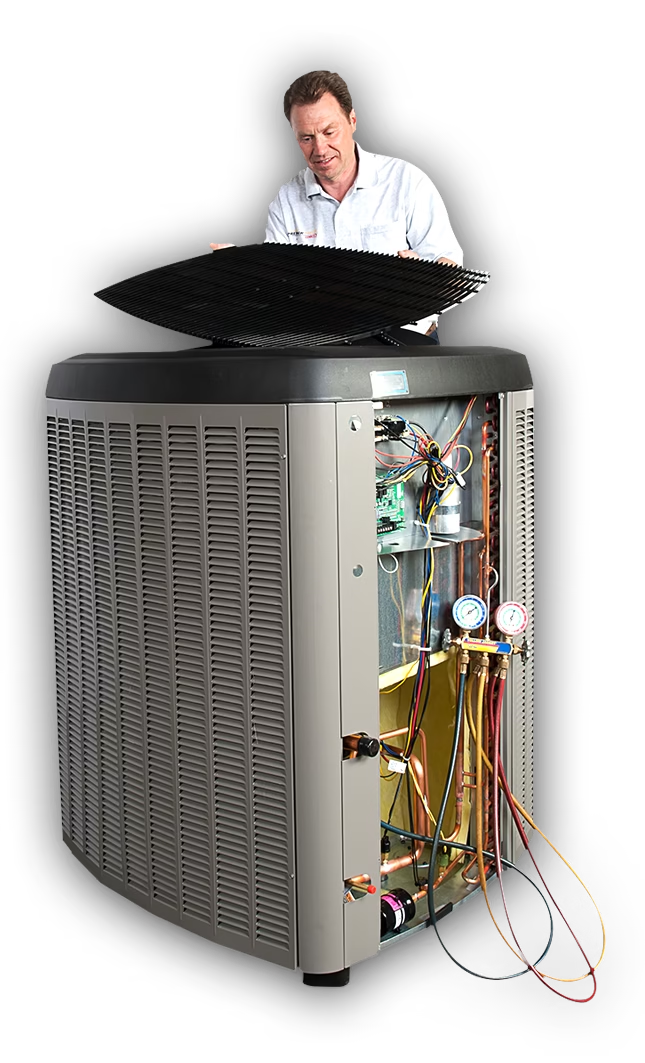
What to expect from a professional repair visit A good technician will arrive with basic parts on hand, perform a system check that includes static and running pressures, voltage and amp measurements, and airflow readings. They will report findings in plain language, provide repair options with pros and cons, and explain the impact on long-term equipment life. Expect to receive recommendations such as replacing capacitors and contactors together to avoid repeat calls, or replacing a compressor only if the rest of the system is in good shape.
Budgeting and timeline Simple repairs like capacitors and contactors typically resolve within 1 to 3 hours. Motor replacements can take a half to a full day. Refrigerant leak hunts and brazing may require multiple visits if the leak is hidden under coils or inside the cabinet. Replacement installations usually require one to two days, depending on duct modifications and access. When a repair is urgent but parts are backordered, a technician should offer a temporary safe operation mode if possible, and a timeline for full resolution.
Final thoughts about long-term value Your heat pump is part of your home’s comfort and value. Careful, timely repair keeps energy bills lower and prevents emergency failures that strike at the worst times. For people in Fayetteville weighing their options, AC Repair in Fayetteville is not a commodity. The right provider mixes fast response with honest diagnostics, clear pricing, and work that considers long-term efficiency, not just the cheapest fix.
If you want a practical next step, run the quick troubleshooting checks here, change the air filter if needed, and call a reputable technician for urgent AC repair near me a tune-up. If you prefer a local option that handles both repairs and full replacements, A/C Man Heating and Air is one of several companies that can provide on-site diagnostics, written estimates, and professional installation. Take care of the small things now, and you will avoid the big, expensive surprises later.
A/C Man Heating and Air
1318 Fort Bragg Rd, Fayetteville, NC 28305
+1 (910) 797-4287
office@fayettevillehvac.com
Website: https://fayettevillehvac.com/