
Expert HVAC Repair for Fayetteville Homes
Summer in Fayetteville pushes a system more days than not. Winters bring humidity swings and surprises on mornings when you least expect them. A quiet, reliable HVAC matters more than aesthetics. It keeps the family comfortable, prevents moisture damage, controls utility bills, and protects appliances and finishes. If you pay attention, your system will tell you when it needs help. The key is knowing what to listen for and who to call when a warning becomes a problem.
Why local expertise matters here Fayetteville sits in a zone where summers are long and hot, and winters can dip low enough that heat pumps or furnaces get taxed. Local contractors understand neighborhood wiring oddities, typical duct runs in older homes, and the specific refrigerants and equipment brands most common in the region. An HVAC contractor who regularly works in Fayetteville knows turnaround times for parts at local suppliers, which means faster fixes when a compressor or control board fails. That familiarity also means better estimates for how long repairs take, and fewer surprises on the final bill.
Common repair scenarios and what they really mean Most calls fall into a handful of patterns. Learning to read these patterns saves money and limits downtime.
Refrigerant leaks and weak cooling: If your AC no longer reaches set temperature, or it runs constantly without dropping room temperature, low refrigerant is a common culprit. Low charge is rarely the result of natural depletion. It usually points to a leak. A competent technician will find and repair the leak, vacuum the system, then recharge to manufacturer specifications. Charging by pressure alone is not acceptable; accurate weight measurement matters. A tip from field experience, do not accept a temporary top-off without a leak search. It buys you a week or two at best, and invites a larger failure later.
Short cycling: Systems that switch on and off quickly suffer more wear than those that run steady. Short cycling can stem from incorrect thermostat placement, oversized equipment, refrigerant issues, or electrical faults. I once saw a three-year-old system cycle every eight minutes because the thermostat was mounted above a door that let in hot attic air. Moving the thermostat and correcting a loose relay solved it without replacing the compressor.
Strange noises: Hissing, grinding, or popping noises require prompt attention. A hissing sound could indicate a refrigerant leak or a failing reversing valve. Grinding often comes from bearings gone bad in motors or blowers. Popping in ducts sometimes signals thermal expansion, but loud, repeated pops often mean loose sheet metal or failing blower wheel attachment. Don’t postpone these calls; moving parts can shred and cause collateral damage to motors and control boards.
Poor airflow: Weak airflow often traces back to dirty filters, closed registers, collapsed ducts, or failing motors. In older homes you may find flexible ducts kinked behind attic insulation, or rodents pulling insulation into runs. Replace filters regularly, but if changing a filter does not restore airflow, schedule a technician who can measure static pressure and inspect duct layout. Replacing a blower motor unnecessarily is a common expense when duct issues are the root cause.
Electrical issues and safety: Tripped breakers, visible scorch marks at the disconnect, or odd smells from the furnace or air handler suggest electrical problems. These are not appropriate DIY territory. Faulty contactors or failing capacitors will sometimes cause systems to hum without turning on. Replacing a capacitor is cheap; repairing a fried control board is not. Address electrical problems promptly to avoid fire risk.
When repair is the smarter choice than replacement Replacing an HVAC system is a significant investment. There are cases where repair extends life economically, and cases where replacement is the correct move. Consider these factors when deciding.
Age and remaining life: A well-maintained central air conditioner typically lasts 12 to 15 years. Furnaces can run 15 to 25 years. If your system is under half its expected life and the repair is less than half the replacement cost, repair is reasonable. If it is older than 10 to 12 years and major components like the compressor or heat exchanger fail, replacement usually delivers better long-term value.
Efficiency gains: New systems are more efficient, but efficiency alone does not always justify replacement. If your bills are sharply higher than neighbors with similar insulation and behavior, and the system is old, a higher efficiency model may make sense. Run conservative payback math. A new 16 SEER unit replacing a 10 SEER unit will save energy, but the payback period depends on local electricity rates and how often you run air conditioning.
Matching refrigeration and ductwork: Replacing a single component in a mismatched system can create problems. Installing a high-efficiency outdoor unit on a duct system that leaks and has incorrect airflow will reduce comfort despite lower theoretical consumption. Evaluate ducts, refrigerant piping, and controls together. Sometimes the smartest move is staged: repair now to keep the house safe and plan a full replacement during the next heating season when you can budget and schedule it.
Anecdote from service calls I remember a customer who called because the upstairs never cooled. The out-of-state landlord wanted the cheapest fix. I found a 20-year-old duct run partially crushed under a crawlspace access, leaking conditioned air into an uninsulated attic space. The homeowner had already been quoted a new heat pump. We sealed and insulated the ducts, repaired a bent evaporator coil drain that was causing intermittent icing, and replaced the thermostat with a programmable unit. The upstairs comfort improved dramatically. The landlord saved the cost of an immediate replacement and bought time to budget for a new system later. That was a case where targeted repair was the right answer.
Choosing the right contractor for Fayetteville homes “HVAC company near me” searches return pages of options. Choosing the right one requires more than picking the highest-rated listing. Look for these concrete indicators when you call for an estimate.
- technicians who are NATE certified or who can demonstrate equivalent experience, because certification reflects tested competency and continuing education
- a written, itemized estimate that explains the work, parts, and labor separately, plus a clear warranty for parts and labor
- evidence of local licensing and insurance, including general liability and workers compensation
- transparent pricing for service calls and an explanation of diagnostic fees and how they will be applied to repairs
- referrals or photos from recent jobs in Fayetteville showing similar systems and results
Talking price without scope buys little. A low estimate that lacks detail often hides add-ons or uses lower-grade parts. A reliable HVAC contractor will explain trade-offs, such as using OEM parts versus aftermarket components, and the effect on warranty and longevity.
What to expect during a professional repair visit A professional visit should follow a predictable sequence. First, the technician arrives in a marked vehicle with identification and a portable work mat. They should ask about recent behavior of the system, when the issue began, and any intermittent symptoms. Then comes a visual inspection and basic safety checks for gas leaks, flame patterns, or loose wiring. The tech should measure temperatures and pressures, check airflow, and test capacitors and contactors under load. If they need to remove a panel or access the attic, they will explain that and protect floors and carpets. At the end, expect a written report that explains findings, shows before and after measurements, and covers recommended repairs or next steps.
Maintenance that reduces repair frequency Preventive maintenance is the single best investment for keeping systems reliable. A yearly tune-up pays in fewer emergency calls, longer equipment life, and better efficiency. For air conditioning, a spring tune-up that inspects refrigerant charge, cleans the coil, checks the condensate drain, and measures airflow will prevent many common summer failures. For heating systems, a fall inspection that checks the heat exchanger for cracks, verifies proper venting, and tests safety controls prevents local emergency AC repair dangerous failures during cold snaps.
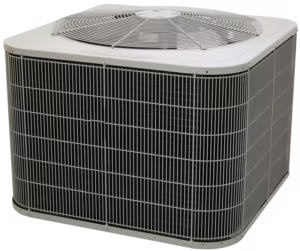
Practical homeowner tasks are limited but valuable. Replace filters every one to three months depending on filter type and household conditions. Keep the condensing unit clear of plants and debris, with at least two feet of clearance. Never let vines or leaves authorized AC repair Fayetteville wrap into the unit. Keep registers unobstructed and avoid enclosed spaces around returns, like closets with closed doors, which can starve systems of air and increase cycling.
When speed matters: emergency repairs and rapid response HVAC failures rarely schedule themselves. A failing furnace in winter or an outdoor compressor that seizes in July demands speed. Ask potential contractors about emergency response policies and typical arrival windows. Local companies that stock common parts like capacitors, contactors, and filters reduce downtime. A/C Man Heating and Air and other Fayetteville-oriented firms often keep popular parts in their vans and can perform immediate replacements. That faster service may cost a premium, but it is worth it when a child or elderly parent needs conditioned air.
A realistic checklist for emergency calls
- note the symptom, such as no cooling, no heat, strange smell, or tripped breaker
- check filters and breakers before calling, then report those steps to the dispatcher
- have your system model and age ready if possible, including any error codes on the thermostat
- ask the dispatcher for an estimated arrival window and what the technician will need access to This short list helps the contractor come prepared and reduces the time your home is without service.
Energy and comfort trade-offs to consider When evaluating repair versus replacement, consider the non-monetary trade-offs. A new unit may reduce noise and improve humidity control, which benefits sleep and health. Repairing an old system may keep you comfortable economically in the short term but could delay improvements in indoor air quality and efficiency. Balance immediate budget constraints against longer-term costs like rising repair frequency and the potential for a catastrophic mid-summer failure.
A second list for choosing an installation or repair offer
- require a clear warranty and ask specifically what voids it, such as using aftermarket refrigerant or neglecting maintenance
- demand a load calculation for any replacement, not just equipment sizing by rule-of-thumb
- prefer contractors who offer a written maintenance plan and who will return for follow-up checks after a major repair or installation
- check whether the contractor will handle permits and inspections where required
- verify whether estimated savings or efficiency improvements are modeled using local climate data
Final persuasive point Investing in expert HVAC repair protects comfort, health, and the value of your home. Fayetteville homes have quirks that local contractors understand. A technician who measures, documents, and explains is more valuable than the cheapest quote. If you need a service call, search for an HVAC company near me that posts certifications, provides clear pricing, and demonstrates local experience. When you see names like A/C Man Heating and Air, check references, ask for an itemized estimate, and trust the company that backs its work with a solid warranty and fast follow-up. Your system will last longer, use less energy, and cause fewer emergency headaches when you pair attentive maintenance with timely, professional repairs.
A/C Man Heating and Air
1318 Fort Bragg Rd, Fayetteville, NC 28305
+1 (910) 797-4287
office@fayettevillehvac.com
Website: https://fayettevillehvac.com/