
A/C Man Heating and Air’s Top Fayetteville AC Repair Tips
Fayetteville heat gets personal. The humidity presses against your skin, and the house that felt comfortable in the morning can feel stifling by midafternoon. I have spent more than a decade servicing residential systems in this region, crawling through attics that bake like ovens, climbing behind condensing units choked with leaves, and talking with homeowners who waited too long to call. These tips come from that experience — what I see most often, what costs people money, and what actually keeps systems running longer without drama.
Why you should care about timely AC repair and maintenance A working air conditioner is not just comfort, it is insurance against higher energy bills, premature equipment failure, and poor indoor air quality. A small problem left unattended — a clogged drain, low refrigerant, a failing capacitor — can cascade into a major compressor failure that can cost several thousand dollars to replace. Repairing problems early saves parts, keeps warranties intact, and prevents the kind of emergency calls that happen on the hottest day of the year. I say this because I’ve shown up to kitchens where the homeowner waited until the day the kids had exams to call, and the unit was beyond simple repair.
What happens to AC systems in Fayetteville specifically The coastal plain climate means long cooling seasons and frequent temperature swings overnight. Systems here run more hours than in cooler climates, and the combination of humidity and airborne pollen accelerates filter loading and coil fouling. Condenser units are exposed to yard debris, pine straw, and fertilizer dust, which reduce airflow. Attics are often poorly ventilated, making ducts hotter than they should be. All of these factors influence what repairs are most common and how you should prioritize maintenance.
Practical diagnostic steps that reveal the real problem When a homeowner calls saying the AC is not cooling, there are a few targeted checks a technician does within minutes that reveal where to look next. First, air temperature split: measure the supply vent air and the return air. A healthy split is roughly 16 to 22 degrees install AC in Fayetteville Fahrenheit when the system is under steady load. If the split is small, the system is not removing heat effectively. Next, check airflow at the register; if it is weak, that points to a blower issue, dirty evaporator coil, or obstructed ducts. Inspect the outdoor unit for debris and listen for unusual noises, like a rattling fan motor or a high-pitched hissing that suggests a refrigerant leak. Test the capacitors and contactors if the compressor will not start; these electrical components fail silently until they do not.
A homeowner story that illustrates timing matters I once worked with an elderly couple who delayed calling when their system started cycling on and off every 15 minutes. They thought it was a minor nuisance. When I arrived, the compressor had developed internal damage from short cycling and needed replacement, a cost they could have avoided with earlier service. Replacing a compressor on a twenty-year-old system also forced them to choose between investing in an expensive repair or replacing the whole system. A routine inspection six months earlier would likely have caught the overheating relay and failing capacitor that caused the short cycling.
Routine maintenance checklist you can follow
- replace or clean the air filter every one to three months depending on filter type and household conditions
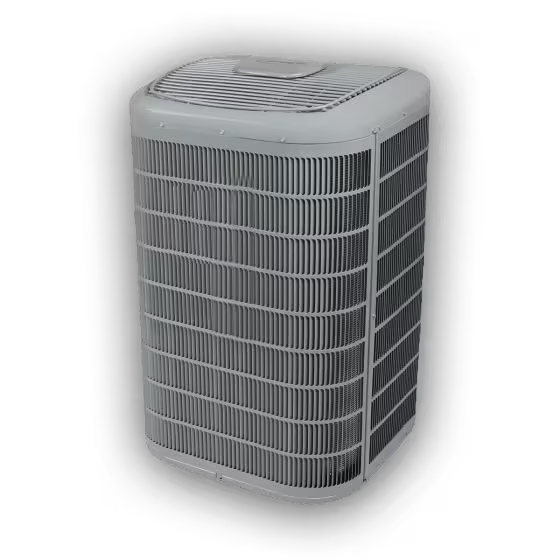
- keep three feet of clearance around the outdoor condenser, trimming vegetation and removing debris
- flush the condensate drain line at least once a year to prevent clogs and water damage
- schedule professional tune-ups annually, ideally in spring before peak cooling demand
- monitor energy bills and runtime; a sudden increase in energy use often signals a mechanical or refrigerant issue
How to decide between repair and replacement A frequent dilemma is whether to repair a failing component or replace the entire system. Several factors matter: the system age, repair cost relative to unit value, efficiency loss, and remaining warranty. As a practical rule, if the system is over 10 to 12 years old and the repair is more than 30 to 40 percent of the cost of replacement, it makes sense to consider replacement. For example, replacing a capacitor for $200 is reasonable for most systems, but a $2,000 compressor replacement on a 15-year-old unit usually tips the scale toward replacement. The financial picture shifts if your electric rate is high, because newer systems with higher SEER ratings can significantly reduce long-term operating costs.
Signs you need professional AC repair now
- the system runs but the house is not cooling, with a reduced temperature difference between return and supply
- odd smells from vents, especially musty or burning odors that indicate mold or electrical faults
- frequent short cycling, where the system turns on and off every few minutes instead of running longer cycles
Electrical issues are subtle and dangerous Most homeowners focus on refrigerant and airflow, but electrical failures are both common and risky. Capacitors age and lose their ability to provide starting torque, contactors pit and weld, and control boards can corrode or suffer power surges. Those faults often present as intermittent operation or complete failure to start. Working on electrical components requires lockout procedures, an understanding of motor start currents, and the right tools to test microfarads and voltage under load. If a technician recommends replacing electrical components, ask about brand and rating matches. Cheaper, undersized parts will fail faster.
What low refrigerant feels like and why it matters Low refrigerant reduces cooling capacity and forces the compressor to work harder and longer. On the low side, the evaporator can ice over, which you may notice as reduced airflow and a layer of frost on the indoor coil or refrigerant lines. On the high side, running with low charge increases discharge temperatures and can ruin a compressor. Refrigerant leaks are not a simple top-up; they require leak detection and repair, because adding refrigerant without fixing the leak is a temporary fix and may violate environmental rules. If a system is past certain age thresholds, the cost and availability of refrigerant for older R-22 systems is another reason to consider replacement.
Airflow problems are the silent efficiency killers Reduced airflow can come from a clogged filter, a dirty evaporator coil, a failing blower motor, or restrictive ductwork. The symptom is often a low temperature drop across the coil and rooms that never reach thermostat setpoint. Replacing filters regularly is the easiest fix, but dirty coils require professional coil cleaning and careful handling to avoid damaging fins. Duct leaks diminish system performance in ways homeowners seldom notice until the bill arrives. Sealing accessible duct seams with mastic and insulating ducts in unconditioned spaces yields measurable improvements in comfort and efficiency.
Why thermostats trip up repairs Thermostats are the user interface but often the cause of system confusion. A thermostat installed on an interior wall near appliances or in sun-exposed locations gives false readings. Programmable thermostats configured poorly can cause excessive setpoint swings and unnecessary runtime. Smart thermostats are useful but require correct wiring and stage sequencing for two-stage or heat pump systems. When troubleshooting, check the thermostat wiring, battery, and programming. Swapping to a known good thermostat is a quick diagnostic step that often rules out control issues.
An honest word about warranties and DIY repairs Warranties make a difference, but they come with conditions. Manufacturers often require proof of annual maintenance to keep extended parts coverage valid. DIY repairs can void warranties if seals are broken or non-certified refrigerant handling occurs. Small tasks such as filter changes or clearing debris are safe to do yourself, but anything involving refrigerant, electrical connections, or sealed components deserves professional attention. When in doubt, take a few photos and a note of what you did before calling a service professional; that record helps technicians diagnose problems faster.
How to find and vet a good local technician Experience matters more than the glossy van logo. Look for companies that can show NATE certified technicians, detailed service reports, and clear pricing breakdowns. Ask for references and for examples of past work similar to your problem. A reputable contractor will explain the diagnostic steps they will take, present repair versus replacement options with numbers, and warn about parts they commonly replace. Get at least two estimates for major work, and look beyond the bottom line to warranties and the quality of the parts specified.
Seasonal timing and how to plan preventive work Schedule preventive maintenance in spring, ideally six to eight weeks before the hottest month. That timing ensures parts are available and technicians are not swamped. A typical tune-up includes checking refrigerant charge, cleaning coils, testing electrical components, lubricating motors where applicable, and verifying thermostat calibration. Doing this annually reduces emergency calls and keeps equipment operating at rated efficiency. If you have pets, smokers, or heavy pollen in your neighborhood, consider inspections twice a year.
Cost expectations and transparency Minor repairs like capacitors, contactors, or a thermostat replacement typically run from a couple of hundred to several hundred dollars, depending on labor and parts. Major component replacements, such as compressors, can range from $1,500 to over $3,000, depending on system size and refrigerant type. Full system replacements vary widely, often $4,000 to $10,000 or more for high-efficiency packaged systems. Those numbers are broad intentionally; get written estimates and ask about financing options or manufacturer rebates that apply to higher-efficiency equipment.
What to do when the technician leaves A quality technician leaves a detailed report: what they found, what they repaired, before and after measurements, and recommendations for follow-up. Keep that report with your home records. If a repair did not fix the problem, call back promptly and Fayetteville air conditioning installation ask for escalation to a senior technician or the service manager. Repeated failures of the same component within a short period should be covered by parts or labor warranties, and a reputable company will stand behind their work.
Why choose A/C Man Heating and Air For homeowners seeking a local team familiar with Fayetteville’s unique conditions, A/C Man Heating and Air brings regional experience and a track record of hands-on fixes that avoid unnecessary replacements. We focus on diagnosing root causes, explaining trade-offs in plain language, and using quality parts that match the equipment. That approach reduces repeat visits and protects your system’s lifespan. If you want straightforward answers, documented work, and technicians who have worked on hundreds of units like yours, that practical expertise is what separates routine service from real value.
A closing note about being proactive Cooling systems respond well to attention. Small investments in regular maintenance and timely repairs compound into years of reliable service and lower utility bills. Waiting for failure turns a fixable problem into an urgent, expensive ordeal. If you notice a change — less airflow, higher bills, strange noises, or a thermostat that misbehaves — act sooner rather than later. Call a trusted technician, ask for a clear diagnostic, and keep records of maintenance. The heat will return next summer; when it does, you want your system ready.
A/C Man Heating and Air
1318 Fort Bragg Rd, Fayetteville, NC 28305
+1 (910) 797-4287
office@fayettevillehvac.com
Website: https://fayettevillehvac.com/